Safe and Effective Methods for Household Ant Elimination
Ant Treatment for Home Infestations: Start With the Colony
The most effective ant treatment for home infestations targets the colony, not just the ants you can see.
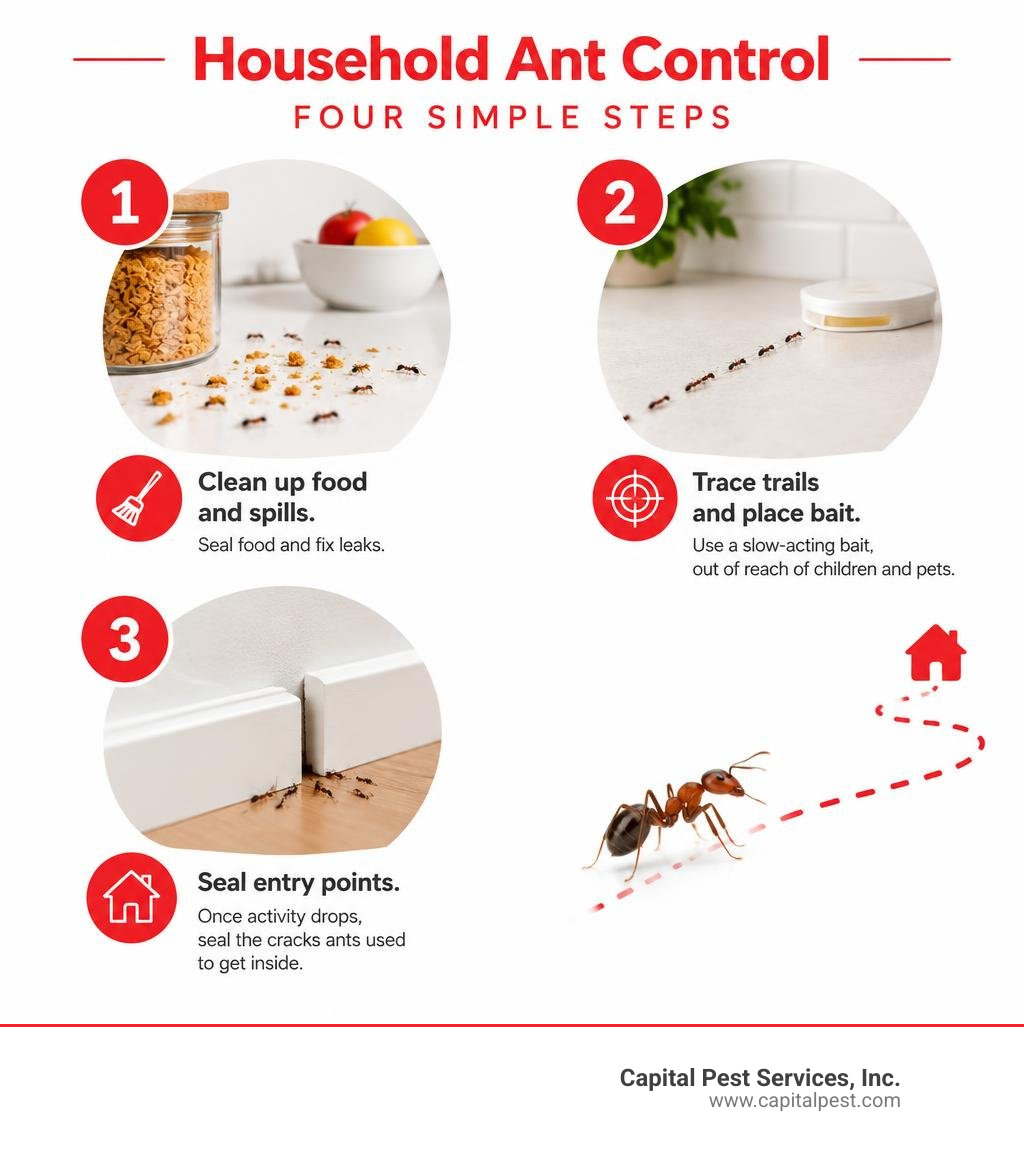
- Clean up crumbs and spills, seal food, and fix leaks.
- Follow the ant trail and place a labeled, slow-acting bait nearby, out of reach of children and pets. Don’t spray the trail while ants are taking the bait.
- Once activity drops, seal the cracks ants used to get inside.
Baits take time because workers must carry them back to the nest. If ants keep returning, the colony may be outdoors or hidden inside a wall.
I’m Mitch Taylor, president of Capital Pest Services, Inc. For more than 17 years, I’ve helped Raleigh-Durham homeowners plan ant treatment for home infestations using an integrated approach that pairs control with prevention.
Basic ant treatment for home glossary:
Identifying Common Household Ants and Finding the Nest
Eliminating an infestation starts with knowing exactly what species you are dealing with. There are more than 12,400 ant species worldwide, but only a handful routinely invade living spaces. Because different species prefer distinct foods, nesting locations, and colony structures, accurate identification determines which control strategy will succeed.
When examining ants around your baseboards or kitchen counters, look closely at their physical characteristics:
- Worker size and uniformity: Are all workers the same size (monomorphic), or do they vary from small to large (polymorphic)?
- Node structures: Look at the petiole—the narrow waist connecting the thorax to the abdomen. Does it have one upright node, two nodes, or a flattened node hidden beneath the abdomen?
- Odor when crushed: Several species release telltale chemical scents when crushed.
- Structural damage: Keep an eye out for fine wood shavings, known as frass, which can point directly to identifying carpenter ant infestations.
Homeowners also frequently confuse reproductive swarmers with other insects during warm spring days. Knowing how to tell flying ants apart from termites—by looking for pinched waists, elbowed antennae, and unequal wing lengths—ensures you choose the right approach from day one.
Key Pest Species and Identification Markers
In our service areas across Raleigh, Durham, Cary, Chapel Hill, Wake Forest, and surrounding Triangle communities, a few species cause the majority of indoor headaches.
| Species | Worker Size | Color & Morphology | Distinct Odor / Trait | Preferred Nesting Habitat |
|---|---|---|---|---|
| Argentine Ant | ~1/10 inch (2 mm), uniform | Light to dark brown; 1 upright node | Stale, musty odor | Moist mulch, under stones, shallow outdoor soil, potted plants |
| Odorous House Ant | ~1/10 inch (2–3 mm), uniform | Brown to blackish-brown; 1 flattened node | Pungent rotten coconut smell | Wall voids, near hot water pipes, under floorboards, moist mulch |
| Carpenter Ant | 1/4 to 1/2 inch (6–13 mm), variable | Black, dark brown, or reddish-black | No distinct odor; leaves sawdust (frass) | Moist, rotting structural wood, tree hollows, roof eaves |
| Red Imported Fire Ant | 1/16 to 1/4 inch (2–6 mm), variable | Reddish-brown to dark brown; 2 nodes | Aggressive sting; open landscape mounds | Sunny lawn areas, adjacent to structural foundations, electrical boxes |
As noted in the Mississippi State Extension guide on Argentine and odorous house ants, both Argentine ants and odorous house ants measure approximately 1/10 of an inch, making them easy to confuse without checking node anatomy and crushing scents. Argentine ant colonies are massive supercolonies containing tens of thousands of workers and hundreds of fertile queens, meaning localized surface sprays will never control them.
How to Track Foraging Trails to Indoor and Outdoor Nests
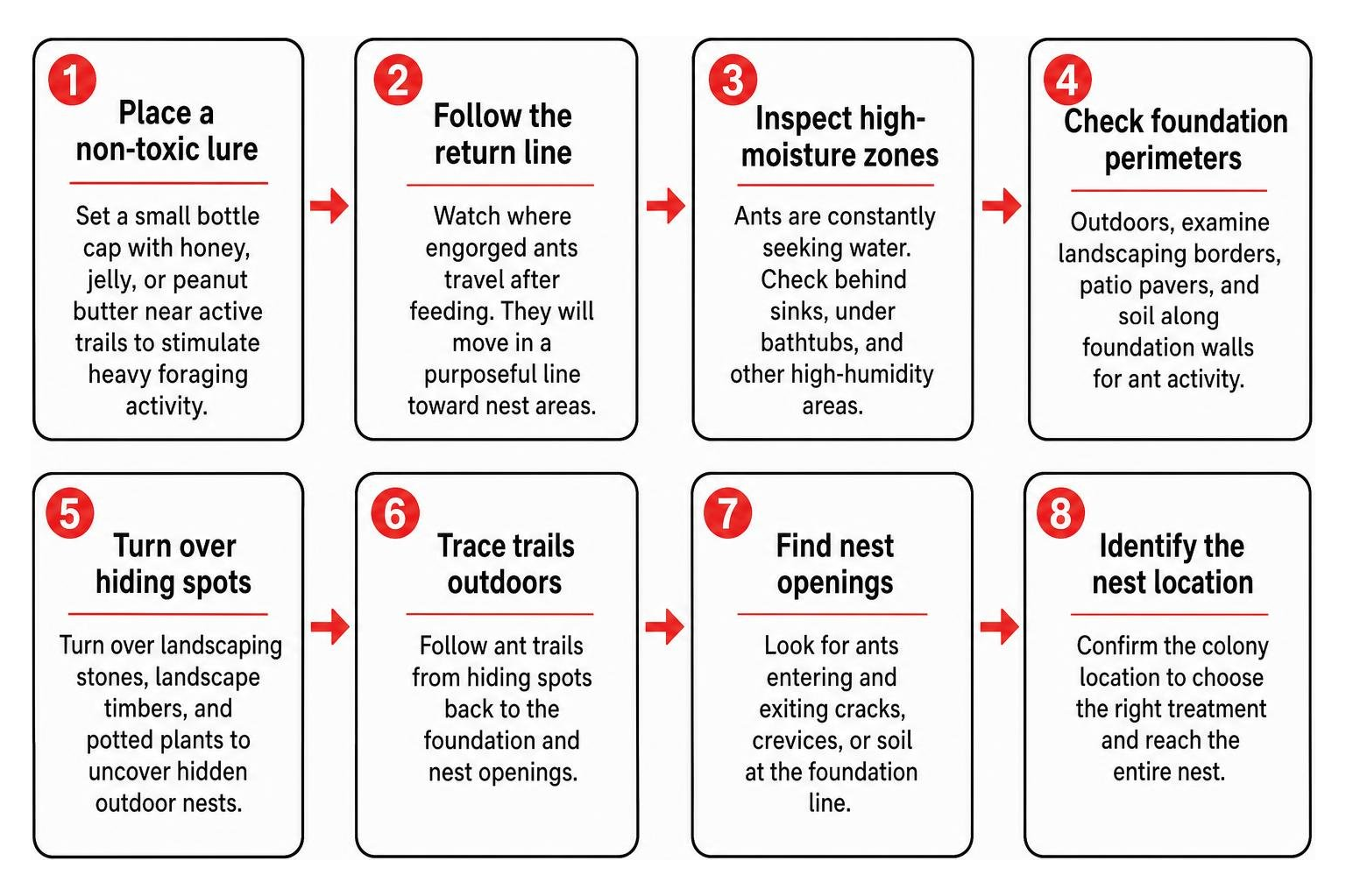
Worker ants leave invisible chemical pathways called pheromone trails. Instead of washing them away immediately, use these trails as a roadmap back to the colony’s headquarters.
To track foraging paths effectively:
- Place a non-toxic lure: Set a small bottle cap with honey, jelly, or peanut butter near active trails to stimulate heavy foraging activity.
- Follow the return line: Watch where engorged ants travel after feeding. They will move in a purposeful line toward baseboard crevices, plumbing penetrations, or outdoor mulch beds.
- Inspect high-moisture zones: Ants are constantly seeking water. High humidity draws them behind bathtubs and sink vanities, which makes preventing ants in your bathroom an essential part of indoor pest management.
- Check foundation perimeters: Outdoors, examine landscaping borders, patio pavers, and soil along foundation walls. According to the Texas A&M AgriLife home ant control study, turning over landscaping stones, landscape timbers, and potted plants is one of the most reliable ways to uncover hidden outdoor nests.
Selecting the Right Ant Treatment for Home Infestations
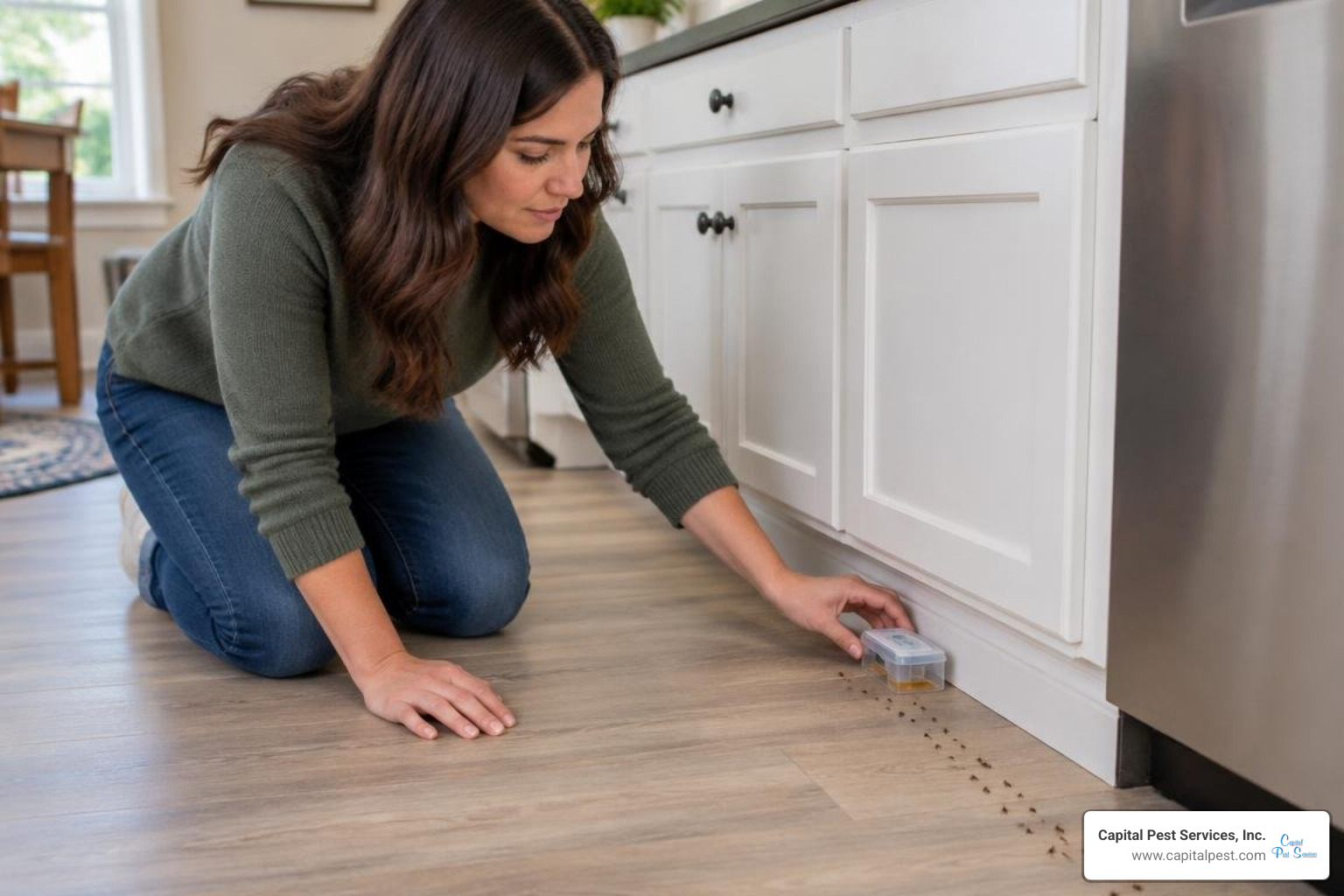
Successful eradication requires targeting how ants feed and share resources. Simply killing foraging workers does nothing to stop the reproductive queens deep inside the nest from producing hundreds of new eggs each day.
Baits vs. Sprays: How Colony Elimination Works
The fundamental difference between pest control methods lies in repellent contact sprays versus slow-acting, non-repellent baits.
When you spray foraging ants with an over-the-counter pyrethroid contact spray, you trigger an immediate stress response. For single-queen species, this temporarily reduces sightings. However, for multi-queen species like Argentine and odorous house ants, fast-acting sprays cause “colony budding.” The colony senses danger, splits into several smaller satellite colonies, and spreads across different rooms in your house, worsening the problem.
Baits work through a biological sharing process known as trophallaxis:
- Foragers feed on a palatable carrier matrix (sugars, proteins, or oils) infused with a slow-acting active ingredient such as borate, spinosad, hydramethylnon, or abamectin.
- The delayed toxicity gives the worker plenty of time to return alive to the central nest.
- The worker regurgitates and shares the toxicant with larvae, fellow workers, and all reproductive queens.
- Within 3 to 14 days, the queens ingest a lethal dose, stopping egg production and collapsing the colony from within.
The UC IPM ant management guidelines point out that ant baits usually take 5 to 10 days to show noticeable reductions in activity, with complete colony collapse taking several weeks. For severe Argentine ant infestations, liquid borate baits with a 0.5% to 1% borate concentration diluted in sugar water provide exceptional long-term results because workers can consume large volumes without dying prematurely.
Tailoring an Ant Treatment for Home Perimeter and Garden Protection
Outdoor management prevents exterior nests from invading your living space. We recommend applying targeted granular baits around garden beds and lawn perimeters where ant hills develop. Granular formulations using active ingredients like spinosad or hydramethylnon can eliminate entire outdoor colonies within 3 to 14 days of consumption.
When protecting your lawn and foundation:
- Spread granular baits around active mounds and garden borders, reapplying every 2 to 4 weeks during active seasons. If rainfall occurs, reapply once the soil dries, as bait uptake drops significantly on wet ground.
- Treat outdoor nesting sites directly to stop them from expanding. Learning the proper techniques for eliminating outdoor ant mounds keeps your lawn comfortable and bite-free.
- Use non-repellent exterior perimeter barriers (such as professional-grade fipronil) applied in a 3- to 10-foot band around your home’s foundation. As detailed by the University of Tennessee Extension fire ant management guidelines, non-repellent liquid barriers let ants walk across treated zones without detecting the chemical, carrying the active ingredient back to the nest on their bodies.
Step-by-Step Guide to Natural and Chemical Ant Elimination
Eliminating household ants requires an integrated pest management (IPM) approach that combines sanitation, exclusion, non-toxic remedies, and targeted chemical products. You can follow our structured step-by-step ant eradication plan to systematically clean out pests room by room.
Safe Indoor Application and Non-Toxic Methods
When ants first appear inside your living areas, jump into action with these immediate, low-toxicity tactics:
- Wipe pheromone trails with soapy water: Plain water will not remove ant scent trails. Mix warm water with dish soap or white vinegar to wash down kitchen counters, tile floors, and baseboards, wiping away the chemical markers other workers use to navigate.
- Seal pantries and food supplies: Store cereals, sugars, pet kibble, and baked goods in airtight glass or rigid plastic containers. Address common attractants when ants invading your kitchen by wiping down jar rims (especially honey, syrup, and jam) and sweeping up toaster crumbs daily.
- Apply food-grade diatomaceous earth (DE): Dust a fine layer of DE into dry, undisturbed voids, such as behind the stove, beneath the refrigerator, and inside unfinished wall penetrations. DE works mechanically by absorbing the waxy protective layer of an insect’s exoskeleton, causing it to dehydrate and perish naturally.
- Deploy enclosed, child-resistant bait stations: Always place indoor baits inside secure stations positioned directly along baseboards or behind major appliances, keeping them away from pets and children while remaining accessible to foraging workers.
Targeted Ant Treatment for Home Species: Odorous House, Argentine, and Fire Ants
Different species require customized treatment plans to achieve lasting control:
- Argentine and Odorous House Ants: These species are sweet-feeders with sprawling supercolonies. Use liquid or gel borate-based baits placed near moisture sources and wall voids. Avoid repellent contact sprays at all costs to prevent colony budding. Manage outdoor aphid and scale populations on landscape shrubs, as these insects produce sweet honeydew that fuels Argentine ant colonies.
- Red Imported Fire Ants: Fire ants demand a proven two-step strategy. Step one is broadcasting a granular bait across the turf in late spring and early autumn when workers are actively foraging. Step two involves drenching individual high-traffic mounds near the foundation with an approved liquid insecticide to prevent structural entry.
- Carpenter Ants: Carpenter ants excavate wood rather than eating it. Target structural nests by applying insecticidal dust directly into occupied wall voids, removing moisture leaks, and trimming tree limbs away from rooflines.
Year-Round Prevention and Long-Term Ant Management
Eradicating an active colony is only half the battle. Maintaining a pest-free home requires seasonal vigilance and physical exclusion to block future invaders from taking up residence. Staying ahead of seasonal trends is simple when you review spring pest prevention strategies and understand the common North Carolina household pests active throughout the Piedmont region.
Exclusion, Sanitation, and Moisture Control Tactics
To establish an impenetrable perimeter around your home, focus on three key structural areas:
Exclusion (Sealing Entry Points):
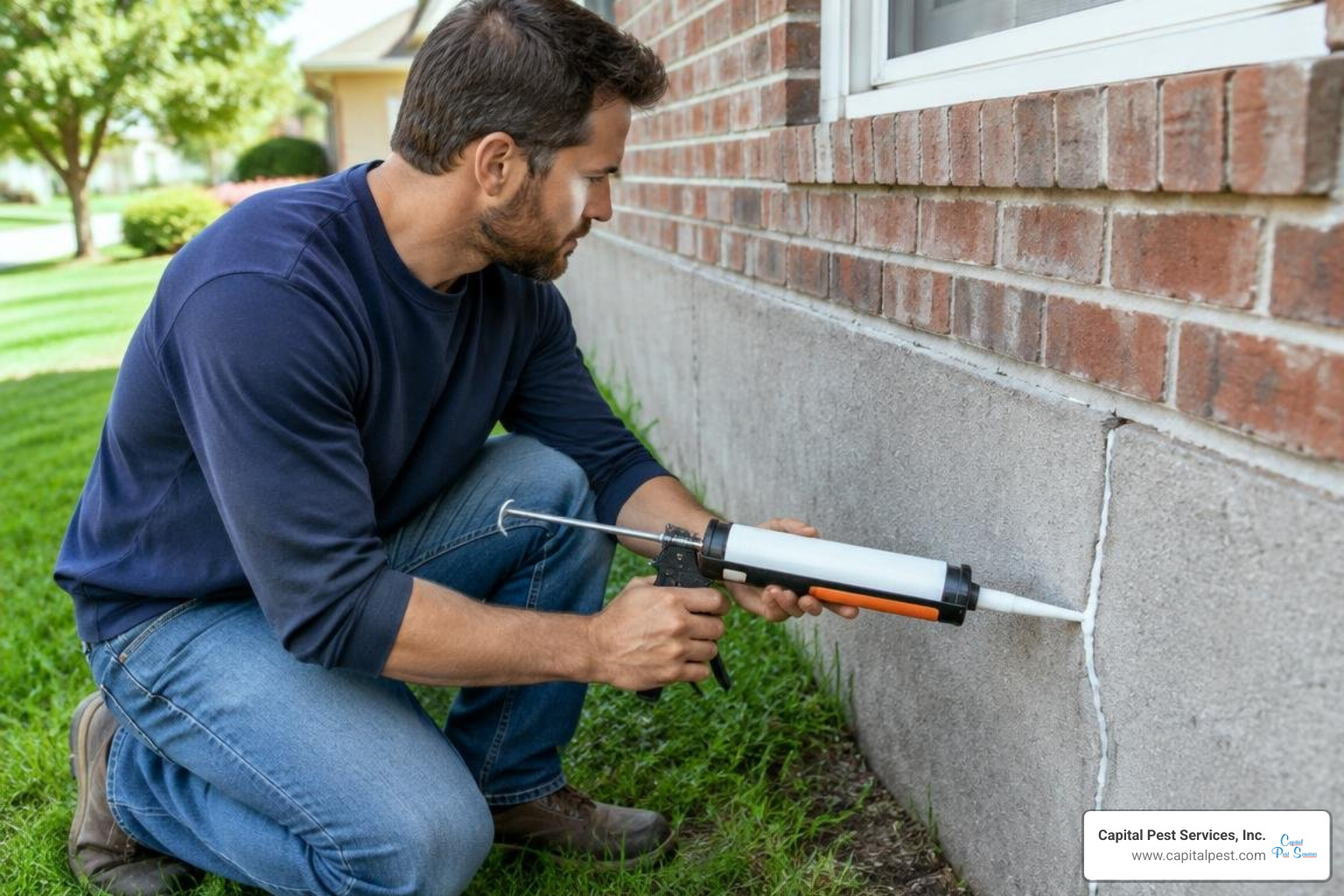
- Inspect the exterior foundation, siding junctions, and utility entry points (pipes, cables, HVAC lines).
- Seal all gaps, cracks, and weep holes using 100% silicone caulk, expandable foam, or copper mesh.
- Install durable door sweeps on exterior doors and replace worn weatherstripping around windows.
Sanitation and Yard Maintenance:
- Keep organic mulch, pine straw, and compost piles at least 12 inches away from the foundation siding.
- Maintain a 2-inch clearance between soil and exterior wooden siding or trim.
- Prune tree branches, ornamental shrubs, and climbing vines so they never touch the roof, gutters, or exterior walls, eliminating natural bridges into your attic.
Moisture Abatement:
- Repair leaking outdoor hose bibs, indoor sink traps, and running toilets promptly.
- Clean gutters and downspouts every autumn to prevent roof runoff from pooling against foundation footings.
- Ensure crawlspaces remain dry by installing vapor barriers and running dedicated dehumidifiers to maintain relative humidity below 55%.
When to Transition from DIY to Professional Pest Control
DIY baits and pantry cleanups handle small, isolated incursions well. However, severe infestations require specialized equipment and commercial-grade chemistry. Attempting to manage massive multi-queen colonies with retail sprays often leads to expensive property damage and prolonged frustration.
Homeowners should review the dangers and limitations of DIY pest control when dealing with:
- Frass piles or hollow-sounding structural framing indicative of carpenter ant damage.
- Pervasive indoor trails that reappear across multiple rooms despite continuous baiting.
- Fire ant mounds establishing within crawlspaces or along HVAC condenser pads.
- Infestations nested inside inaccessible wall voids, subflooring, or spray foam insulation.
By enrolling in comprehensive residential pest control plans, homeowners secure year-round protection that combines exterior barrier defense with targeted indoor inspections.
Frequently Asked Questions About Ant Control
How long does it take for ant bait to eliminate a colony?
Ant baits typically produce noticeable reductions in foraging activity within 3 to 10 days, with complete colony elimination taking anywhere from 2 to 4 weeks. Active ingredients like spinosad or hydramethylnon take 3 to 14 days to eliminate the queen once consumed. Because workers must find the bait, carry it back, and distribute it through trophallaxis, baiting is an investment in long-term control rather than instant contact knockdown.
Why are ants returning even after I spray them?
Standard over-the-counter bug sprays are repellent insecticides that only kill the workers visible on your counter. When you kill those foragers, the queen and thousands of unexposed nestmates remain unharmed inside the wall or underground. In response to the spray, multi-queen species split into multiple satellite colonies (budding), causing the infestation to return in larger numbers across different areas of your home just a few weeks later.
Are ant treatments safe for households with pets and children?
When used according to label instructions, modern ant treatments are designed to minimize risk to pets and children. Baits should always be enclosed inside tamper-resistant bait stations and placed in out-of-reach locations, such as behind appliances or inside wall voids. For indoor contact needs, botanical sprays containing natural pyrethrins or mechanical dusts like diatomaceous earth provide excellent, low-toxicity alternatives. Outdoors, keep pets off treated turf until granular applications or barrier sprays have thoroughly dried or settled.
Conclusion
Managing household ant invasions requires moving beyond short-term spray cans and adopting an integrated pest management strategy. By accurately identifying the species, deploying slow-acting non-repellent baits, tracking nests, and sealing structural entry points, you can eliminate existing colonies and keep them from returning.
At Capital Pest Services, Inc., our locally owned and NPA-accredited team has proudly served homeowners across Raleigh, Durham, Cary, Chapel Hill, Apex, Wake Forest, Holly Springs, Morrisville, Garner, and Clayton for years. We combine eco-friendly products, advanced non-repellent barrier treatments, and dedicated customer support to protect your home. If you are battling a persistent ant infestation or want year-round perimeter security, schedule a consultation for our specialized ant control services today.
Capital Pest is proud to be a family-owned and operated pest control company serving Raleigh, NC and its surrounding area (Chapel Hill, Wake Forest, Clayton, Pinehurst, Pittsboro, Fuquay-Varina, etc). Contact us for our pest control services today!