Why Ants Love Your Bathroom and Simple Tricks to Make Them Leave
Ants in Your Bathroom? Start With Water and the Trail
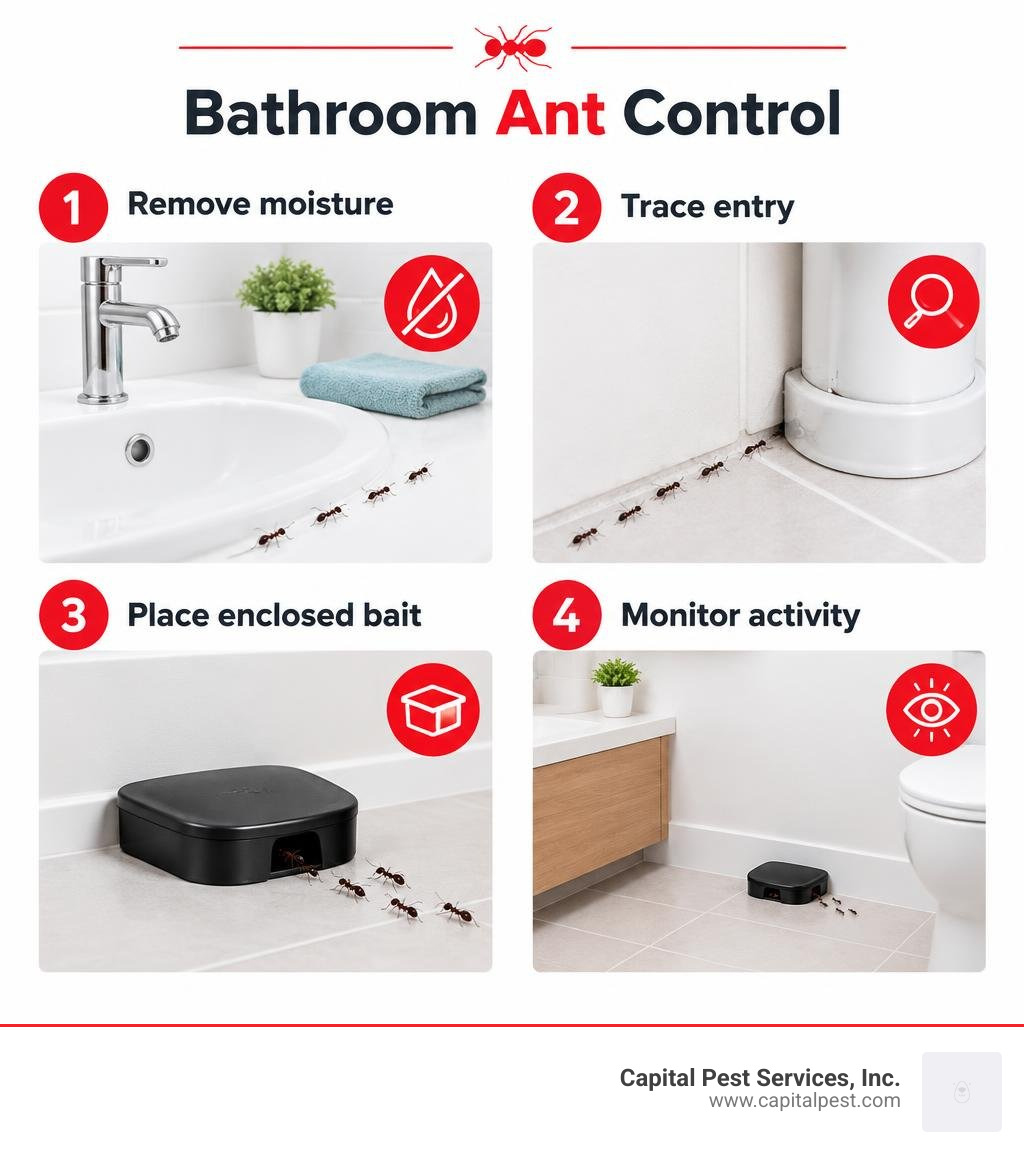
To get rid of bathroom ants, fix leaks and dry wet surfaces first. Then follow the ants to find where they enter. Place an enclosed ant bait station near their trail, out of reach of children and pets. Avoid spraying the trail: sprays may kill the ants you see while leaving the hidden colony untouched.
Bathrooms give ants water and shelter, often through gaps around pipes or tile. Vinegar can wipe away a trail, but it will not remove the colony. If ants keep returning after baiting and moisture repairs, it may be time for a professional inspection.
I’m Mitch Taylor, president of Capital Pest Services, Inc., and I’ve spent more than 17 years helping Raleigh-Durham homeowners manage pests. When someone asks me about “ants in my bathroom,” I start with the water source, the entry point, and a plan to reach the colony.
Why Are There Ants in My Bathroom? Key Causes and Attractants
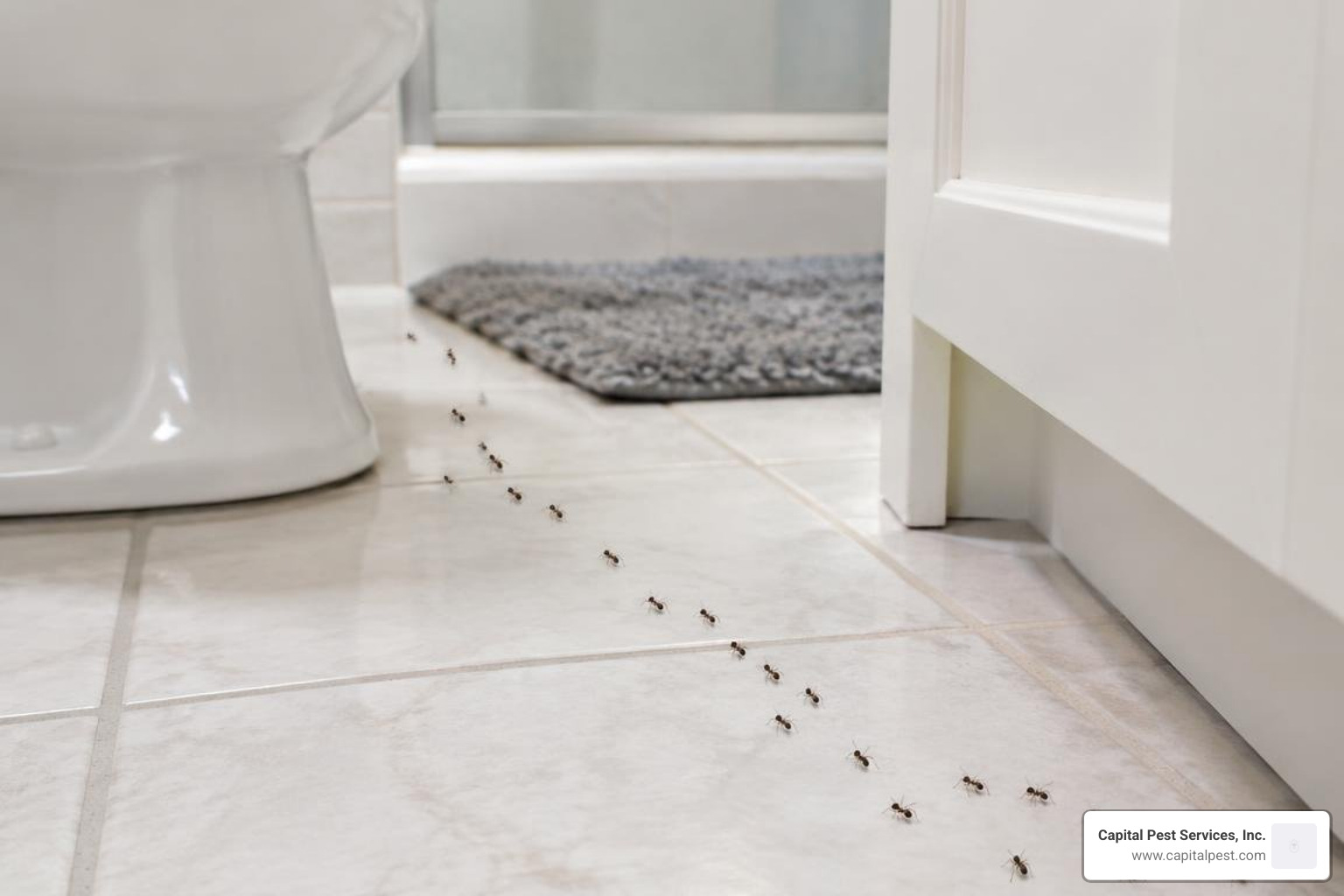
Seeing a steady line of ants marching along your bathtub or vanity can feel baffling, especially if you never bring food into the room. Most people assume insects only enter homes searching for sugary crumbs on kitchen countertops. However, as detailed in this entomological guide to bathroom ant behavior, moisture is often an even stronger draw than food. A 2004 study published in the Journal of Economic Entomology demonstrated that common household species—particularly Tapinoma sessile (the odorous house ant)—consistently direct their scout workforce toward sources of water before searching for food.
Bathrooms serve as indoor oases for foraging insects. Leaky supply lines, condensation on porcelain tanks, damp bath mats, and puddles around shower seals create a reliable, year-round water supply. Beyond water, bathrooms provide surprising food sources. Microscopic deposits of shed skin cells, strands of hair containing keratin, toothpaste spills, and residues from fruit-scented shampoos or botanical soaps provide all the proteins and carbohydrates a colony needs to thrive.
Plumbing lines and electrical conduits also create hidden highways directly into bathroom wall voids. When gaps around pipes, subflooring, and tile grout remain unsealed, scout ants quickly slip inside to establish satellite nests near these ideal resources.
Identifying Common Bathroom Ant Species
Effectively solving an infestation requires identifying which species has taken up residence. Different ants prefer different nesting habitats and food sources.
| Species | Physical Appearance | Common Bathroom Nesting Sites | Dietary & Bait Preferences |
|---|---|---|---|
| Odorous House Ant (Tapinoma sessile) | Tiny (1/16 to 1/8 inch), dark brown to black; emits a rotten coconut smell when crushed | Wall voids near hot-water pipes, behind baseboards, beneath damp bath mats | Sweets, sugary liquid baits, honeydew |
| Pharaoh Ant (Monomorium pharaonis) | Very small (1/16 inch), pale yellow to light reddish-brown with a darker abdomen | Warm, inaccessible wall cavities, pipe insulation, behind shower surrounds | Sweets, fats, proteins; highly prone to colony budding if sprayed |
| Carpenter Ant (Camponotus spp.) | Large (1/4 to 1/2 inch), solid black or reddish-black | Water-damaged subfloors, rotting framing around tubs and leaking shower pans | Sweets, dead insects, proteins; excavates smooth galleries in damp wood |
| Pavement Ant (Tetramorium immigrans) | Small (1/8 inch), dark brown to black with parallel ridges on the head and thorax | Underneath concrete slab foundations, beneath floor tiles, behind baseboards | Greasy residues, dead skin, proteins, sweets |
Odorous house ants are the most frequent culprits in North Carolina homes, quickly building multiple satellite nests throughout bathroom walls. Pharaoh ants are notorious for “budding”—a defense mechanism where worker ants scatter to form dozens of new colonies if they encounter repellent surface sprays. Carpenter ants do not eat wood, but they hollow out water-damaged framing around tubs and showers, which can cause significant structural damage over time.
Moisture, Drains, and Organic Debris
Scout ants are constantly searching for resources to support their queen and expanding brood. In a bathroom, water accumulation is rarely confined to the sink basin. Daily showers raise humidity levels, causing steam to condense behind mirrors, under vanities, and along floorboards.
Drains are another major attraction. Over time, drains accumulate organic sludge made of soap scum, body oils, and shed hair. These deposits give off chemical scents that attract ants straight up plumbing pathways and into overflow drains. When floor mats stay damp against tile or vinyl flooring, they trap moisture against the grout, creating an ideal microclimate for foraging workers.
How to Get Rid of Bathroom Ants Effectively
The most common mistake homeowners make is spraying visible ants with household cleaning sprays or aerosol insecticides. While this kills the foraging workers on contact, it does nothing to address the thousands of ants—and the egg-laying queen—tucked safely inside the wall.
Colony eradication relies on a biological process called trophallaxis, where worker ants ingest food and carry it back to share with larvae and the queen through mutual feeding. According to extension research on household ant baits, slow-acting toxicants allow worker ants enough time to transport the bait throughout the nest before succumbing to the active ingredient.
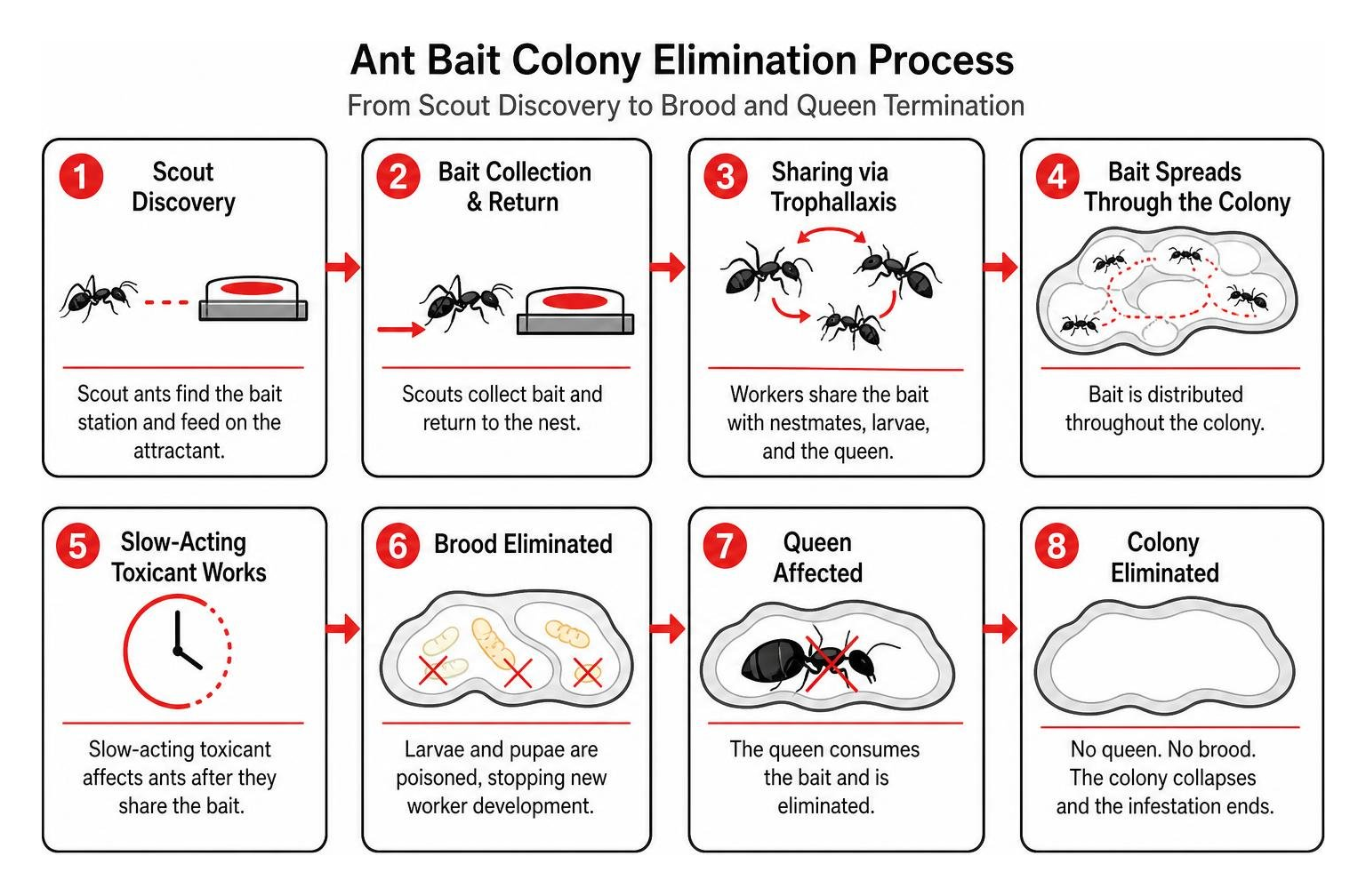
A meta-analysis by Klotz et al. (2000, Journal of Economic Entomology) confirmed that low-concentration boric-acid baits (0.5% to 1%) rank among the most dependable options for eliminating whole colonies of odorous house ants. Professional biocidal gels containing active ingredients like imidacloprid, indoxacarb, or fipronil typically show noticeable reductions in ant activity within 48 to 72 hours, with complete colony collapse achieved within a 7-to-14-day protocol.
How to Safely Treat Ants in My Bathroom Around Kids and Pets
Safety is essential when treating bathrooms, especially around curious toddlers and pets. Never spray broad-spectrum chemical aerosols over exposed bathroom fixtures, bath toys, or baseboards.
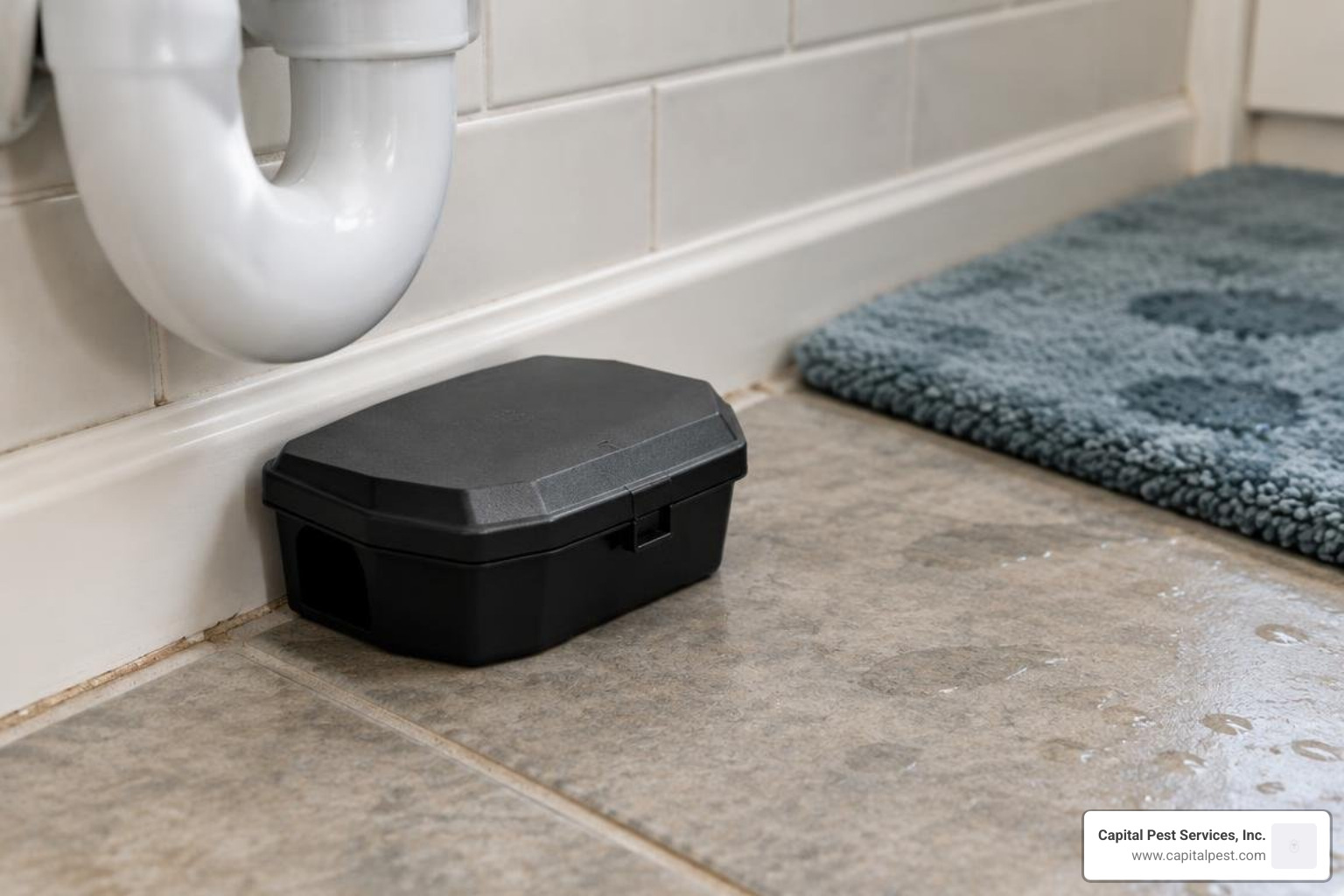
Instead, use enclosed, tamper-resistant bait stations that keep the active toxicant out of reach of children, cats, and dogs. For targeted gel applications, place small, pea-sized droplets inside dark, inaccessible locations where pets cannot reach—such as:
- Inside the vanity cabinet behind plumbing cutouts
- Behind the toilet tank along the baseboard seam
- Inside the motor access panel of jetted tubs
- Along the narrow crack between the vanity kickplate and the subfloor
These localized placements keep the active ingredients safely contained while delivering bait directly along active ant highways.
Natural Trail Disruptors vs. Delayed-Action Baits
Home remedies like white vinegar, diluted isopropyl alcohol, and essential oils are often recommended online, but it helps to understand their real-world capabilities and limitations.
| Treatment Type | Mechanism of Action | Speed of Impact | Colony Impact | Best Used For |
|---|---|---|---|---|
| White Vinegar & Water | Dissolves hydrocarbon pheromone trails; acts as a temporary communication disruptor | Immediate surface disruption | None; leaves the queen and nest completely unharmed | Cleaning foraging trails without leaving chemical residues |
| Essential Oils (Peppermint/Tea Tree) | Strong olfactory repellent; masks attractant scents | Immediate contact repulsion | None; can cause pharaoh ants to scatter and bud | Temporary deterrence in sensitive surface areas |
| Boric Acid / Borax Sugar Baits | Slow-acting stomach poison; worker ants carry it back via trophallaxis | 3 to 7 days for initial decline | High; steadily eliminates brood and queen | DIY colony control when mixed at correct low concentrations (0.5–1%) |
| Professional Biocidal Gels (Fipronil, Indoxacarb) | Delayed-action neurotoxicant or metabolic blocker targeting the entire colony | 48 to 72 hours; total control in 1–2 weeks | Total eradication; wipes out multi-queen satellite nests | Heavy, persistent, or structural infestations |
While white vinegar acts as a temporary deterrent by clearing away pheromone trails, it will not resolve an active infestation on its own. For permanent results, combine thorough cleaning with slow-acting baits that reach the source of the colony.
Step-by-Step Prevention: Sealing Entry Points and Eliminating Moisture
Once you begin baiting, focus on sealing entry points and correcting the environmental conditions that attracted the ants in the first place. You can also reduce surrounding pest pressure in your lawn by flattening outdoor ant hills before outdoor colonies expand inside.
Why Ants in My Bathroom Keep Returning After Cleaning
If you find that ants return just days after you scrub the bathroom, hidden structural issues are likely at play.
Structural Sealing and Long-Term Humidity Control
Maintaining an ant-free bathroom requires consistent moisture control and proper physical barriers. Inspect the escutcheon plates where plumbing supply pipes enter the wall; if they fit loosely, backfill the gap with silicone sealant. Check the vanity baseboard and caulk along the seam where the cabinet meets the tile floor.
Keep indoor relative humidity below 50% by ensuring your bathroom exhaust fan is sized correctly and venting outdoors. If the room lacks an exhaust fan, run a small portable dehumidifier after long showers. Finally, empty bathroom trash bins regularly and rinse them out periodically to prevent discarded personal care items and sweet-scented hygiene products from attracting foraging scouts.
Frequently Asked Questions About Bathroom Ants
What does the presence of flying ants in the bathroom mean?
Winged ants (known as alates or reproductive swarmers) indicate that a mature, well-established colony is nesting nearby. In spring and summer, colonies produce winged males and queens that take flight to mate and start new colonies. Finding them indoors usually means the nest is inside your wall voids, subfloors, or crawlspace.
It is also important to tell flying ants apart from termite swarmers. Ants have elbowed antennae, narrow “wasp-like” waists, and front wings that are longer than their hind wings. Termites have straight antennae, broad waists, and four wings of equal length.
Can ants crawl up through the bathtub or sink drain?
Ants rarely climb directly through functional plumbing pipes because the curved “P-trap” beneath sinks and tubs holds water, creating a liquid barrier that blocks pests. Instead, ants typically follow the dry exterior of the drainpipe through holes cut in the subfloor or wallboard.
However, they can enter dry overflow drains, or step down into open drains to feed on trapped hair, body oils, and soap residue when the fixtures are not in use.
Does white vinegar kill the ant colony permanently?
No. White vinegar is an acetic acid solution that dissolves hydrocarbon scent trails, temporarily confusing worker ants and keeping them from following their usual path. It does not transfer through the colony, nor does it harm the queen or brood. While vinegar is a safe, non-toxic cleaner for disrupting active trails, it must be paired with slow-acting baits to eliminate the colony for good.
Professional Extermination and Long-Term Colony Elimination
When DIY baits fail, or when you are dealing with stubborn species like pharaoh ants or wood-damaging carpenter ants hidden inside wall voids, a professional approach is the safest and most reliable way forward.
At Capital Pest Services, Inc., we provide homeowners throughout Raleigh, Durham, Cary, Chapel Hill, Wake Forest, and surrounding Triangle communities with comprehensive targeted residential ant control. As an NPA-accredited team, we combine detailed structural inspections, low-impact applications, and proven integrated pest management principles to eliminate the source of the infestation.
Whether you need a one-time targeted treatment or ongoing year-round protection, we take the guesswork out of home pest control. If ants continue invading your bathroom, contact our local team today to set up an inspection and protect your home for the long haul.
Capital Pest is proud to be a family-owned and operated pest control company serving Raleigh, NC and its surrounding area (Chapel Hill, Wake Forest, Clayton, Pinehurst, Pittsboro, Fuquay-Varina, etc). Contact us for our pest control services today!