Can You Really Prevent Mice in House Structures with Steel Wool?
The Biology of Entry: Why Trapping Alone Fails
Yes, steel wool can help prevent mice in house structures, but only when it is packed tightly into gaps and capped with a chew-resistant sealant. Used alone, steel wool is a temporary fix because standard steel wool rusts and breaks down when exposed to moisture. For lasting mouse proofing, pair metal mesh with exterior-grade sealant and focus on sealing every opening larger than 1/4 inch before relying on traps.
When property owners discover rodents indoors, their initial reaction is almost always to buy a pack of wooden snap traps. While population reduction is important, relying entirely on traps treats only the symptom of the problem rather than its root cause. To understand why physical exclusion is vital, you have to look at the anatomy and reproductive habits of the common house mouse (Mus musculus).
A house mouse can easily slip through an opening measuring just 1/4 inch across—roughly the diameter of a standard No. 2 pencil. For larger rodents, rats need about 1/2 inch to gain entry, but mice need only a fraction of that space. Their rib cages and clavicles are remarkably flexible, allowing them to flatten their bodies and push through tiny structural gaps. If a mouse can fit its skull through a crevice, the rest of its body will follow without resistance.
Mice are also agile climbers and jumpers. A typical adult house mouse can jump vertically up to 12 inches from a flat floor onto an elevated surface. They can scale rough brick walls, run along utility conduits, and navigate complex rooflines.
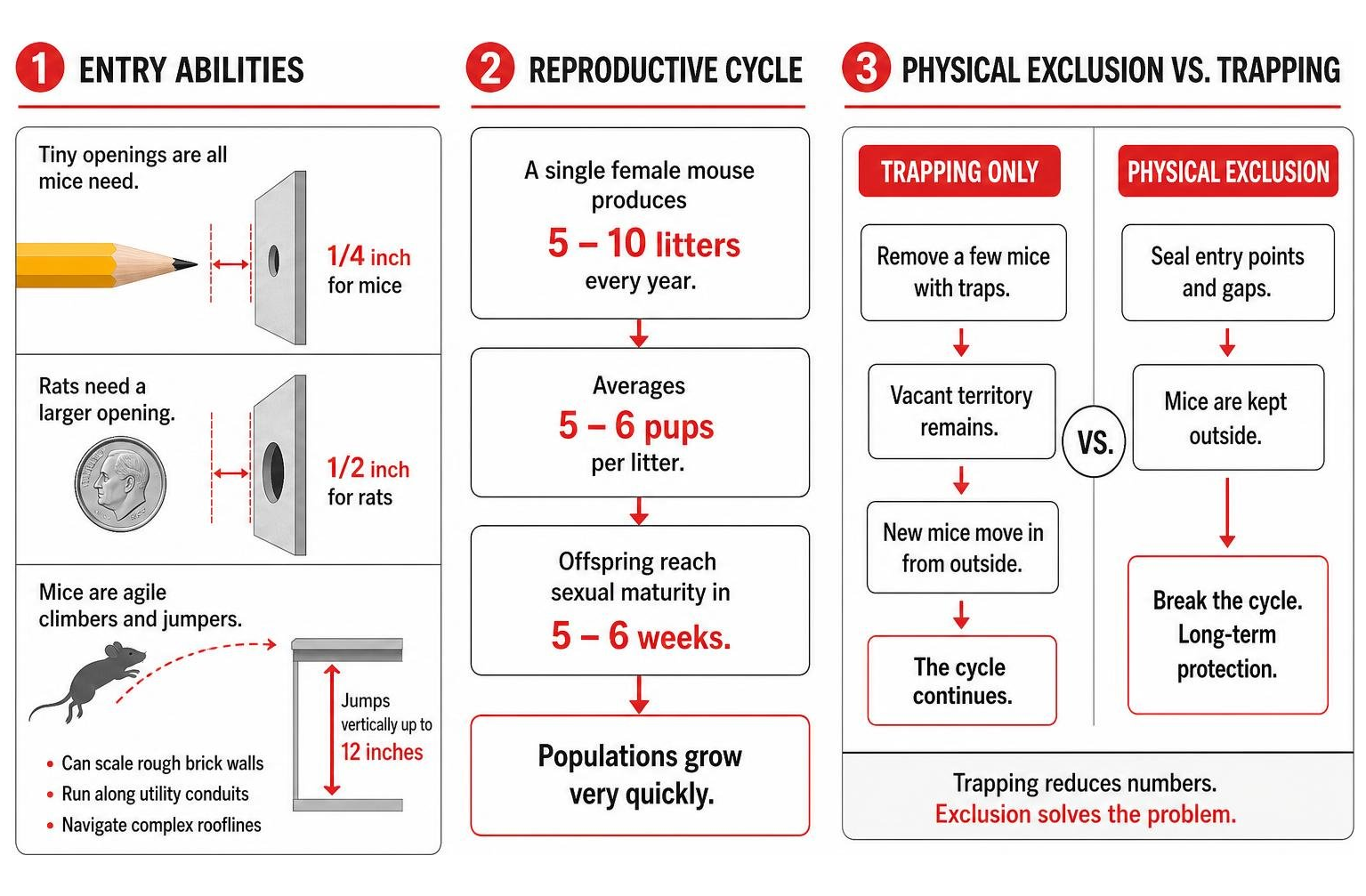
According to the University of California IPM guidelines on house mice, breeding cycles also make trapping-only approaches unsustainable over time. A single female mouse produces between 5 and 10 litters every year, averaging 5 to 6 pups per litter. These offspring reach sexual maturity in just 5 to 6 weeks.
Without sealing the structure, removing five mice with snap traps merely creates vacant territory for new mice living outside to move in and take their place.
Why Trapping Fails Without Mouse Proofing Your House
Mice are habitual, shelter-seeking creatures that consume up to 20% of their body weight each day across roughly 200 small feeding bouts every night. House mice rarely venture more than 30 feet from their nests and established food supplies. When an exterior structural gap sits within 30 feet of your kitchen pantry, pet food dishes, or trash cans, your home becomes a prime target.
When you trap mice without sealing structural access points:
- Outdoor populations detect the pheromone-laden scent trails left behind by previous rodents.
- Cold weather or seasonal shifts continually drive new mice toward indoor warmth and shelter.
- The remaining breeding pairs inside or nearby quickly replenish any localized population losses.
- Structural vulnerabilities remain completely exposed to future invasions.
Physical exclusion creates an impenetrable barrier that permanently separates your living space from exterior rodent populations.
Exclusion Materials: What Stops Mice and What Fails
Selecting the right barrier material is the single most important factor in long-term rodent exclusion. Rodent incisors grow continuously throughout their lives, coated in an enamel hard enough to gnaw through wood, plastic, rubber, vinyl, aluminum flashing, and even low-density concrete blocks.
Many well-meaning homeowners attempt quick fixes using standalone expanding foam from an aerosol can. Mice chew straight through cured expanding foam within minutes, often using the shredded polyurethane as nesting material inside wall voids.
| Material | Durability | Chew-Resistance | Weather Resistance | Best Use Case |
|---|---|---|---|---|
| Coarse Steel Wool (Grade #2 to #4) | Moderate (1–2 yrs outdoors) | High | Poor (rusts when exposed to moisture) | Interior dry gaps, temporary indoor pipe seals |
| Copper Mesh (Stuff-Fit style) | High (5+ years) | High | Excellent (100% rust-proof) | Exterior weep holes, plumbing voids, siding gaps |
| Stainless Steel Fill Fabric | Very High (10+ years) | Maximum | Excellent (rust-proof, high tensile) | Critical exterior penetrations, HVAC conduits |
| 24-Gauge Hardware Cloth (1/4″) | Very High (10+ years) | Maximum | Excellent (galvanized finish) | Foundation vents, crawl space louvers, soffits |
| Expanding Foam (Alone) | Low | None (mice gnaw through easily) | Moderate | Do not use alone; only use to anchor metal mesh |
| Elastomeric / Polyurethane Sealant | High (5–8 years) | Moderate (when capping metal) | Excellent | Weatherproofing over metal mesh plugs |
The Core Materials for Mouse Proofing Your House
To build a permanent barrier, use materials engineered to resist relentless gnawing and harsh weather:
- Copper Mesh and Stainless Steel Fill Fabric: These woven metal products will never rust, corrode, or degrade when exposed to moisture or humidity. When compressed and packed tightly into cracks, their sharp, interlocking fibers deliver an abrasive surface that rodents cannot chew through.
- 24-Gauge, 1/4-inch Galvanized Hardware Cloth: Specified by university extension programs across the country, this rigid woven wire mesh provides protection for larger structural voids. Any mesh opening larger than 1/4 inch will allow mice to slip right through, while openings smaller than 1/4 inch can restrict essential airflow through crawl space vents and attic louvers.
- Elastomeric Caulk and Heavy-Duty Polyurethane Sealants: These premium sealants anchor metal mesh inserts, block air drafts that attract pests, and protect structural openings against exterior moisture.
How to Inspect and Map Rodent Entry Routes
A thorough inspection is the foundation of any effective rodent control plan. You must evaluate your home with the eye of an architect and the mindset of a rodent. Grab a high-output LED flashlight, a standard pencil (to gauge gap sizes), a notepad, and a mirror for checking tight angles.
Begin your survey at ground level and move systematically around the entire exterior perimeter:
- Identify Rub Marks and Grease Stains: Rodent fur contains natural oils and dirt. As mice travel along baseboards, siding ledges, and foundation lips, they leave behind dark, greasy smudge marks.
- Look for Droppings: Fresh mouse droppings are dark brown or black, roughly 3 to 6 mm long with pointed ends (resembling small grains of rice).
- Track Daylight Gaps: From inside a dark basement, garage, or crawl space, check for daylight shining through perimeter walls, baseboards, or sill plates. Any visible light beam indicates an entry point large enough for a mouse.
Exterior Foundation and Utility Penetrations
Utility entry points represent the single most common access route into modern residential homes. When plumbers, electricians, and HVAC installers run pipes and wires through exterior siding or masonry, they frequently cut holes larger than the lines themselves.
Check these critical penetration areas:
- HVAC Refrigerant Lines and Electrical Conduits: Inspect the point where copper refrigerant pipes and wiring enter your home’s exterior wall.
- Plumbing Stubs and Hose Bibbs: Water supply lines often have gaps around the backplates.
- Brick Weep Holes: These necessary drainage slots along brick veneers allow water drainage but offer an open door to mice unless backed with breathable metal mesh.
- Foundation Cracks: Settle cracks in poured concrete or cinder blocks that exceed 1/4 inch must be repaired. You can evaluate structural repairs and local exclusion and inspection costs to match your home’s foundation needs.
Doors, Rooflines, and Ventilation Openings
Mice do not restrict themselves to the ground. Because they can jump a foot into the air and run vertically along brickwork, you must inspect elevated features as well:
- Garage Door Thresholds and Weatherstripping: Look closely at the lower bottom corners of your garage door. The rubber gasket often deteriorates or gets chewed away, leaving openings along the jamb.
- Exterior Door Sweeps: If you can slide a pencil under an exterior door, an adult mouse can walk right in.
- Dryer and Kitchen Exhaust Vents: Plastic exhaust louvers often stick open or warp, allowing rodents direct access into ductwork.
- Soffits, Fascia Boards, and Attic Louvers: Check the roofline where roof valleys meet gutters. Mice easily climb downspouts and squeeze through loose fascia boards into attic insulation.
Step-by-Step Guide to Mouse Proofing Your House
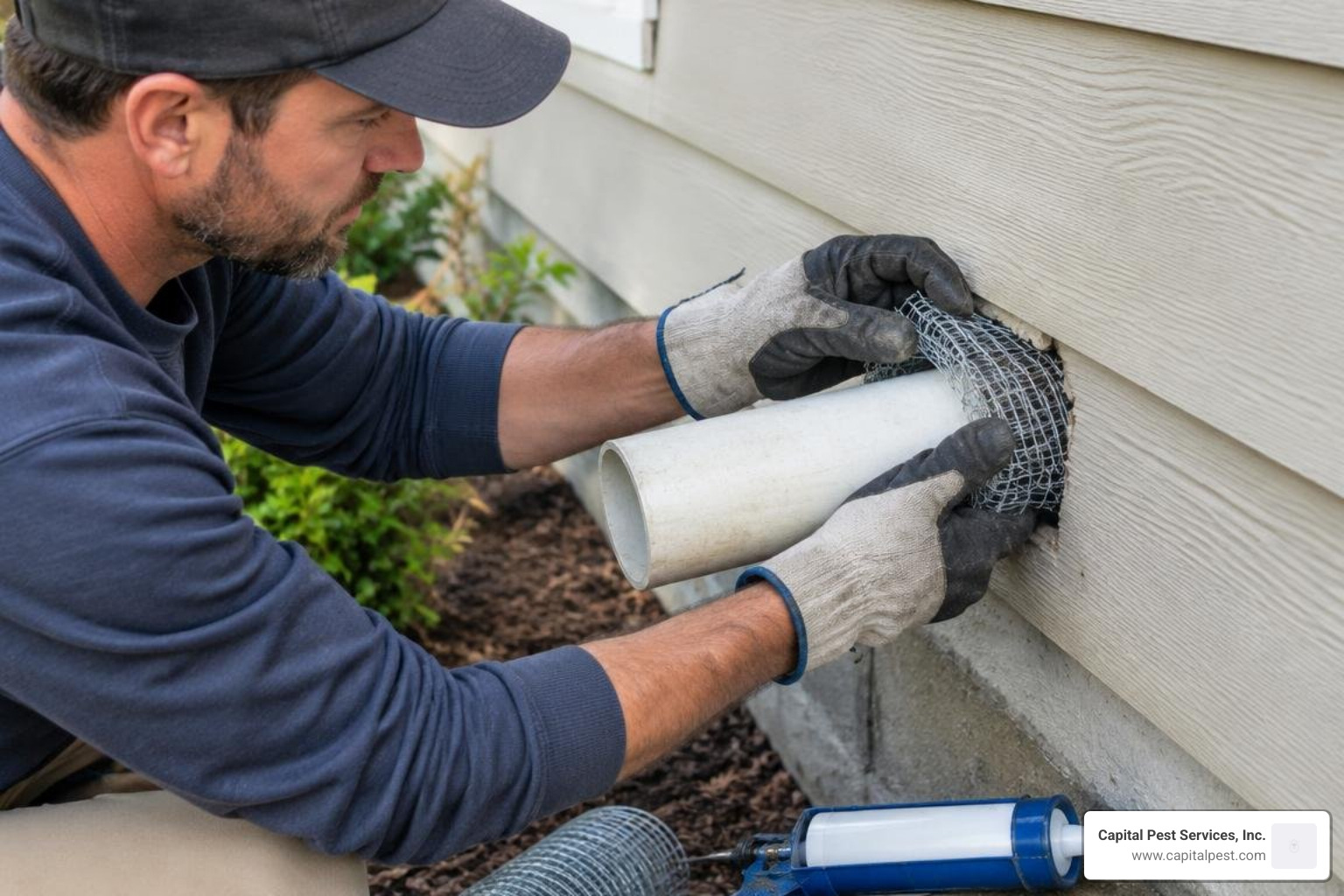
Sealing structural gaps requires precision and the correct installation sequence. Follow this step-by-step process to ensure your exclusion repairs hold up over time.
Step 1: Clean and Sanitize the Void
Before sealing any opening, prepare the area safely:
- Safety Protocol: Put on disposable nitrile gloves and an N95 respirator mask, especially when working in enclosed spaces containing rodent debris.
- Disinfect Without Aerosolizing: Never sweep or vacuum dry rodent droppings, as this can launch airborne pathogen particles. Spray droppings and nesting material with an EPA-registered disinfectant or a 1:10 household bleach solution.
- Wipe Clean: Let the disinfectant sit for 10 minutes, wipe the void clean using disposable paper towels, and allow the surfaces to dry completely before applying sealants.
Step 2: Pack and Anchor the Metal Barrier
A common DIY mistake is applying caulk or spray foam directly over a bare hole without a metal core.
- Cut the Mesh: Using heavy wire snips, cut a piece of copper mesh or stainless steel fill fabric slightly larger than the gap (roughly 1.5 to 2 times the size of the opening).
- Compress and Insert: Roll or fold the mesh tightly and use a flat-head screwdriver or putty knife to pack it deep into the crevice.
- Verify Density: Pack the material firmly until it sits roughly 1/4 to 1/2 inch below the wall surface. The mesh should be snug enough that you cannot pull it out easily with your fingertips.
Step 3: Seal and Cap Against Weather
With the metal core securely seated in the opening, apply your finishing sealant:
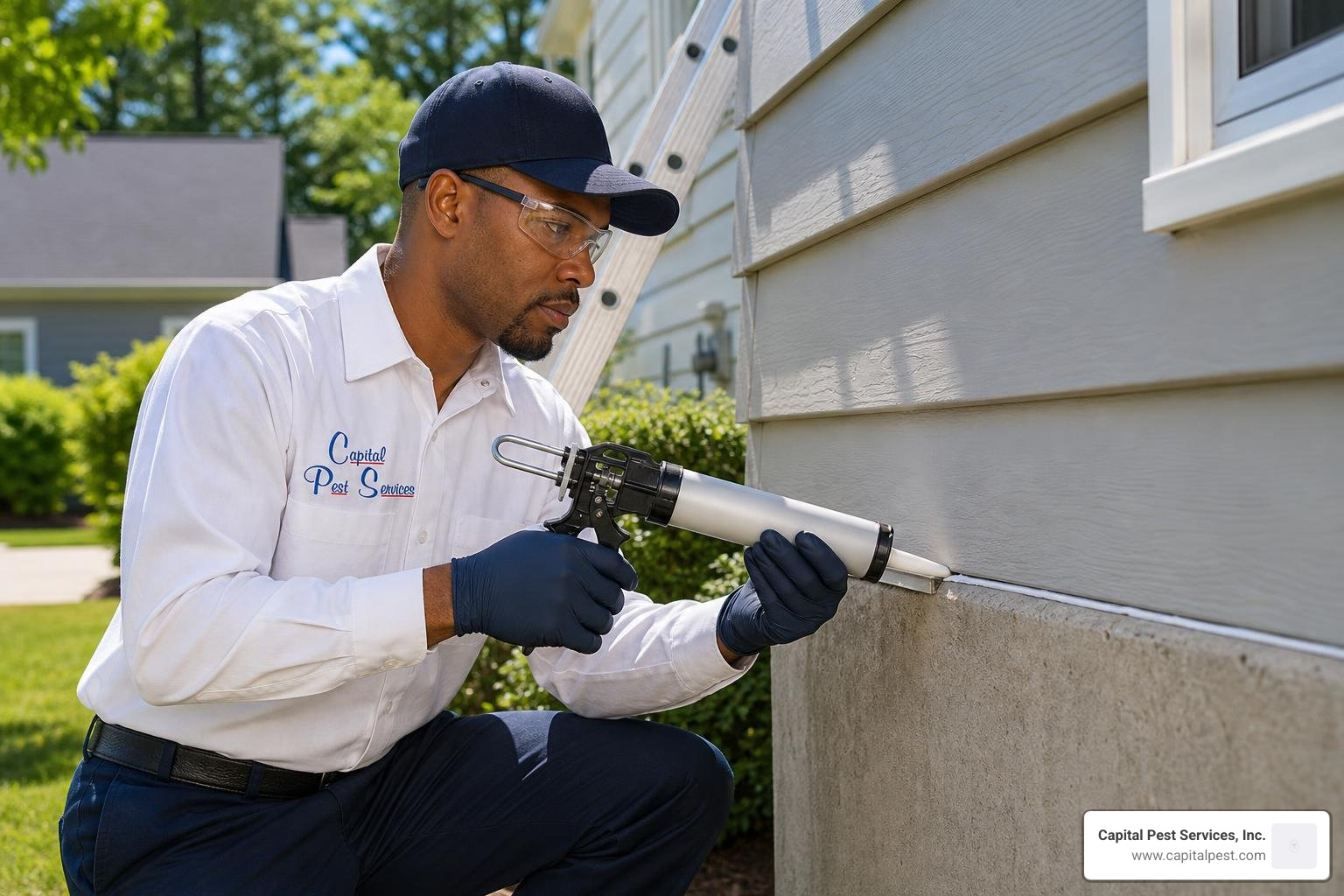
- Apply Sealant: Inject exterior-grade polyurethane sealant or elastomeric caulk over the packed metal mesh, filling the remaining void flush with the surrounding wall.
- Smooth and Seal: Tool the sealant flat using a putty knife to ensure full contact with the edges of the opening. This locks the metal fibers in place, prevents mice from pulling on loose strands, blocks indoor scent plumes, and seals out moisture and drafts.
- Cure Time: Allow the sealant to cure fully according to the manufacturer’s directions (typically 24 to 48 hours) before disturbing the area.
Managing Interior Mice After Completing Exclusion
Once you have sealed your home’s exterior perimeter, any mice remaining indoors are trapped inside. These rodents will quickly begin searching for alternate food and water sources. This is the stage where population control becomes essential.
For fast results, use proven homeowner strategies for fast mouse removal alongside your exclusion work.
Avoid placing loose rodenticide baits inside your living areas or attics. Poisoned mice often crawl deep inside wall voids, crawl spaces, or subflooring before dying, leading to severe odor problems, fly infestations, and safety risks for household pets.
Continue monitoring your indoor snap traps daily. When you go 7 to 14 consecutive days with zero trap triggers, no fresh droppings, and no night noises, your exclusion and trapping program is complete.
Frequently Asked Questions About Mouse Exclusion
Does regular steel wool rust when used outside?
Yes. Standard hardware-store steel wool is manufactured from raw carbon steel. When exposed to rain, morning dew, or outdoor humidity, it oxidizes and rusts quickly.
Within a few months, rusted steel wool breaks down into a brittle brown powder that falls right out of the opening, leaving your home unprotected.
For exterior sealing, always choose 100% pure copper mesh, stainless steel fill fabric, or galvanized hardware cloth. Standard steel wool should only be used as a temporary indoor fix in dry locations.
Why is expanding foam alone ineffective against rodents?
Polyurethane expanding foam cures into a lightweight, airy cellular plastic that offers practically no mechanical resistance against rodent teeth. Mice can easily chew through hardened spray foam within minutes to create entry tunnels.
Rodent-block expanding foams contain bittering agents designed to deter chewing, but these agents will not stop determined rodents searching for food or warmth. Expanding foam should only ever serve as a backing agent or weather seal around a dense core of stainless steel or copper mesh.
How do I confirm my mouse-proofing was successful?
You can verify your exclusion repairs using a simple three-point evaluation over a two-week period:
- Trap Success Trends: Interior snap traps should quickly catch any trapped rodents within the first 3 to 5 days, tapering off to zero captures as indoor numbers drop.
- Absence of Fresh Droppings: Vacuum or wipe away existing droppings during your initial cleanup. Check those same surfaces a week later; finding zero new droppings confirms no new mice are entering.
- Visual Seal Integrity: Inspect your sealed exterior points weekly. If a patch remains undisturbed without scratch marks, loose fibers, or chewed edges, your physical barrier is holding up.
Professional Rodent Exclusion and Long-Term Protection
While simple pipe gaps and door thresholds are manageable DIY projects, complex structural vulnerabilities often demand professional equipment and expertise. Large-scale rodent infestations, deep nesting sites inside finished attics, compromised ductwork, and gnawed electrical wiring present serious health, structural, and fire hazards that require immediate intervention.
At Capital Pest Services, Inc., we protect homes throughout the Raleigh-Durham Triangle—including Raleigh, Durham, Cary, Chapel Hill, Wake Forest, Apex, Morrisville, Holly Springs, Garner, Fuquay-Varina, Clayton, Knightdale, Wendell, Zebulon, Rolesville, Youngsville, Franklinton, Oxford, Pittsboro, and Sanford.
Our NPA-accredited team uses advanced integrated pest management (IPM) techniques to inspect, exclude, and eliminate rodent populations safely and permanently.
When you need lasting protection against mice, rats, and other nuisance pests, turn to our team for comprehensive rodent control services designed for North Carolina homes. Give our local experts a call today to schedule your comprehensive home inspection and take the first step toward a secure, mouse-free home.
Capital Pest is proud to be a family-owned and operated pest control company serving Raleigh, NC and its surrounding area (Chapel Hill, Wake Forest, Clayton, Pinehurst, Pittsboro, Fuquay-Varina, etc). Contact us for our pest control services today!