Smart Homeowner Strategies for Fast and Reliable Mouse Removal
Identifying Rodents, Entry Points, and Signs of Infestation
The fastest and most reliable approach to mouse removal combines three steps: strategic trapping along active runways, sealing every dime-sized entry point with gnaw-proof materials such as copper mesh and silicone sealant, and scheduling a professional Integrated Pest Management inspection to locate hidden nesting sites. This method clears active rodents quickly while preventing new mice from entering behind them.
Detecting a rodent problem early can save thousands of dollars in home repairs and keep your living environment sanitary. Because rodents are naturally shy creatures of habit that avoid bright lights, infestations often grow silently behind drywall, under subfloors, and within attic spaces before an animal is ever spotted out in the open.
Knowing the subtle indicators of rodent activity helps you take action before a few scouts turn into a full-scale colony. Look for these hallmark signs throughout your home:
- Fecal Pellets: Mouse droppings are small, dark, rod-shaped pellets measuring roughly 1/8 to 1/4 inch with pointed ends. In contrast, rat droppings are noticeably larger, blunt-ended, and measure up to 3/4 inch. Fresh droppings are dark and moist, whereas older droppings become dry, hard, and gray.
- Gnaw Marks: Rodents possess continuously growing incisors that require constant grinding. Fresh chew marks on pantry cardboard, baseboards, plastic storage tubs, and wooden framing appear light-colored before oxidizing to a darker tone over time.
- Grease Rub Marks: Mice and rats travel along identical routes along baseboards and structural beams. Their oily fur deposits dark grease trails and dirt smudges along walls, studs, and around floor entry holes.
- Scratching and Scurrying Sounds: As nocturnal animals, rodents become active after dark. You might hear light tapping, squeaking, or frantic scratching within wall cavities, above bedroom ceilings, or beneath floorboards.
- Nesting Materials: Shredded fiberglass attic insulation, paper towels, cardboard fibers, and fabric tucked into hidden corners, crawlspaces, or back corners of cabinets signal active nesting.
- Unusual Pet Behavior: Dogs and cats have acute hearing and a keen sense of smell. If a family pet repeatedly fixates on a specific baseboard, paws at the bottom of the stove, or barks at an apparently empty wall, they are often tracking rodents moving inside the wall cavity.
Mouse vs. Rat: Species Identification and Warning Signs
Correctly identifying whether you have mice or rats is essential for effective treatment because their behaviors, trap preferences, and structural entry methods differ significantly.
The two most common residential mice are the House Mouse (Mus musculus) and the Deer Mouse (Peromyscus maniculatus). House mice are typically light brown to dusty gray with cream-colored bellies, weighing only 0.5 to 1 ounce. A captive house mouse sleeps roughly 12.5 hours per day, emerging during crepuscular and nocturnal hours to forage within a small radius of its nest. Deer mice are slightly larger, sporting distinctive white feet, bi-colored tails, and white undersides; they are frequent invaders of rural and suburban outbuildings, attics, and crawlspaces. Homeowners can read more about house mouse biology and nocturnal behavior to understand how quickly their breeding cycles can escalate an infestation.
By contrast, the Norway Rat (brown rat) and the Roof Rat are significantly larger pests. An adult brown rat weighs between 250 grams (9 oz) for females and 350 grams (12 oz) for males, with exceptional specimens reaching up to 900 to 1,000 grams. Brown rats have acute hearing, sensitivity to ultrasound, an exceptional olfactory sense, and a resting heart rate between 300 and 400 beats per minute.
Interestingly, house mice exhibit an instinctive fear of rats due to a natural behavior known as muricide, wherein rats actively hunt, kill, and consume mice. Consequently, you will rarely find an active mouse population and a dominant rat colony sharing the exact same localized feeding zone.
| Rodent Metric | House Mouse (Mus musculus) | Brown Rat (Rattus norvegicus) |
|---|---|---|
| Average Body Weight | 12 to 30 grams (0.4 – 1 oz) | 250 to 350+ grams (9 – 12 oz) |
| Dropping Size & Shape | 1/8 – 1/4 inch; slender with pointed ends | 1/2 – 3/4 inch; thick with blunt ends |
| Daily Sleep Duration | ~12.5 hours per day | ~10 hours per day |
| Entry Hole Requirement | Dime-sized (approx. 6 mm / 1/4 inch) | Quarter-sized (approx. 20 mm / 3/4 inch) |
| Foraging Behavior | Inquisitive; samples multiple food spots | Neophobic; highly suspicious of new objects |
| Vocalizations & Senses | High-pitched squeaks; acute hearing | Sensitive to ultrasound; keen scent tracking |
How Rodents Enter Homes and the Damage They Cause
Mice possess flexible skeletal structures that allow them to squeeze through openings no larger than a dime (about 6 millimeters). If their skull fits through a crevice, the rest of their body can compress and follow.
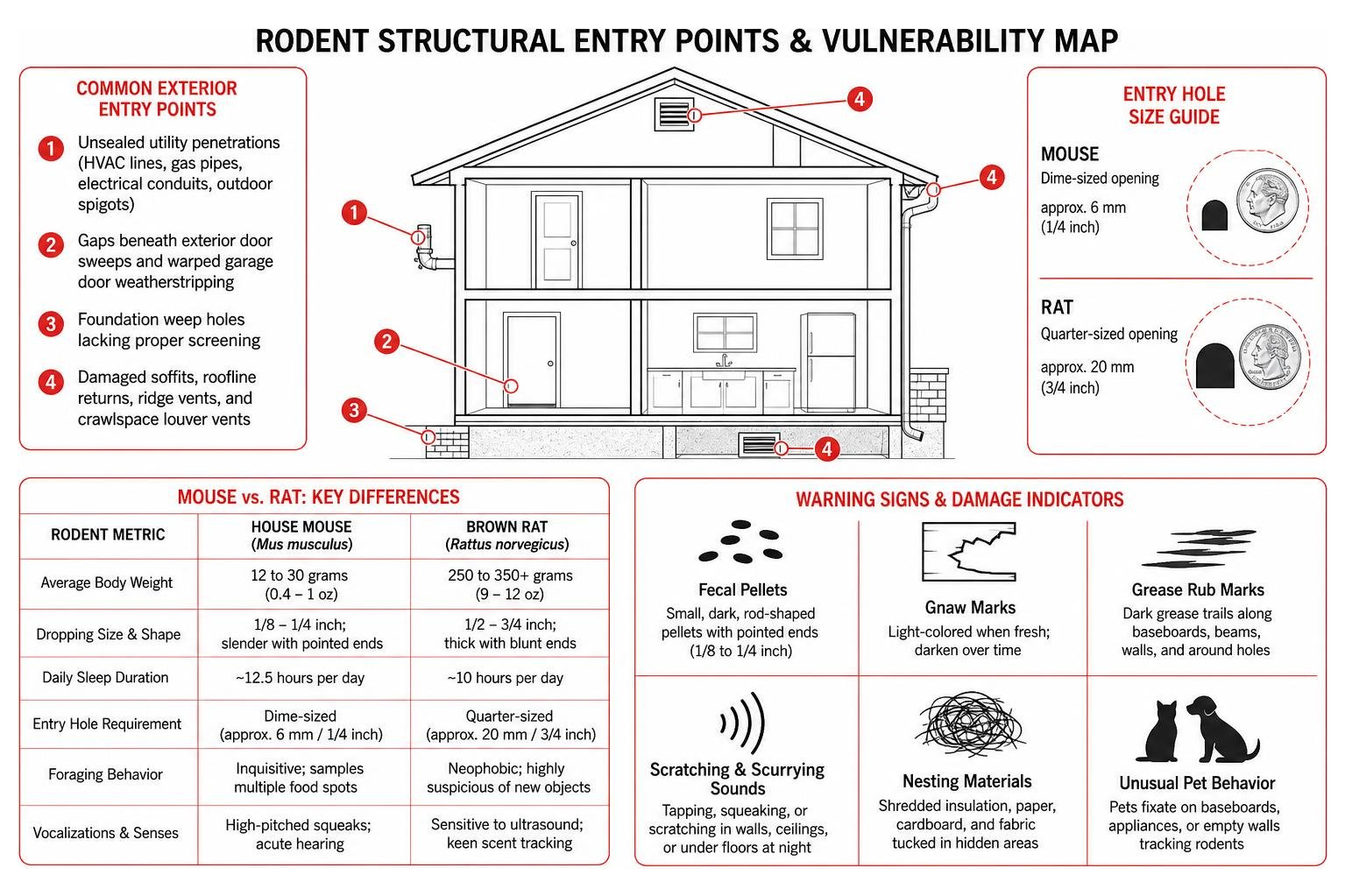
Common exterior entryways include:
- Unsealed utility penetrations (HVAC lines, gas pipes, electrical conduits, outdoor spigots)
- Gaps beneath exterior door sweeps and warped garage door weatherstripping
- Foundation weep holes lacking proper screening
- Damaged soffits, roofline returns, ridge vents, and crawlspace louver vents
- Gaps between siding and brick veneer masonry
Once indoors, rodents present serious safety and health risks. To keep their incisors sharp and trimmed, mice persistently gnaw on structural wood, PVC plumbing pipes, and electrical cables. Chewed wiring strips away protective insulation, creating exposed arcs that represent a leading cause of unexplained residential structure fires. Furthermore, their continuous urination and shedding of fecal matter foul attic insulation, introduce allergens, and contaminate pantry items with pathogens like Salmonella and Lymphocytic Choriomeningitis (LCMV). Implementing effective rodent control is vital to safeguard your family’s health and maintain your home’s structural integrity.
Finding the Best Professional Mice Removal Near Me
When searching for the best local mouse exterminator, look beyond basic trap-setting services. Modern rodent management requires an Integrated Pest Management (IPM) methodology that balances immediate population elimination with structural exclusion and environmental sanitation.
When vetting local exterminators in areas like Raleigh, Durham, Cary, Wake Forest, Chapel Hill, or Apex, evaluate providers based on these standards:
- Credentials and Accreditation: Verify that the company holds valid state pest control licensing, appropriate liability insurance, and recognition from industry organizations like the National Pest Management Association (NPMA).
- Comprehensive Inspections: Reputable specialists never prescribe treatments over the phone without conducting an on-site evaluation of the foundation, crawlspace, attic, and living quarters.
- Permanent Exclusion Capabilities: A quality service provider does not rely solely on chemical baits. They identify physical entry gaps and seal them using permanent, rodent-proof materials rather than temporary expanding foams that mice easily chew through.
- Safety-First Protocols: Inquire about their use of tamper-resistant bait stations and non-toxic interior trapping strategies that safeguard children and family pets.
- Clear Guarantees: Look for companies that stand behind their work with follow-up monitoring and service warranties.
What to Expect When Hiring Mice Removal Near Me
A professional rodent removal visit follows a systematic process designed to clear active pests and prevent future invasions. When our technicians arrive at your property, you can expect a comprehensive, multi-step treatment:
- Initial Property Assessment: We conduct an intensive interior and exterior diagnostic sweep, charting rodent pathways, mapping entry crevices, noting nesting hot spots in attics or crawlspaces, and identifying indoor food or moisture attractants.
- Targeted Trapping and Removal: We deploy precision snap traps and mechanical capture devices strategically along active transit paths, baseboards, and hidden utility chases. All interior equipment is placed in concealed, out-of-reach locations to ensure safety.
- Structural Exclusion Measures: We seal active and potential exterior access points using durable, gnaw-proof materials such as heavy-gauge copper mesh, stainless steel wool, metal flashing, and industrial silicone sealants.
- Tamper-Resistant Exterior Defense: Where exterior baiting is necessary to suppress outside rodent pressure, we place heavy-duty, lockable, tamper-resistant bait stations along perimeter foundation walls to prevent non-target animals or pets from accessing the material.
- Sanitation and Prevention Guidance: Our technicians outline actionable recommendations for securing food storage, cleaning up micro-droppings safely, and modifying outdoor landscaping to eliminate perimeter harborage.
Homeowners seeking full-service property defense frequently pair rodent remediation with comprehensive residential pest control to maintain total protection against seasonal pests across every room and outdoor space.
Average Extermination Costs and Service Plans
Rodent control pricing varies based on the size of the home, the severity of the infestation, the required exclusion repairs, and whether you choose an emergency one-time eradication or an ongoing maintenance program.
One-time treatments typically resolve an immediate, minor mouse sighting, but they rarely include the long-term exterior defense needed to prevent new seasonal migrations. In contrast, recurring plans combine initial eradication with scheduled inspections, trap maintenance, bait station replenishment, and free warranty callbacks if pests ever return.
Explore our flexible pest control plans to choose a preventative maintenance schedule that fits your property’s specific needs and budget.
| Service Option | Best For | Inclusions | Warranty Coverage |
|---|---|---|---|
| One-Time Eradication | Isolated, minor mouse sightings with no structural nesting | Initial inspection, targeted interior trap setup, baseline exclusion recommendations | Limited 30-day callback window |
| Quarterly Pest & Rodent Plan | Standard suburban single-family homes needing steady defense | Full inspection, interior/exterior trapping, exterior bait station maintenance, seasonal barrier treatments | Continuous year-round re-treatment guarantee |
| Monthly / Bi-Monthly Maintenance | Older homes, heavily wooded lots, or properties with recurring rodent pressure | Frequent trap checks, continuous bait replenishment, ongoing exclusion checks, priority emergency dispatch | 100% full-coverage continuous guarantee |
Treatment Process, Safety Protocols, and Prevention Strategies
Achieving a permanently mouse-free home requires a combination of structural fortification, strategic trapping, and targeted habitat modification.
- Exclusion Sealing: Mice can chew through wood, drywall, rubber, and traditional expanding polyurethane foam. Effective exclusion demands robust materials. We pack gaps around plumbing stacks, electrical lines, and foundation joints with coarse stainless steel wool or woven copper mesh, securing them with high-grade silicone-based sealants or hydraulic cement that mice cannot penetrate.
- Moisture and Food Elimination: Store dry goods, cereals, and pet food in airtight glass, metal, or heavy-duty plastic containers. Fix dripping hose bibs, crawlspace plumbing leaks, and keep kitchen sinks dry overnight to eliminate accessible water sources.
- Landscape Management: Trim tree limbs, climbing ivy, and heavy shrubbery at least three feet away from your foundation and roofline. Overhanging branches serve as elevated bridges that guide roof rats and deer mice directly into soffits and attic vents. Keep firewood stacks elevated at least 18 inches off the ground and placed well away from exterior walls.
Emergency Response and Same-Day Mice Removal Near Me
Discovering a mouse in your kitchen pantry or hearing loud scratching sounds directly above your bed demands rapid intervention. For severe infestations, professional pest control teams offer expedited response protocols to relieve homeowner stress immediately.
Upon arrival, our priority is isolating active nesting sites in attics, wall voids, and crawlspaces. Technicians immediately deploy capture systems along primary transit lines and seal obvious breach points so no additional rodents can join the existing population. Because modern integrated pest management prioritizes low-impact, non-disruptive treatments, these urgent services can be completed safely while your family remains comfortably inside your home.
Pet-Safe Treatments and Long-Term Exclusion
A primary concern for many homeowners is whether rodent treatments pose any danger to children, dogs, or cats. When executed by licensed professionals, mouse eradication is extremely safe.
Interior mouse treatments rely predominantly on mechanical snap traps, enclosed multi-catch units, and physical exclusion barriers rather than loose rodenticides. Traps are concealed deep inside wall chases, behind heavy appliances, within crawlspaces, or inside locked utility closets entirely out of reach of curious paws and hands.
When exterior baits are utilized to suppress incoming yard populations, they are placed exclusively inside rigid, commercial-grade, key-locked tamper-resistant stations. These stations are constructed with internal baffles that allow small rodents to enter while preventing children, dogs, cats, and non-target wildlife from accessing the bait. This family-first approach ensures complete peace of mind while resolving the pest issue.
Frequently Asked Questions About Mouse Extermination
How long does it take to completely get rid of mice?
The timeline for complete eradication depends on the size of the initial population, the complexity of your home’s architecture, and how quickly all structural entry points are sealed.
Most homeowners see a substantial reduction in rodent activity within the first 24 to 72 hours after professional trap placement. However, clearing an entire breeding colony typically takes between one to three weeks. This window accounts for trapping foraging adults, allowing juvenile mice to emerge toward traps, and confirming that no new individuals are gaining exterior access. A follow-up inspection around day 10 to 14 is standard practice to check capture counts, reinforce exclusion materials, and verify that all activity has ceased.
Will mice return after an exterminator finishes treatment?
Mice can return if structural access points are left unsealed or if new gaps open up as a building settles over time. Pheromone trails left behind by previous infestations can also attract outdoor mice toward your foundation.
To ensure mice never return:
- Ensure all dime-sized exterior gaps are sealed with copper mesh and elastomeric caulking.
- Maintain tamper-resistant exterior monitoring stations along perimeter foundation walls to intercept outdoor rodents before they approach the siding.
- Enroll in a recurring residential pest defense plan that includes routine inspections, allowing technicians to spot and repair new foundation cracks, loose door sweeps, or damaged vent screens during seasonal visits.
What should I do immediately if I hear scratching in my walls?
If you hear scratching, rustling, or squeaking inside your walls or ceilings, take these proactive steps:
- Pinpoint the Location and Time: Note the exact rooms and times of day you hear the sounds. Nocturnal scratching (between dusk and dawn) strongly indicates mice or rats, whereas daytime scampering may point to squirrels.
- Contain Food Supplies: Immediately inspect your pantry, pet feeding stations, and kitchen cabinets. Transfer all bagged and boxed foods into airtight glass or heavy plastic containers to eliminate potential food sources.
- Do NOT Disperse Loose DIY Poisons: Homeowners often make the mistake of tossing retail poison pellets into wall voids or attics. When mice consume these baits, they frequently die deep inside inaccessible wall cavities or under subfloors, resulting in persistent foul odors and secondary insect infestations.
- Call a Professional: Contact a licensed pest control professional to perform an inspection, deploy strategic capture equipment, and map exterior structural gaps.
Conclusion
A mouse infestation is more than just a minor annoyance—it presents real risks to your home’s electrical wiring, insulation, and overall family health. While DIY traps can catch an occasional mouse, solving an infestation requires a thorough approach: finding entry points, removing active rodents safely, and sealing the home to prevent future issues.
At Capital Pest Services, Inc., we have protected homes and commercial properties throughout Raleigh, Durham, Wake Forest, Cary, Apex, Chapel Hill, Holly Springs, Morrisville, Garner, and surrounding North Carolina communities for more than seventeen years. As a locally owned, NPA-accredited company, we combine eco-friendly materials, advanced exclusion techniques, and personalized service to solve rodent problems at their source.
If you suspect rodent activity in your attic, crawlspace, or kitchen, don’t wait for the colony to multiply. Schedule local mice removal near me with our expert team today to reclaim a clean, quiet, and secure home.
Capital Pest is proud to be a family-owned and operated pest control company serving Raleigh, NC and its surrounding area (Chapel Hill, Wake Forest, Clayton, Pinehurst, Pittsboro, Fuquay-Varina, etc). Contact us for our pest control services today!