Understanding Local Rat Control Pricing from Inspection to Exclusion
Understanding Rat Exterminator Cost Near Me and Core Pricing Factors
When evaluating local estimates, understanding the foundational variables that drive pricing helps you budget effectively. National pricing benchmarks show most standard treatments fall between $189 and $655, but comprehensive projects vary based on property square footage, structural layout, labor rates, and infestation intensity.
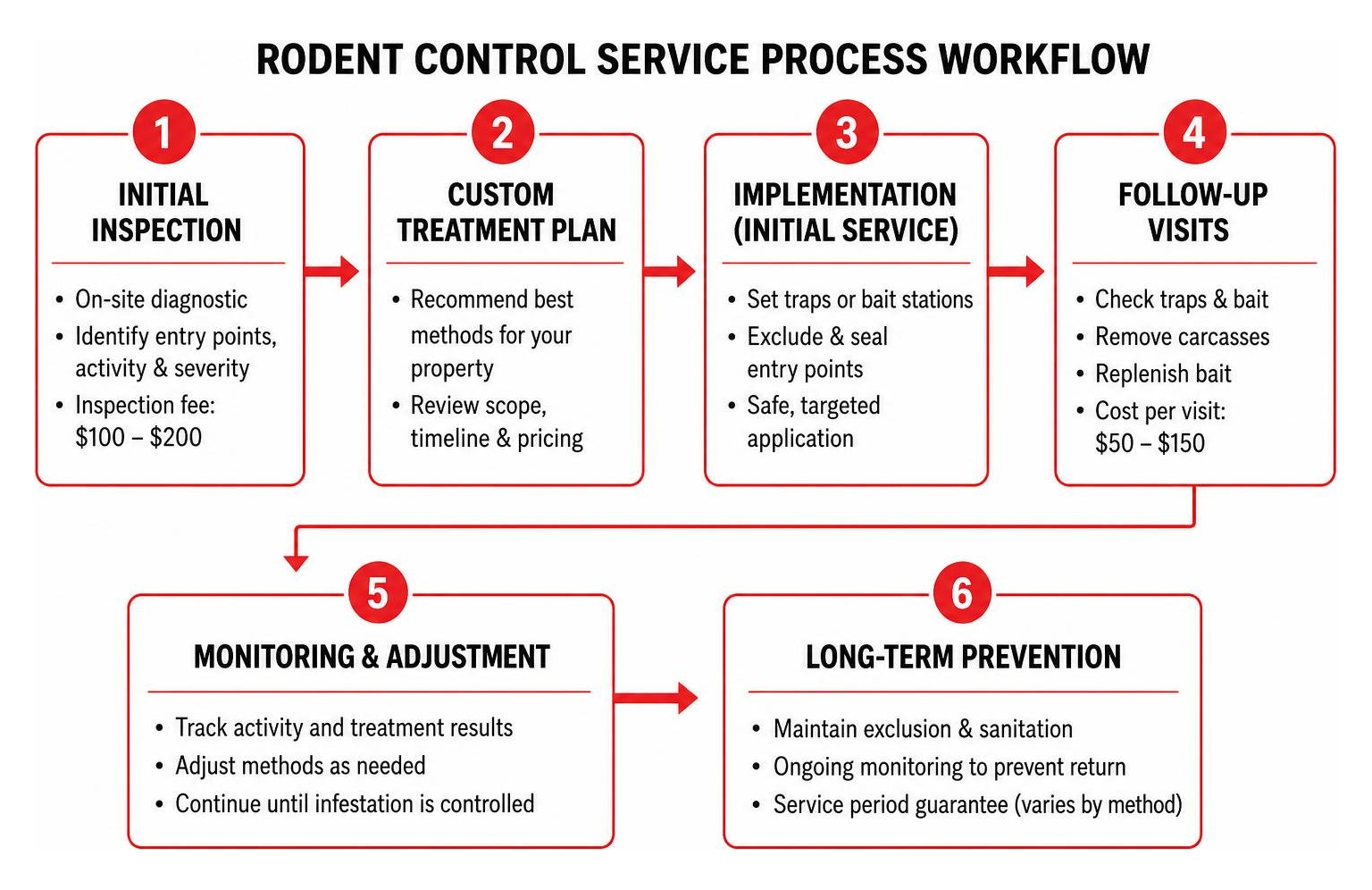
Initial diagnostic inspection fees generally range from $100 to $200. In many cases, pest management professionals deduct this diagnostic fee from the final service invoice if you proceed with their treatment recommendations. Follow-up visits, which are necessary to check traps, remove carcasses, and replenish bait, typically cost $50 to $150 per visit when billed separately.
Investing in professional rodent control ensures that every phase of treatment—from initial knockdown to long-term monitoring—is handled safely and systematically.
| Method | Typical Cost Range | Eradication Timeline | Warranty / Long-Term Protection | Best Suited For |
|---|---|---|---|---|
| Snap & Electric Trapping | $200 – $600 | 2 – 4 weeks | Service period guarantee | Attic, basement, and interior runways |
| Tamper-Resistant Baiting | $250 – $500 | 3 – 6 weeks | With recurring service | Exterior perimeter reduction |
| Rodent Exclusion (Sealing) | $200 – $1,300+ | Permanent barrier | 1 – 2 year structural warranty | Homes with foundation/roofline gaps |
| Structural Fumigation | $1 – $3 per sq. ft. ($1,500 – $6,000+) | 2 – 3 days (plus prep) | Re-entry inspection only | Massive, wall-entrenched infestations |
| Live Relocation (Per Rat) | $50 – $110 per rodent | Variable | None without exclusion | Small, localized, accessible pests |
Calculating Rat Exterminator Cost Near Me by Infestation Location and Severity
The location of the infestation within your structure plays a major role in overall labor expenses. Accessible areas like an open garage or unfinished basement are straightforward to treat, keeping costs near the lower baseline. Conversely, complex spaces require specialized equipment and safety protocols.
- Attics and Rooflines: Roof rats frequently target elevated spaces. Technicians must navigate ceiling joists, inspect blown insulation, and set traps along narrow top plates, which typically raises labor costs to $300–$800.
- Crawlspaces and Basements: Navigating low-clearance crawlspaces to check moisture barriers, foundation vents, and subfloor plumbing penetrations demands extensive protective gear and time, pushing initial trapping and setup toward $350–$750.
- Wall Cavities: When rodents nest within drywall partitions, locating active voids may require thermal imaging cameras or acoustic monitors (adding $150–$250 to diagnostic labor) so technicians can place mechanical traps precisely without unnecessary drywall damage.
- HVAC Ductwork: Rats chewing into flexible ducting create air contamination hazards. Remediation here involves clearing runs, sanitizing sheet metal, and repairing duct tears, which can range from $250 to over $1,000 depending on system damage.
Understanding basic rat biology and behavior reveals why these pests target hidden voids: they seek warm, sheltered spaces near food and water, reproducing up to six litters annually. A minor issue involving two or three rodents can quickly multiply into an entrenched colony within weeks if left unaddressed.
Treatment Method Breakdown: Trapping, Baiting, Fumigation, and Live Removal
Professional rat eradication relies on specialized methods tailored to your home’s layout:
- Mechanical & Snap Trapping: Highly targeted and poison-free, strategic snap and electronic trapping is the gold standard for indoor spaces like attics and kitchens. It prevents rodents from dying inside inaccessible wall cavities. A comprehensive multi-visit trapping program typically costs $200 to $600.
- Exterior Tamper-Resistant Bait Stations: Placed along foundation perimeters, these secured stations target exterior populations before they enter your home. They are locked to protect non-target wildlife, pets, and children. Initial station deployment and loading averages $200 to $450.
- Structural Fumigation: Reserved as a last resort for extreme, entrenched infestations, whole-home tenting and gas fumigation ranges from $1 to $3 per square foot (often $2,000 to $6,000+ for a standard home). Fumigation requires residents to vacate the premises for several days and does not provide lasting protection unless exclusion sealing is performed afterward.
- Live Capture & Relocation: Capturing rats alive with cage traps costs approximately $50 to $110 per animal plus setup and travel mileage. Live relocation is labor-intensive and subject to local wildlife regulations regarding rodent transport.
The Value and Cost of Rodent Exclusion, Cleanup, and Repairs
Eradicating existing rodents solves only half the problem. Permanent protection requires physical exclusion—sealing the gaps, cracks, and vulnerabilities that allowed rats inside in the first place. Pairing targeted removal with residential pest control ensures lasting peace of mind.
A rat can squeeze through an opening as small as a quarter of an inch (roughly the size of a quarter-dollar coin). Leaving these structural voids open invites future rodent activity, turning a one-time treatment into a recurring expense.
Structural Exclusion and Entry Point Sealing Expenses
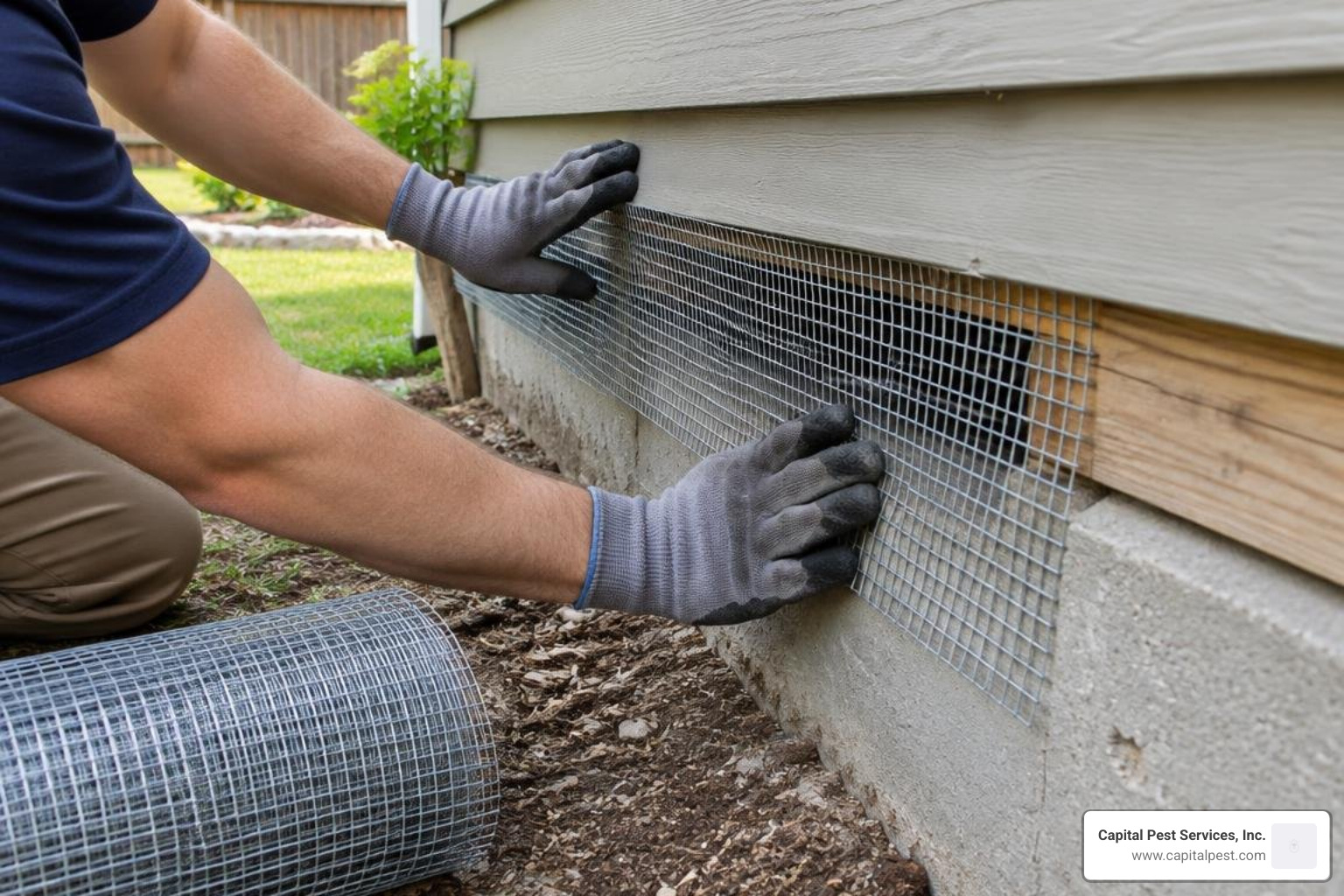
Exclusion services involve installing durable, chew-proof physical barriers such as galvanized steel hardware cloth (1/4-inch wire mesh), metal flashing, silicone or elastomeric sealants, and concrete patch repairs.
- Minor Spot Exclusion ($200 – $600): Focuses on sealing low-hanging ground-level gaps, such as plumbing entry points beneath sinks, AC line chase pipes, dryer vents, and foundation weep holes.
- Comprehensive Whole-Home Exclusion ($500 – $2,500+): Encompasses full perimeter fortification from roofline to foundation. Technicians seal roof ridge caps, dormer junctions, fascia gaps, crawlspace access doors, and exterior siding voids.
Many professional pest management companies back comprehensive structural exclusion with multi-year warranties, guaranteeing that if rodents gnaw through sealed materials, the company will re-treat and reseal the area at no additional charge.
Decontamination, Insulation Replacement, and Damage Repair
Rodents leave behind hazardous biological waste and structural damage that must be addressed once trapping is complete:
- Antimicrobial Fogging & Sanitization ($200 – $600): Neutralizes disease-carrying pathogens, pheromone trails that attract new rodents, and persistent urine odors using EPA-registered antimicrobial mists.
- Attic Insulation Remediation ($1,200 – $4,500+): Soiled, urine-soaked insulation loses thermal efficiency (R-value) and creates respiratory hazards. Restoration involves vacuuming contaminated materials, sanitizing attic floor joists, and blowing in fresh insulation.
- Electrical & Structural Repairs ($150 – $1,000+): Rats must gnaw continuously to wear down their incisors, often targeting electrical wiring (creating serious fire hazards), PVC plumbing pipes, and wood studs.

Service Plans and Regional Pricing Variations
Pest control labor, travel, and material costs vary across municipal and rural settings. High-density urban environments often face elevated exterior rodent pressure and logistical hurdles, whereas rural properties may require expanded exterior perimeter baiting and outbuilding coverage. Reviewing verified local pest control ratings in Durham and surrounding communities provides realistic insight into regional service expectations.
Across North Carolina, property structures range from historic homes with fieldstone foundations in Hillsborough and Oxford to modern slab builds in Cary, Morrisville, and Holly Springs, or vented crawlspaces in Apex, Wake Forest, Garner, Clayton, and Fuquay-Varina. Each foundation profile requires customized exclusion strategies that influence total project estimates.
Comparing Rat Exterminator Cost Near Me for One-Time Visits vs. Ongoing Maintenance
Homeowners often choose between an immediate one-time eradication package and ongoing integrated pest maintenance:
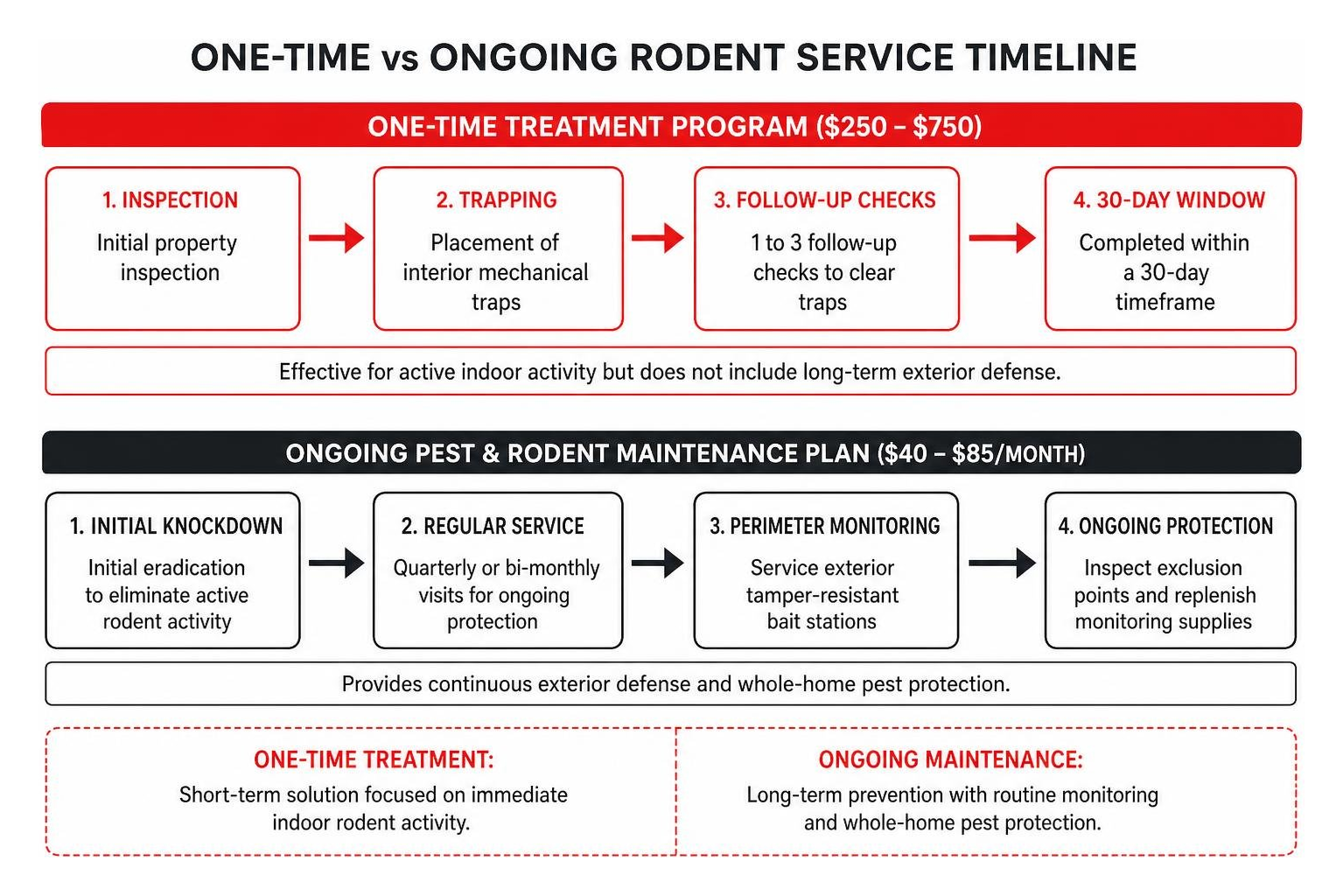
- One-Time Treatment Programs ($250 – $750): Typically includes an initial property inspection, placement of interior mechanical traps, and 1 to 3 follow-up checks to clear traps over a 30-day window. While effective for active indoor activity, it does not include long-term exterior defense.
- Ongoing Pest & Rodent Maintenance Plans ($40 – $85/month): After initial knockdown, homeowners can enroll in ongoing pest control plans that integrate rodent perimeter monitoring with whole-home coverage against common household pests (ants, spiders, roaches). Technicians routinely service exterior tamper-resistant bait stations, inspect previous exclusion points, and replenish monitoring supplies on quarterly or bi-monthly schedules.
DIY vs. Professional Extermination: Cost and Safety Comparison
Attempting DIY rat control using retail snap traps and hardware store bait stations often appears economical, typically costing $40 to $120 for basic materials. However, DIY efforts carry distinct limitations and safety risks:
- Trap Placement Inefficiencies: Rats are naturally neophobic (suspicious of new objects in their territory). Improperly placed or baited traps can cause trap-shyness, making rodents significantly harder to catch.
- Secondary Poisoning Hazards: Loose or improperly secured retail rodenticides can be moved by rats into living spaces, posing severe poisoning risks to domestic pets and non-target wildlife.
- Inaccessible Carcasses: Using poisons indoors without knowing active runway locations often leads to rodents dying inside wall cavities, causing intense odors and insect infestations that require costly drywall repairs.
- Missing Root Entry Points: Without complete exclusion using heavy-gauge metal flashing and steel mesh, DIY trapping offers only short-term relief before new rats move into the vacated territory.
Professional extermination ensures comprehensive safety, targeted placement, structural sealing, and documented eradication backed by licensed, certified technicians.
Frequently Asked Questions About Rat Extermination Pricing
How much does an initial rat inspection typically cost?
An initial diagnostic rat inspection generally costs between $100 and $200. This fee covers an extensive top-to-bottom assessment of your attic, crawlspace, foundation perimeter, roofline, and plumbing chases to map active runways and structural vulnerabilities. Most pest control providers apply this inspection fee directly toward your total treatment or exclusion package if you move forward with service.
Is rodent exclusion worth the additional upfront investment?
Yes. Structural exclusion is the single most cost-effective investment in long-term rodent control. While trapping resolves current pests, unsealed entry points leave your home vulnerable to repeat infestations. Paying $200 to $1,000+ for professional exclusion permanently blocks access, saving thousands of dollars in future trapping, insulation replacement, and electrical wiring repairs over the life of your home.
How long does the complete rat extermination process take?
Complete eradication typically takes 2 to 6 weeks. The initial knockdown phase using mechanical snap traps usually captures active adult rodents within the first 7 to 14 days over several follow-up visits. Once internal activity stops, technicians finalize structural exclusion sealing and complete sanitation measures to ensure the structure remains protected.
Conclusion
Successfully eliminating a rat infestation requires a comprehensive, multi-step approach: identifying entry points, eliminating active populations through targeted trapping, sealing structural access points, and decontaminating affected areas. Getting a detailed, line-item written estimate ensures full transparency across every phase of treatment.
For homeowners and commercial property managers seeking trusted, professional guidance, schedule a local pest control inspection with our accredited team to secure your property with lasting, comprehensive protection.
Capital Pest is proud to be a family-owned and operated pest control company serving Raleigh, NC and its surrounding area (Chapel Hill, Wake Forest, Clayton, Pinehurst, Pittsboro, Fuquay-Varina, etc). Contact us for our pest control services today!