

Wipe Out Outdoor Pests Using These Top-Rated Yard Sprays
What to Look for in the Best Yard Bug Killer
Selecting the right outdoor pest treatment comes down to understanding the pests invading your turf, how the chemical or botanical agent works, and the delivery method required to reach the target zone. A product designed to eliminate surface-dwelling ants might do nothing for root-chewing beetle larvae lurking three inches below the soil line.
To get reliable results, evaluate three critical factors:
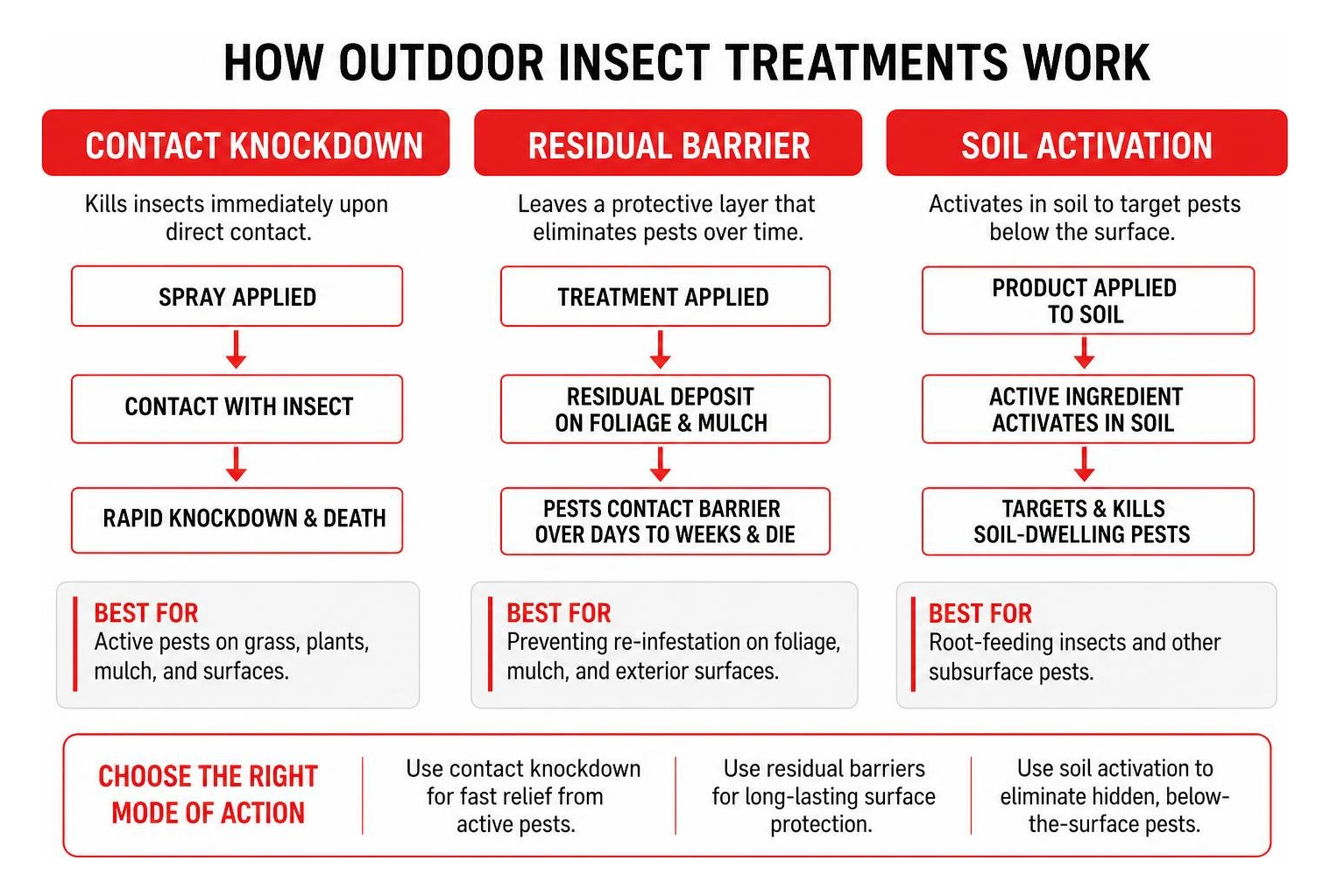
- Active Ingredients & Mode of Action: Contact insecticides kill target insects immediately upon exposure, while residual barriers linger on foliage and mulch to eliminate pests over weeks or months. Systemic products are absorbed into turf and plant vascular systems, targeting insects as they feed.
- Delivery Format: Pre-calibrated hose-end sprayers offer convenience for broad turf applications, pump-tank concentrates allow precise perimeter and shrub treatments, and solid granules work best for subsurface pest problems.
- Target Pest Spectrum: Broad-spectrum formulas target over 200 species (including ticks, fleas, spiders, and sod webworms), whereas targeted repellents only deter specific flying insects without eliminating their breeding populations.
| Category | Primary Active Ingredients | Best For | Typical Residual Duration | Pollinator & Pet Profile |
|---|---|---|---|---|
| Synthetic Pyrethroids | Bifenthrin, Zeta-Cypermethrin, Lambda-Cyhalothrin | Broad-spectrum turf pests, spiders, mosquitoes, ants | 4 to 12 weeks | Re-entry after completely dry; highly toxic to bees and aquatic life while wet |
| Natural Essential Oils | Cedarwood oil (up to 84.7%), Lemongrass oil | Fleas, ticks, mosquitoes, nuisance lawn bugs | 2 to 4 weeks (requires frequent reapplication) | Pet-friendly, minimal risk to non-target pollinators once settled |
| Two-Way Systemic & Contact | Imidacloprid + Beta-Cyfluthrin | Soil-dwelling grubs, chinch bugs, systemic turf protection | Up to 3 months (subsurface) | Strictly avoid flowering plants; high pollinator risk if misapplied |
Synthetic Pyrethroids vs. Natural Essential Oils
Synthetic pyrethroids—such as bifenthrin, zeta-cypermethrin, and lambda-cyhalothrin—are man-made compounds modeled after the natural pyrethrins found in chrysanthemum flowers. These ingredients disrupt the voltage-gated sodium channels in an insect’s nervous system, causing rapid paralysis and knockdown. They bond exceptionally well to plant leaves and organic soil matter, creating long-lasting residual barriers that withstand sun exposure and light precipitation far better than botanical alternatives. However, because pyrethroids are broad-spectrum, they present non-target risks to aquatic organisms and foraging honeybees if sprayed carelessly onto blooms or near storm runoff.
Natural botanical sprays use high concentrations of essential oils, such as cedarwood oil or lemongrass oil. Cedarwood oil works by disrupting octopamine—a critical neurotransmitter regulating heart rate, movement, and behavior in many target pests like fleas, ticks, and mosquitoes. Because beneficial pollinators like honeybees and butterflies utilize different neurological pathways for key behaviors, lab-tested cedarwood formulations deliver repellent and contact-kill properties without persistent environmental toxicity. The trade-off lies in residual performance: essential oils break down much faster under heat and UV radiation, requiring monthly applications to maintain protection.
Spray Concentrates vs. Granular Insecticides
Liquid spray concentrates deliver immediate surface coverage across grass blades, landscape mulch, and exterior vertical walls. When connected to a hose-end sprayer, they distribute millions of micro-droplets across turf foliage, knocking down active mosquitoes, chinch bugs, and leaf-feeding caterpillars on contact. Sprays are the gold standard when you need fast relief ahead of outdoor gatherings or when treating vertical surfaces like foundation walls and dense ornamental shrubs.
Granular insecticides serve a completely different purpose. Formulated on solid clay or carrier substrates, granules drop through the grass canopy directly onto the thatch layer and topsoil. Once spread with a calibrated broadcast or drop spreader, they require mechanical irrigation or rainfall to dissolve the carrier and wash the active ingredient into the root zone. Granules excel at preventative control against subsurface pests—like Japanese beetle grubs, billbug larvae, and mole crickets—that chew through root systems away from liquid surface sprays.
Top Picks for Yard Insect Sprays and Treatments
Different sections of your property face distinct pest pressures throughout the spring, summer, and autumn months. Choosing a product with the right coverage capability and active profile ensures you do not waste chemical inputs or leave gaps in your property’s defense.
Best Yard Bug Killer for Broad-Spectrum Turf Control
When dealing with mixed pest populations invading lawns and landscaped garden beds, a dual-action pyrethroid concentrate provides the most thorough suppression. Formulations combining fast-acting zeta-cypermethrin with long-lasting bifenthrin target up to 235 listed insect species, including aggressive lawn pests, ticks, fleas, and perimeter intruders.
Concentrates such as Ortho BugClear Insect Killer for Lawns & Landscapes Concentrate allow flexible dilution rates depending on where you apply them. Mixing at 0.75 to 1.5 fluid ounces per gallon of water inside a dedicated tank sprayer lets you treat turf, foundation lines, and dense ornamental shrubs with precision. A single 32-ounce bottle yields up to 42 gallons of finished spray, covering up to 5,300 square feet of lawn or 2,700 square feet of ornamental foliage. This pyrethroid blend provides an extended residual barrier, maintaining outdoor protection against crawling spiders for up to 6 months.
Best Yard Bug Killer with Natural Plant Oils for Pollinator Safety
Homeowners with active pets, young children, or thriving pollinator gardens often prefer non-synthetic chemistries. High-grade cedarwood oil formulations offer an effective botanical barrier that targets nuisance biting insects while minimizing risk to beneficial garden pollinators when applied correctly.
Products like Wondercide Flea & Tick Concentrate for Yard + Garden utilize plant-powered active oils to kill and repel fleas, ticks, and mosquitoes across large areas without synthetic chemical residue. A compact 16-ounce concentrate covers up to 10,000 square feet (a quarter acre), while bulk 128-ounce jugs can treat up to 80,000 square feet. Because these plant-oil residues do not leave harsh toxins on turf or foliage, treated areas are accessible to family and pets as soon as the spray application is finished.
Best Hose-End Spray for Fast Perimeter Defense
For quick application without measuring cups or manual pumping, ready-to-spray hose-end bottles streamline the treatment process. These units use internal siphon tubes that draw and mix concentrated chemicals with running garden hose water at exact label ratios.
Formulations powered by 0.16% lambda-cyhalothrin deliver fast knockdown across up to 5,000 square feet per 32-ounce container. The synthetic pyrethroid forms a durable bond with exterior foundation materials and turfgrass, providing up to 12 weeks of residual suppression against wood-destroying carpenter ants, house crickets, earwigs, and ticks. When combined with our professional targeted mosquito control, establishing this perimeter barrier helps keep flying and biting insects from resting in lower landscape foliage.
Best Soil-Dwelling and Grub Control Solution
Surface sprays rarely penetrate dense thatch to reach white grubs, European chafer larvae, or deep-burrowing billbugs before breaking down. Controlling these subsurface pests requires a dual-action formula that pairs a rapid contact knockdown agent with a systemic, root-absorbed active ingredient.
Solutions such as BIOADVANCED Complete Brand Insect Killer for Soil and Turf Concentrate leverage beta-cyfluthrin for 24-hour surface insect knockdown alongside imidacloprid for extended soil activity. A 40-ounce bottle provides broad control against more than 500 listed turf insects, creating a 3-month protection zone within the soil profile. This combination prevents beetle larvae from severing your lawn’s root systems—protecting your turf from turning brown, spongy, and lifting up like unrolled carpet.
How to Apply Yard Sprays for Maximum Residual Protection
Applying yard insecticides correctly is the difference between lasting pest suppression and wasted product that washes into local storm drains. Achieving complete protection requires proper calibration, correct spray mechanics, and adequate lawn prep.
- Prep the Turf: Mow your lawn 24 to 48 hours prior to application. Removing excess grass blade height allows the liquid spray to coat lower stems and reach the thatch layer where fleas, ticks, and surface pests harbor. Ensure the lawn is moderately hydrated; bone-dry soil repels liquid treatments, causing runoff.
- Calibrate Your Equipment: If using a dial-style hose-end applicator, adjust the top dial to the exact ounce-per-gallon ratio specified on your product’s label (typically 1.5 to 3 fl. oz. per gallon for general turf pests).
- Use Sweeping, Overlapping Passes: Walk at a steady, consistent pace backwards to avoid walking through wet chemical deposits. Hold the spray nozzle roughly 2 to 3 feet above the grass, using a side-to-side sweeping motion with a 10% to 15% spray overlap to eliminate untreated gaps.
- Target Harborage and Entry Zones: Direct extra volume toward damp, shaded mulch beds, dense ground cover, low shrub branches, and property perimeters where pests rest during the heat of the day. For building perimeters and outdoor ant control, spray a continuous 2-foot band upward onto the exterior foundation wall and 2 feet outward onto the surrounding soil.
Proper Timing, Weather, and Temperature Factors
Environmental conditions during application heavily influence how well an insecticide bonds to foliage and how long it lasts.
- Avoid Extreme Heat (Phytotoxicity): Never apply liquid concentrates—especially essential-oil formulations—when ambient temperatures exceed 90°F. Intense sun combined with liquid carrier oils can cause phytotoxic leaf burn on ornamental plants, shrubs, and heat-stressed turf.
- Target Early Morning or Dusk: Spraying during the early morning (between 6:00 AM and 8:30 AM) or late evening minimizes evaporative loss and provides calm air conditions with minimal wind drift.
- Respect the 24-Hour Rain Window: Synthetic pyrethroid insecticides require a full curing window to dry completely and bind with plant cuticles and mulch. Check the local forecast and apply only when no precipitation is expected for at least 24 hours. Once cured, modern pyrethroids resist light rainfall, but heavy downpours shortly after application will wash the chemical away before it establishes a residual barrier.
Protecting Pets, Children, and Beneficial Pollinators
Pesticide stewardship means safeguarding non-target organisms, native wildlife, and family members. Always read and adhere to the Environmental Hazards section on any EPA-registered label.

Keep children and pets completely out of the treated lawn area until all liquid sprays have completely dried—a process that typically takes between 1 and 2 hours on a warm, sunny day. Once dry, synthetic pyrethroid residues bind tightly to organic surfaces, minimizing chemical transfer to paws or skin.
To protect native honeybees, bumblebees, and butterflies:
- Never Spray Open Blooms: Avoid applying broad-spectrum insecticides directly to blooming flowering plants, clover patches, or fruit trees in flower.
- Time Applications Around Foraging: Apply sprays early in the morning or near dusk when pollinators are inactive and resting in hives or nests.
- Establish Water Feature Buffers: Maintain a minimum 15-foot untreated buffer zone around birdbaths, fish ponds, ornamental fountains, and natural waterways. Synthetic pyrethroids are highly toxic to aquatic life and must never enter standing water or storm sewers.
Frequently Asked Questions
How long does outdoor pest spray remain effective after rain?
Most synthetic pyrethroid yard sprays (such as bifenthrin or lambda-cyhalothrin) are rainfast once they dry completely onto plant foliage and mulch, typically requiring 1 to 2 hours of dry weather. After this curing window, light to moderate rainfall will not immediately wash away the residual barrier. However, persistent heavy rainstorms, high humidity, and regular lawn irrigation will gradually degrade the chemical film over 4 to 6 weeks. Botanical essential-oil sprays break down faster when exposed to water and should be reapplied every 2 to 3 weeks or directly following substantial rain events.
What is the difference between an insect repellent and an insecticide?
An insecticide is formulated to actively kill insects through direct contact, ingestion, or systemic absorption, eliminating both active pests and emerging juvenile populations. A repellent does not kill pests; instead, it creates a localized vapor barrier or scent signature that deters insects from entering an immediate area. Spatial repellents (like patio lanterns, diffusers, and citronella coils) provide temporary, on-demand relief for small gathering areas like decks and patios. Furthermore, common skin repellents like DEET are not designed for broad turf application, as they break down rapidly on foliage and do not eliminate underlying insect breeding cycles.
When should you call a professional instead of using DIY yard sprays?
DIY yard sprays are helpful for light maintenance and minor seasonal flare-ups, but they often struggle against entrenched, reproducing infestations. If you are dealing with recurring tick activity, deep-seated flea breeding cycles fueled by wildlife, extensive lawn damage from subsurface root-feeding grubs, or persistent stinging insect nests, store-bought equipment rarely achieves the necessary pressure, droplet spectrum, or chemical residual to solve the root issue.
Our technicians at Capital Pest Services, Inc. provide targeted, commercial-grade residential pest control services backed by certified integrated pest management strategies. We accurately diagnose pest habitats, identify environmental entry points, and apply custom treatments to eradicate active pests while keeping your family, pets, and beneficial garden pollinators protected.
Choosing the Right Yard Protection for Your Home
Maintaining a comfortable, pest-free outdoor living space requires matching the right treatment method to your yard’s specific layout and pest pressures. While broad-spectrum synthetic sprays deliver fast knockdown and durable barriers for expansive lawns, botanical alternatives offer eco-friendly spot relief for pollinator-heavy gardens. For long-term turf health, integrate targeted liquid applications with sound lawn care practices like regular aeration, proper watering, and seasonal mowing.
If outdoor pests continue to invade your lawn or drive you indoors, our local team is here to help. At Capital Pest Services, Inc., we serve homeowners across Raleigh, Durham, Cary, Wake Forest, Chapel Hill, Apex, and the surrounding Triangle communities with dedicated, dependable pest management. Explore our comprehensive pest control plans to establish year-round defense for your lawn, landscape, and home foundation with a single call.
Capital Pest is proud to be a family-owned and operated pest control company serving Raleigh, NC and its surrounding area (Chapel Hill, Wake Forest, Clayton, Pinehurst, Pittsboro, Fuquay-Varina, etc). Contact us for our pest control services today!