What Every Chapel Hill Homeowner Must Know About Annual Termite Inspections
Why Every Property Needs a Regular Chapel Hill Termite Inspection
Every Chapel Hill homeowner should schedule a professional termite inspection at least once a year. A thorough inspection covers the foundation perimeter, crawl space or basement, interior living areas, and attic framing, looking for mud tubes, hollowed wood, frass, and moisture issues that attract termites. Early detection is essential because subterranean termites feed from the inside out, often causing structural damage before visible signs appear on the surface.
North Carolina sits squarely in the nation’s “very heavy” termite infestation zone. Subterranean termites cause over $5 billion in property damage across the United States annually, and our state is consistently ranked among the most active. In fact, estimates suggest that approximately 1 in 5 homes across the Triangle will face termite activity or damage at some point.
Our warm, humid climate allows colonies to feed year-round, often without leaving visible signs on surface wood until structural integrity is already compromised. Because these pests move through the soil and enter through foundation cracks as small as 1/32 of an inch, properties built over damp crawl spaces are especially vulnerable.
| Foundation Type | Relative Termite Risk Level | Key Vulnerability Factors | Recommended Inspection Focus |
|---|---|---|---|
| Crawl Space | High (3x more likely to harbor activity) | High humidity, wood framing close to damp soil, ground-to-wood contact, hidden foundation piers | Wooden floor joists, band sills, support piers, subflooring, plumbing penetrations |
| Slab-on-Grade | Moderate | Expansion joints, hidden plumbing penetrations beneath concrete, exterior stucco/brick veneer weep screeds | Perimeter foundation walls, interior bath traps, utility lines, baseboards |
| Basement | Moderate to High | Cold joints where floor meets wall, subterranean walls below grade, finished wall framing | Perimeter sill plates, floor cracks, window well framing, support columns |
Homes in Chapel Hill with crawl spaces are roughly three times more likely to experience termite activity than homes constructed on slab foundations. Damp soil, minimal ventilation, and unmanaged ground moisture create an ideal environment for subterranean colonies to thrive.
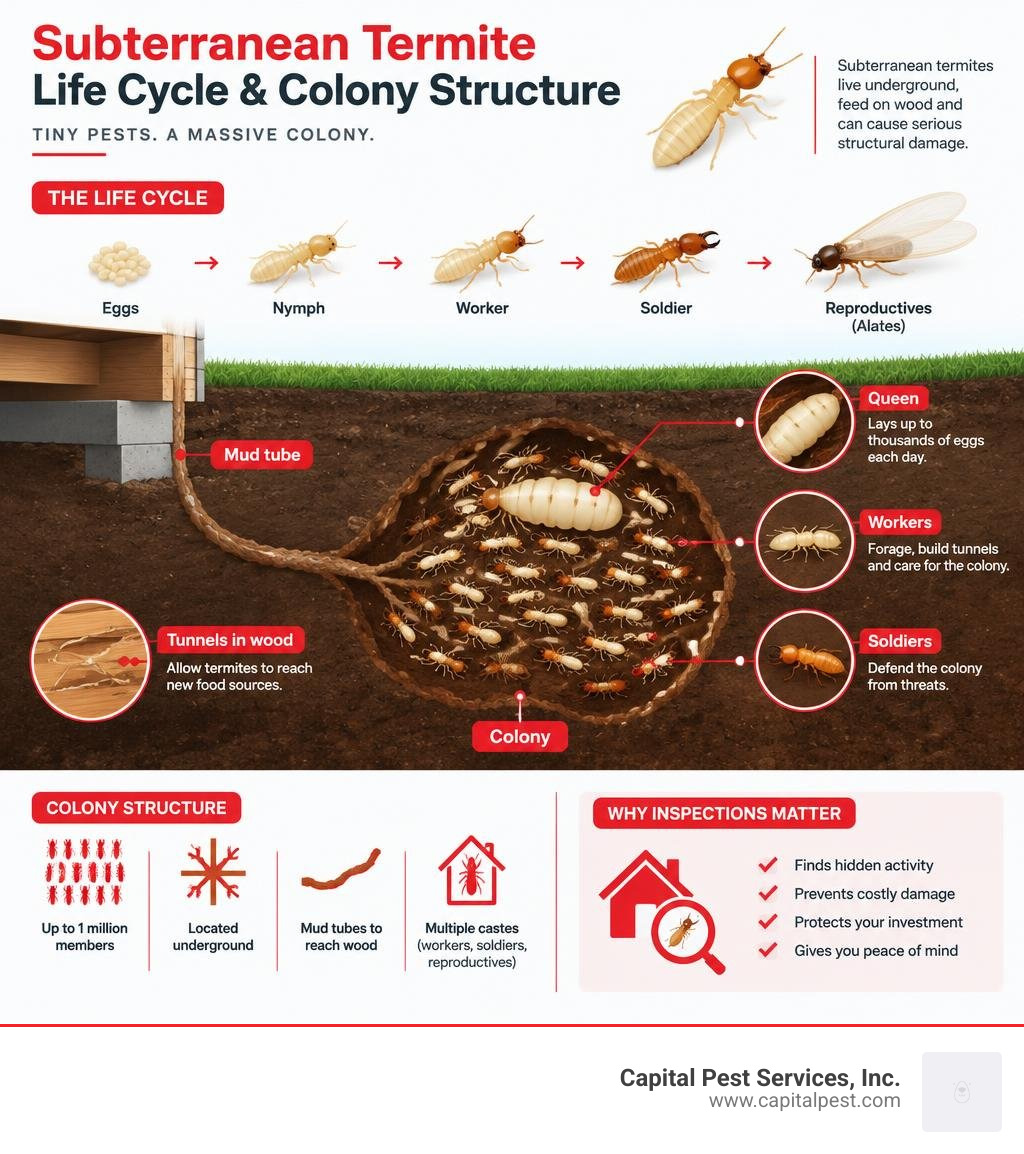
Common Termite Species in the Triangle Region
While several wood-destroying insect species live in the Southeast, two main types warrant attention in Orange and Durham counties:
- Eastern Subterranean Termites (Reticulitermes flavipes): By far the most common and destructive pest in Chapel Hill. They live underground in massive social colonies consisting of up to a million members. They require ground moisture to survive and construct distinct mud tubes across masonry and foundation walls to reach structural wood framing.
- Drywood Termites (Incisitermes snyderi): Less common in the Piedmont region than along the coast, drywood termites do not require contact with the ground. They establish small colonies directly inside dry, structural timbers, furniture, or roof rafters, deriving moisture solely from the wood they consume.
Distinguishing reproductive swarmers (alates) from winged ants is a helpful first step:
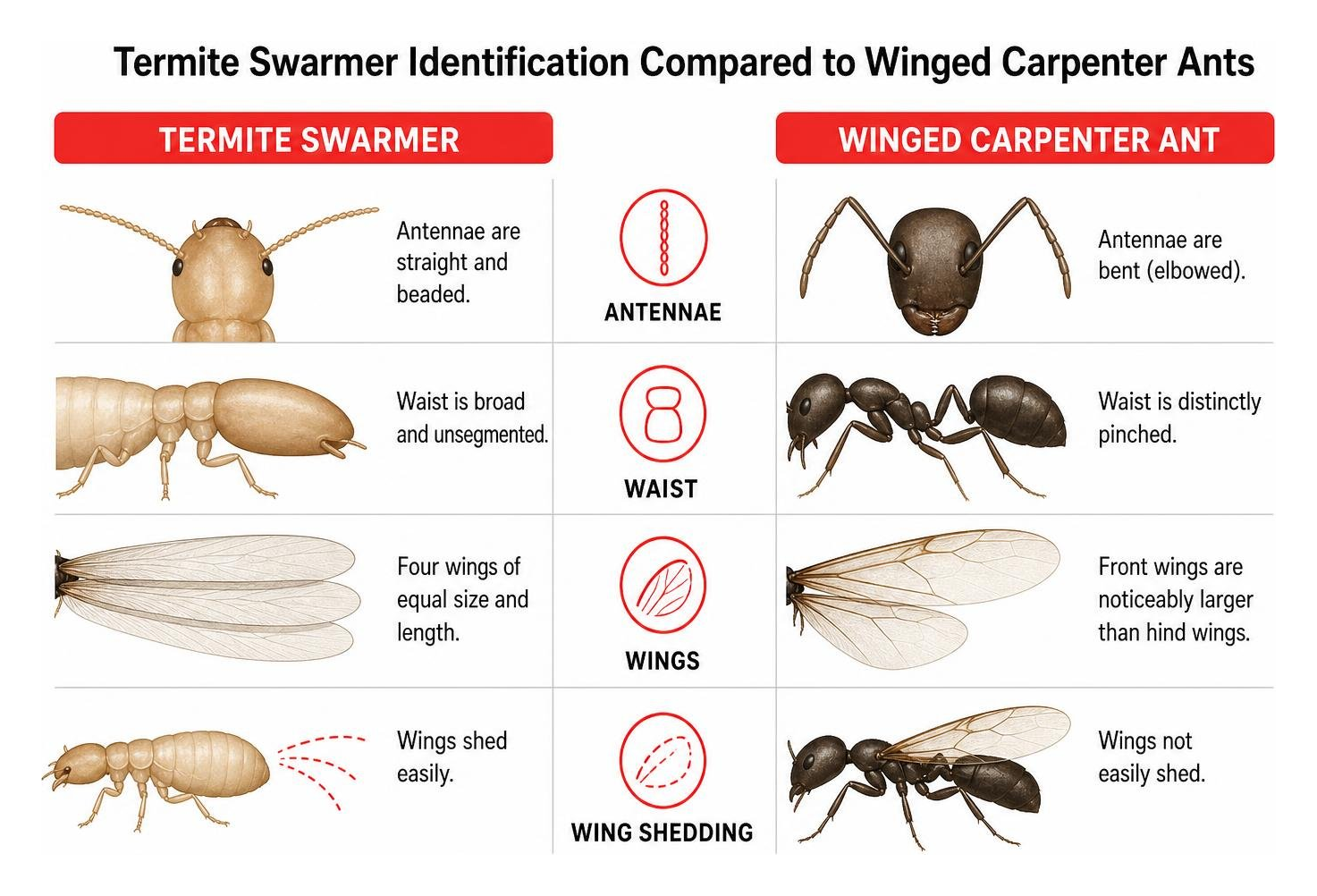
- Termite Swarmers: Possess straight, beaded antennae, a broad, unsegmented waist, and four wings of equal size and length that shed easily.
- Winged Ants: Feature bent (elbowed) antennae, a distinctly pinched waist, and front wings that are noticeably larger than their hind wings.
Critical Warning Signs of an Active Infestation
Because worker termites feed on structural cellulose from the inside out, surface wood often appears completely sound until pressure is applied. Homeowners should look for these distinct warning signs:
- Mud Shelter Tubes: Pencil-thick tunnels made of soil, saliva, and wood particles running along foundation walls, brick piers, floor joists, or drywall.
- Hollowed or Damaged Wood: Wood that sounds dull or hollow when tapped with a screwdriver handle, or timber whose interior grain has been eaten away, leaving layers of dried mud behind.
- Drywall Changes: Pinhead-sized exit holes, bubbling paint, or discoloration on drywall that looks like water damage.
- Frass Accumulation: Small, six-sided, sand-like droppings pushed out of kick-out holes by drywood termites.
- Sticking Windows and Tight Doors: Warped frames caused by structural shifting or moisture introduced by active colonies.
- Discarded Wings: Piles of uniform, translucent insect wings on windowsills, spider webs, or baseboards after spring swarms.
The Anatomy of a Professional Termite Assessment
A thorough assessment goes far beyond a casual walk around the yard. Comprehensive evaluations involve inspecting every accessible structural element where wood meets soil or foundation masonry. While standard inspections examine overall code and structural safety, a dedicated wood-destroying insect inspection focuses specifically on biological threats, hidden moisture, and entry pathways.
Our technicians use moisture meters, high-lumen inspection lights, sounding tools, and thermal imaging cameras to check for activity hidden behind finished sheetrock or within floor assemblies.
What to Expect During a Professional Chapel Hill Termite Inspection
A standard professional inspection typically takes between 45 and 90 minutes, depending on the size, age, and foundation architecture of your home. Key areas checked include:
- Exterior Perimeter: Checking ground clearances, siding-to-foundation margins, brick weep holes, perimeter drainage, porch steps, and any wood mulch or landscape timbers touching the structure.
- Crawl Space or Basement: Examining the band sill, floor joists, subflooring, main support beams, masonry piers, plumbing rough-ins, and moisture levels in structural wood.
- Interior Living Areas: Sounding suspect baseboards, probing door casings, checking plumbing walls around kitchens and bathrooms, and inspecting ceilings for structural deflection.
- Attic and Roof Framing: Checking roof rafters, ceiling framing, and attic access points for drywood activity, past leaks, and wood-destroying beetles.
- Documentation: Delivering a clear report that details any active infestations, evidence of past treatments, existing structural damage, and specific moisture concerns.
North Carolina Real Estate WDIR Requirements
During North Carolina real estate transactions, standard residential contracts typically require an official Wood-Destroying Insect Report (Form WDIR-100). Lenders generally mandate this inspection before approving mortgages on existing homes.
The WDIR-100 report provides legal documentation regarding whether there is visible evidence of:
- Active infestations of subterranean or drywood termites, powderpost beetles, or carpenter ants.
- Previous infestations where structural repairs or past treatments are evident.
- Inaccessible areas (such as vaulted ceilings, fully insulated crawl space walls, or finished basements) that could conceal hidden pest activity.
In a survey of North Carolina homeowners, 68% of those who suffered termite damage had skipped a dedicated termite inspection before purchasing their property. Arranging an independent inspection during your contractual due diligence period helps prevent costly structural surprises after closing.
Termite Treatment Strategies and Financial Planning
If an inspection reveals active termites or shows that an older protective barrier has degraded, prompt treatment stops further structural degradation. We use targeted applications tailored to your home’s foundation type and soil conditions.
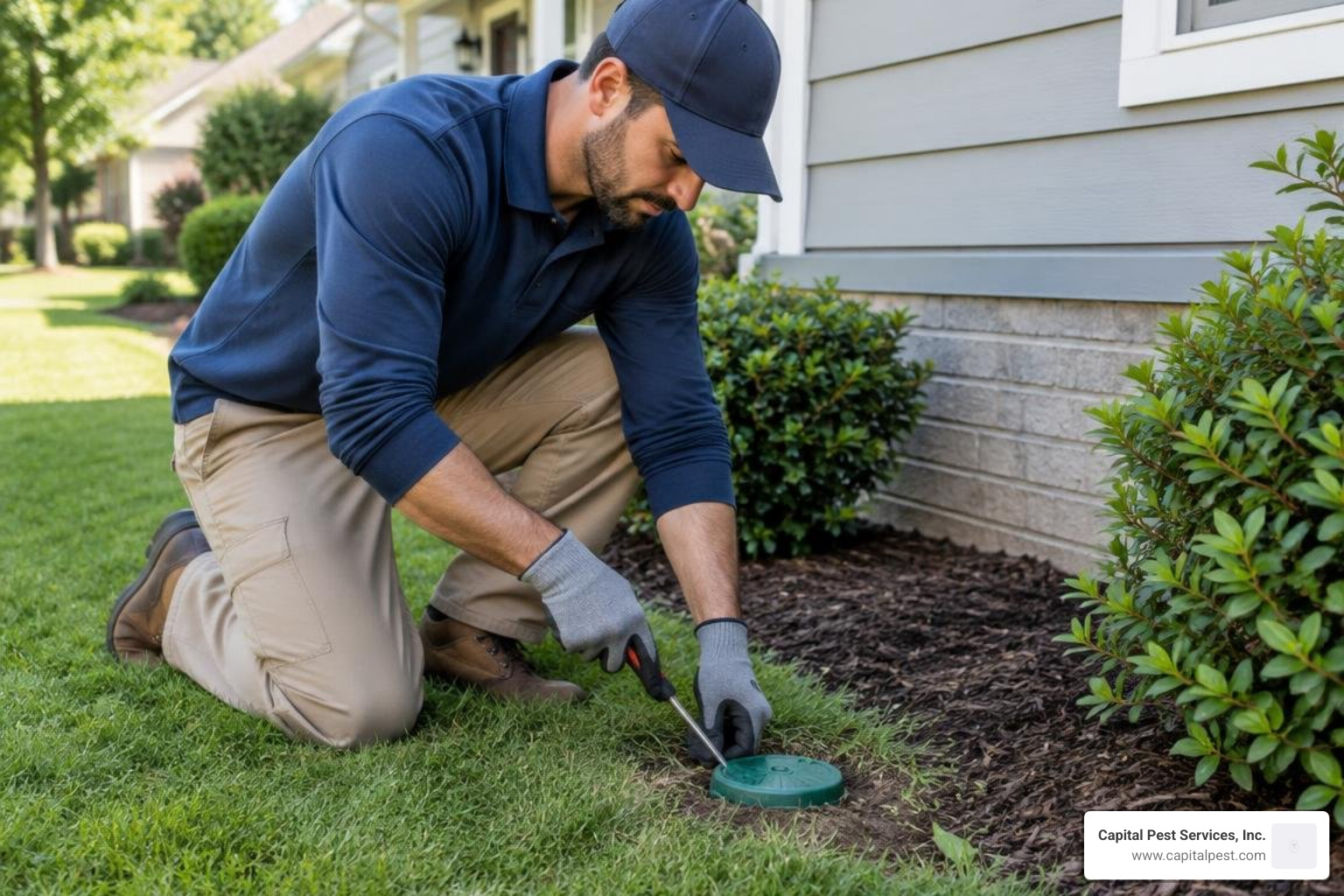
Modern treatment methodologies generally fall into two primary categories:
- Non-Repellent Liquid Termiticides (Soil Barriers): Products containing advanced active ingredients like fipronil are applied into trenches along the foundation perimeter and injected through expansion joints. Because worker termites cannot detect the chemistry, they pass directly through it, ingest it, transfer it to nestmates through grooming, and eliminate the central colony.
- Targeted Baiting Systems: Low-profile bait stations containing chitin-synthesis inhibitors are placed at regular intervals around the home’s perimeter. Foraging termites consume the bait matrix and feed it to the colony, preventing workers from molting and causing colony collapse.
For homeowners exploring treatment options across the Triangle, finding a reliable licensed exterminator in Raleigh and Chapel Hill who utilizes state-approved, university-tested materials ensures lasting structural protection.
How Much Does a Chapel Hill Termite Inspection and Treatment Cost?
A standalone real estate inspection (WDIR-100) across the Chapel Hill area usually ranges between $50 and $150. For regular homeowners seeking preventive evaluations, many licensed pest control operators provide initial visual assessments at nominal rates or include them in annual maintenance plans.
Full structural treatment investments depend on home square footage, linear footage of the perimeter foundation, and foundation architecture:
- Preventative Bait Station Installation: Typically costs between $800 and $1,500, with annual monitoring agreements running $250 to $400.
- Comprehensive Liquid Barrier Treatments: Typically range from $1,000 to $2,500 for single-family residences.
- Structural Damage Repairs: The average cost to repair termite damage in North Carolina exceeds $3,000, with severe structural floor joist and sill plate restoration frequently climbing beyond $10,000.
Standard homeowners insurance policies almost universally exclude wood-destroying insect repairs, categorizing termite damage as preventable maintenance. Understanding what you should expect to pay for professional termite treatment helps homeowners plan their budgets around preventative defense rather than emergency structural repairs.
Proactive Termite Prevention and Moisture Management for Homeowners
While professional barriers provide the backbone of termite defense, homeowners can take everyday steps to make their properties far less attractive to foraging subterranean colonies. Termites seek out food (cellulose) and moisture; managing both around your foundation is critical.
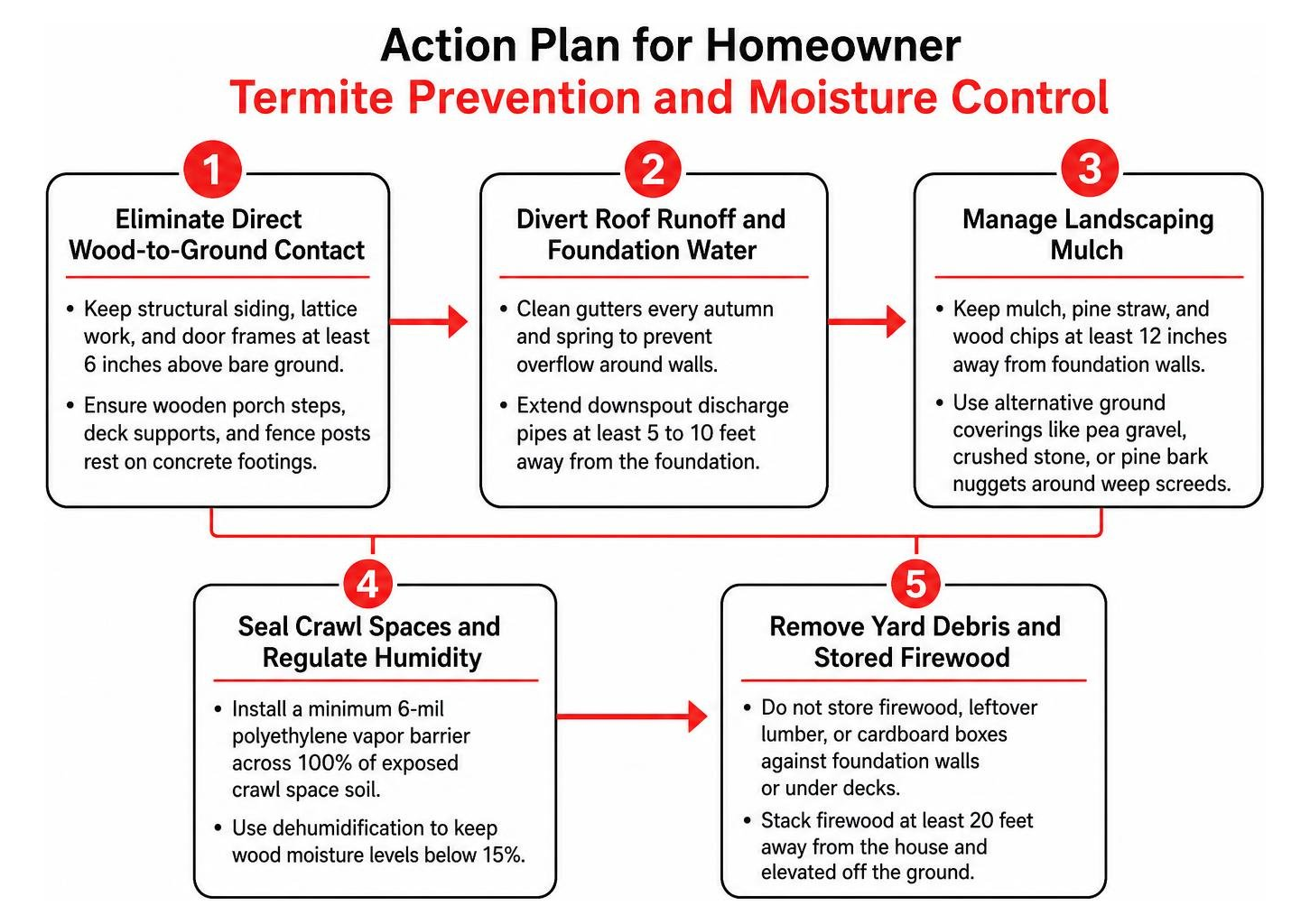
- Eliminate Direct Wood-to-Ground Contact: Ensure structural siding, lattice work, and door frames sit at least 6 inches above bare ground. Wooden porch steps, deck supports, and fence posts should always rest on concrete footings rather than bare soil.
- Divert Roof Runoff and Foundation Water: Clean gutters every autumn and spring to stop water from overflowing around exterior walls. Extend downspout discharge pipes at least 5 to 10 feet away from the foundation wall to prevent soil saturation.
- Manage Landscaping Mulch: Keep mulch, pine straw, and wood chips at least 12 inches away from foundation walls. Use alternative ground coverings like pea gravel, crushed stone, or pine bark nuggets sparingly around perimeter weep screeds.
- Seal Crawl Spaces and Regulate Humidity: Install a durable, minimum 6-mil polyethylene vapor barrier across 100% of exposed crawl space soil. Consider crawl space dehumidification to keep wood moisture levels safely below 15%.
- Remove Yard Debris and Stored Firewood: Never store firewood, leftover framing lumber, or cardboard boxes against foundation walls or under decks. Stack firewood at least 20 feet away from the house and elevated off the ground.
- Address Plumbing Leaks Promptly: Repair leaking hose bibs, air conditioning condensation lines, and internal pipe drips immediately. Subterranean termites frequently locate structural wood by tracking moisture leaks inside wall cavities.
Frequently Asked Questions About Termite Management
When is termite swarming season in Chapel Hill?
In Chapel Hill and throughout the Triangle, the peak swarming season for Eastern subterranean termites runs from March through May. Swarming events usually happen on warm, humid mornings following heavy spring rains.
During these months, mature colonies release thousands of winged reproductive alates to mate and start new colonies. Local termite inspection requests typically increase by 40% during this window. Seeing swarmers inside your home is a strong indicator of an active, established colony within the structural framing.
What should I do immediately if I find termites in my home?
If you uncover active termites or mud tubes while remodeling or cleaning:
- Do Not Disturb the Area: Avoid spraying household bug sprays, bleach, or aerosol insecticides directly onto the termites or mud tubes. Subterranean termites will simply seal off that pathway and redirect their feeding to another hidden area of your framing.
- Collect a Sample: Capture several dead or living insects in a sealed plastic bag or jar with rubbing alcohol for accurate laboratory identification.
- Document and Flag the Location: Take clear, well-lit photos of the mud tubes, damaged wood, or insect swarms.
- Schedule a Professional Evaluation: Contact a licensed pest control professional right away to inspect the full extent of the infestation and install a colony-eliminating treatment.
Are termite inspections covered by homeowners insurance in North Carolina?
No. Standard property insurance policies in North Carolina treat termite infestations and their associated structural damage as preventable maintenance issues. Insurance carriers expect homeowners to maintain their foundations, address moisture risks, and carry professional prevention warranties out of pocket.
Because repairing damaged subfloors, headers, and sill plates can run thousands of dollars, an annual inspection plan coupled with a renewable termite warranty remains the most dependable financial protection for your home.
Conclusion
Guarding your home against wood-destroying organisms requires regular attention and proven control strategies. With 1 in 5 regional homes vulnerable to subterranean colonies, skipping regular evaluations puts your most valuable asset at risk.
Catching termite activity early saves you from extensive structural repairs down the line. We provide comprehensive inspections, soil treatments, bait systems, and moisture management across Chapel Hill, Raleigh, Durham, Cary, Apex, and the surrounding Triangle communities. Contact Capital Pest Services today to schedule comprehensive termite control services and keep your home protected year after year.
Capital Pest is proud to be a family-owned and operated pest control company serving Raleigh, NC and its surrounding area (Chapel Hill, Wake Forest, Clayton, Pinehurst, Pittsboro, Fuquay-Varina, etc). Contact us for our pest control services today!