Top-Rated Pest Control Solutions to Clear Out Cockroaches for Good
The Best Pest Control for Cockroaches Starts With a Plan
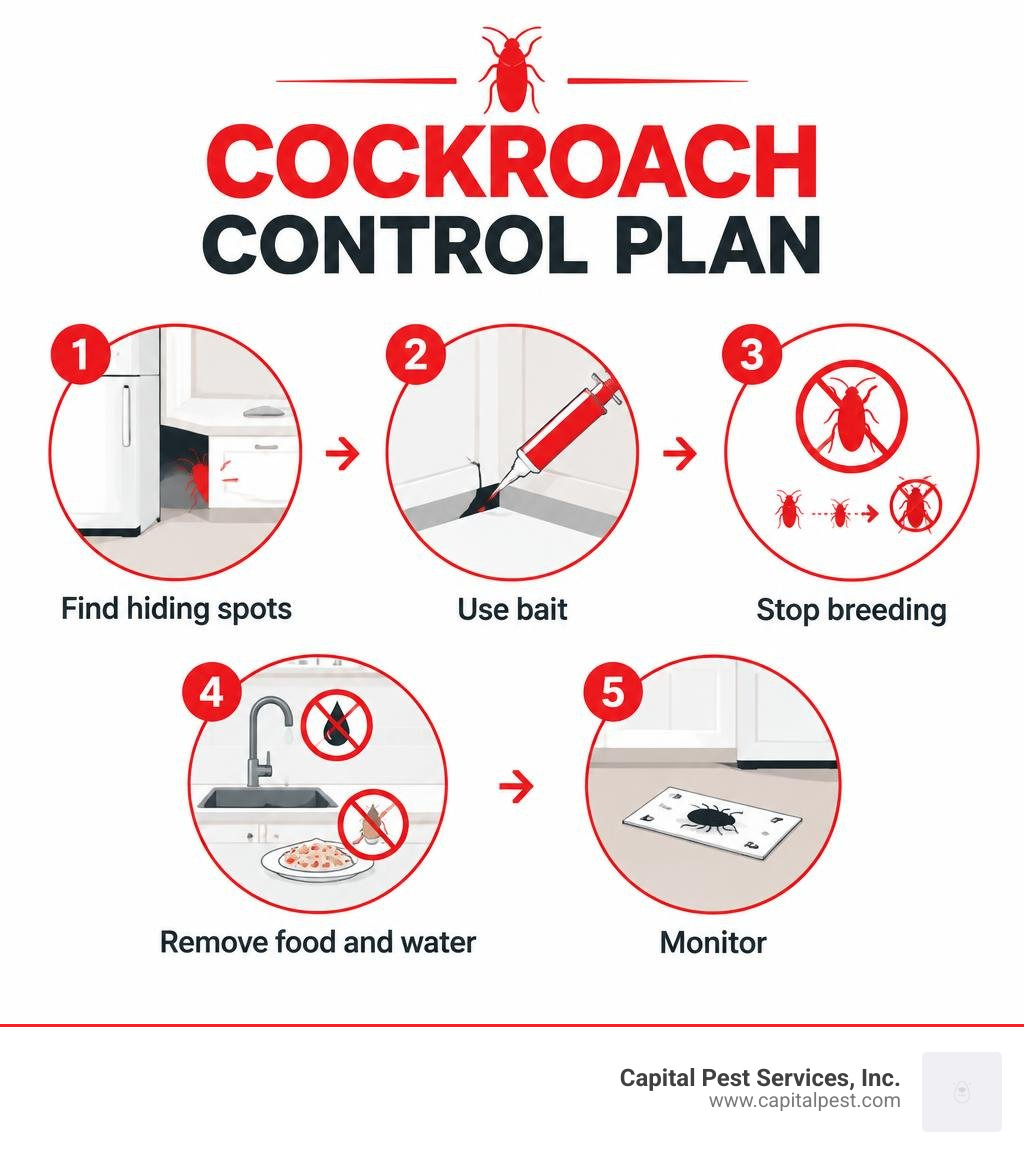
The best way to get rid of cockroaches is to combine targeted bait with a clean, dry home and ongoing monitoring. Find where they hide, place gel bait in cracks and crevices as the label directs, fix leaks, and remove food scraps. An insect growth regulator (IGR) can help stop young roaches from becoming breeding adults. Keep sprays away from bait, and check sticky traps to see whether treatment is working.
This matters because roaches reproduce quickly, can contaminate food, and leave behind allergens that may trigger asthma. Killing the few you see is not enough if others remain hidden.
I’m Mitch Taylor, President of Capital Pest Services, Inc. With more than 17 years in pest control across the Raleigh-Durham Triangle, I help homeowners choose the best pest control for cockroaches through practical, low-risk steps.
Identifying Common Cockroach Species and Health Risks
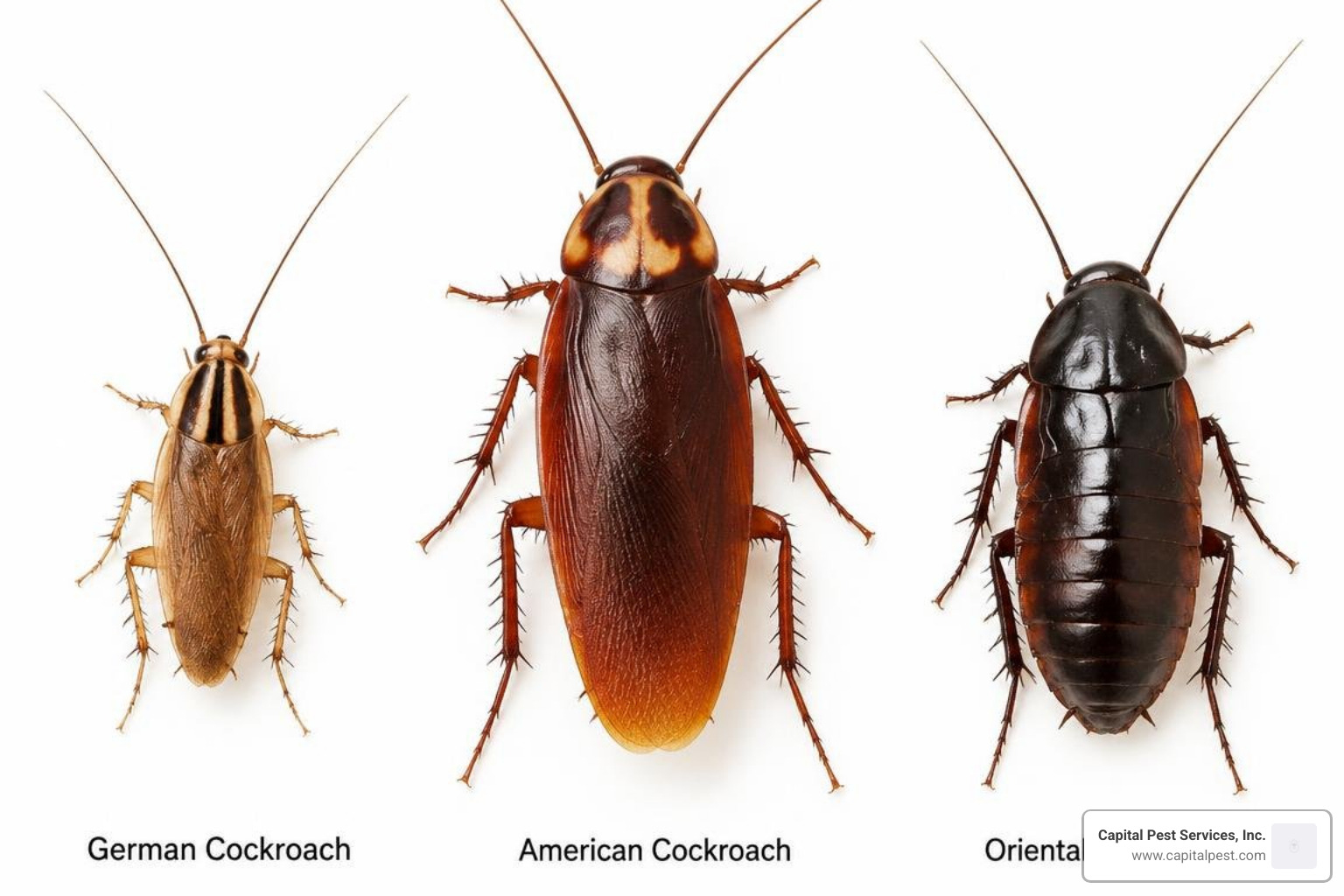
Before applying a single drop of bait, you must know what species you are dealing with. Different cockroaches have drastically different nesting habits, moisture requirements, and reproductive rates. Treating an outdoor invader the same way you treat an indoor breeder will waste time, effort, and money.
Cockroaches are among the most resilient pests on Earth. In the Raleigh-Durham Triangle—from Chapel Hill and Cary to Wake Forest and Garner—our warm, humid climate creates an ideal environment for multiple species to thrive both indoors and outdoors.
High-Risk Household Species
Four primary domestic and peridomestic species cause problems for property owners:
German Cockroach (Blattella germanica)
The German cockroach is the most common and destructive indoor species. Adults are light brown or tan, measuring roughly 1/2 inch in length, with two dark parallel stripes running down their pronotum (the shield behind the head). A single female produces up to 8 egg cases (oothecae) in her lifetime, each containing 30 to 50 eggs, resulting in approximately 240 offspring. Their life cycle takes as little as 60 to 103 days to complete. German roaches nest exclusively indoors near warmth and moisture, congregating inside kitchen cabinet hinges, behind refrigerators, under sinks, and inside electronic appliances.American Cockroach (Periplaneta americana)
Often called “waterbugs” or “palmetto bugs,” these are the largest common household roaches, growing up to 2 inches long with a reddish-brown body and yellowish edges on their thorax. A female produces roughly 430 offspring in her lifetime. These pests typically live in sewers, crawlspaces, and mulch beds, entering homes through drains, pipe gaps, and open foundations. For homeowners dealing with these massive invaders, specialized North Carolina Roach Defense against the giant American cockroach is essential to secure crawlspaces and outdoor perimeters.Oriental Cockroach (Blatta orientalis)
Measuring about 1 inch long, Oriental cockroaches are dark brown to glossy black. Females produce up to 8 egg cases with 16 eggs each, totaling around 80 offspring over a 300-day life cycle. These roaches prefer cool, damp, dark locations such as basements, crawlspaces, floor drains, and wet utility areas.Brown-Banded Cockroach (Supella longipalpa)
Roughly 1/2 inch long with light golden-brown bands across their wings, these roaches do not require high humidity. A single female produces about 250 offspring over 6 to 7 months. They prefer warm, dry, high locations such as upper kitchen cabinets, behind picture frames, and inside television sets or computers.
For a deeper look into species-specific behavior and nesting habits, refer to the University extension research on cockroach biology.
Pathogen Transmission and Allergen Risks
Cockroaches are far more than a visual nuisance—they are documented vectors of serious human health risks. Research shows that cockroaches can transmit approximately 50 different microorganisms, including Salmonella, Staphylococcus, Streptococcus, coliform bacteria, and other intestinal pathogens responsible for food poisoning, diarrhea, dysentery, and cholera. They mechanically spread these pathogens over food prep counters, cutting boards, and pantry items as they forage across sewage, rotting matter, and garbage.
Beyond bacterial contamination, cockroach waste, shed exoskeletons, and saliva contain potent protein allergens. Between 23% and 60% of urban dwellers with asthma are allergic to cockroach allergens. In infested homes, children experience higher rates of asthma attacks, increased emergency room visits, and more missed school days. Multiple clinical studies confirm that a single comprehensive pest control intervention drastically reduces cockroach allergen levels and lowers asthma morbidity in children.
The Multi-Step Protocol: Best Pest Control for Cockroaches
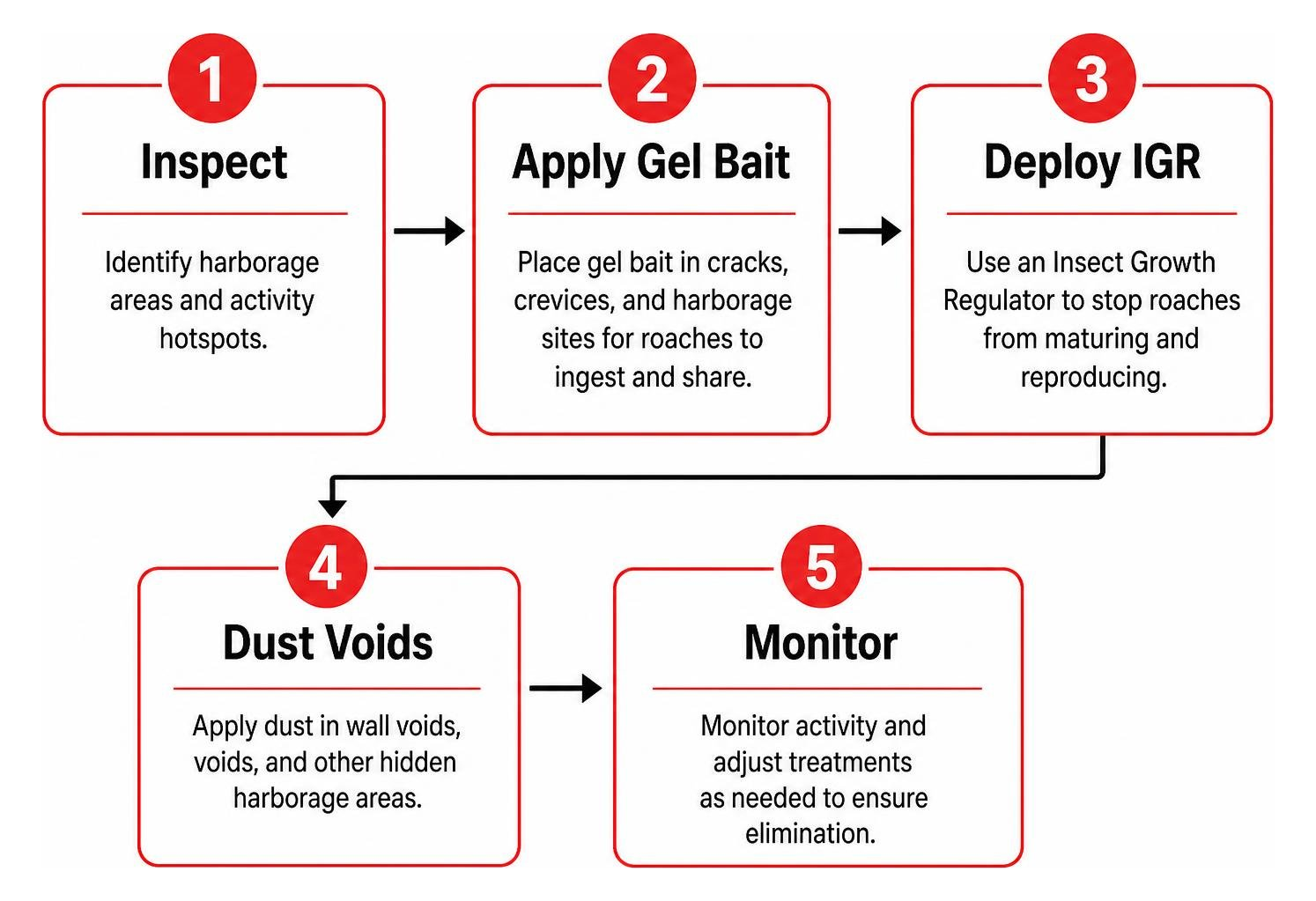
Eradicating an established population requires a structured, multi-stage protocol rather than a single aerosol can or fogger. When we look at how to eliminate a cockroach infestation step by step, the strategy relies on attacking every stage of the insect’s life cycle simultaneously.
Why Gel Baits Represent the Best Pest Control for Cockroaches
Gel baits are the cornerstone of modern cockroach eradication. Unlike repellent contact sprays that only kill the foraging roaches you see (which represent only 10% to 20% of the true population), gel baits leverage social cockroach biology to destroy the hidden nest.
Professional gel baits like Advion utilize the active ingredient indoxacarb. Indoxacarb features a proprietary “MetaActive” bioactivation design: the compound is practically non-toxic until it is ingested by the cockroach, whose internal gut enzymes convert it into its active insecticidal form.
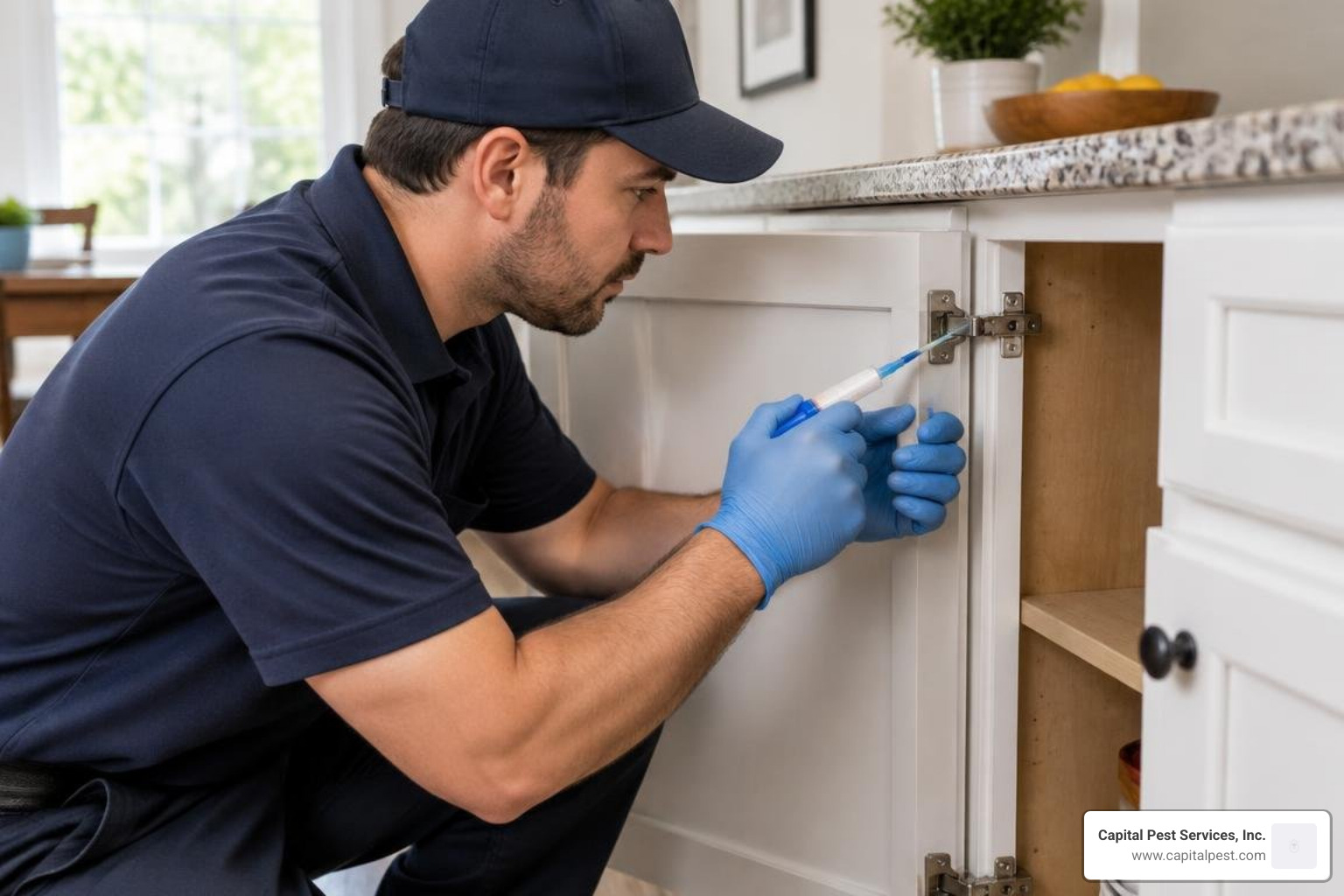
This process causes a delayed kill, giving the insect time to return to its harborage. Cockroaches are coprophagic (they eat feces) and necrophagic (they consume their dead nestmates). When a poisoned roach returns to the colony and dies, its droppings and carcass contain active indoxacarb residues. Secondary and tertiary transfers occur, killing up to 40+ additional roaches from a single initial feeding. According to the EPA label guidelines for indoxacarb gel baits, applying 3 to 5 small spots (roughly 0.5 grams or 1/4-inch diameter) per 10 linear feet in cracks and crevices achieves colony-level elimination within 1 to 4 weeks.
Combining IGRs and Baits for the Best Pest Control for Cockroaches
Gel baits eliminate active feeding nymphs and adults, but they cannot penetrate cockroach egg cases (oothecae). This is where Insect Growth Regulators (IGRs), such as hydroprene (found in Gentrol), become indispensable.
Hydroprene is a synthetic juvenile hormone mimic. When young roach nymphs encounter hydroprene, it prevents them from successfully molting into reproductive adults, causing physical mutations like twisted wings and sterile genitalia. Furthermore, adult females exposed to an IGR produce non-viable egg cases that fail to hatch. With a 120-day residual activity, IGRs break the reproductive chain, preventing the next generation from rebounding once the bait has been consumed.
Strategic Perimeter Barriers and Dusts
To complete the treatment protocol:
- Insecticidal Dusts: Apply inorganic dusts such as boric acid or diatomaceous earth into dry, enclosed voids (behind wall outlets, under dishwashers, and beneath kickplates). These dusts wear down the cockroach’s waxy exoskeleton, causing lethal dehydration, and remain effective indefinitely if kept dry.
- Perimeter Sprays: Apply non-repellent or long-lasting perimeter insecticides (such as Ortho Home Defense with up to 12 months indoor residual protection) around baseboards, utility penetrations, and entry doorways to intercept migrating roaches from crawlspaces or outdoors.
Core Treatment Products and Application Mistakes to Avoid
Selecting the right active ingredients and applying them properly determines whether an infestation disappears in three weeks or drags on for months.
| Product Type | Top Active Ingredients | Primary Mechanism | Residual Life | Best Placement Area |
|---|---|---|---|---|
| Gel Bait | Indoxacarb, Fipronil | MetaActive / Delayed kill, secondary transfer | 1–2 weeks (replenish as eaten) | Cabinet hinges, appliance gaps, pipe collars |
| Insect Growth Regulator (IGR) | Hydroprene, Pyriproxyfen | Juvenile hormone mimic; sterilizes adults | 90–120 days | Kickplates, pantry corners, dark harborage |
| Insecticidal Dust | Boric Acid, Diatomaceous Earth | Abrasive desiccation; cuticle damage | Indefinite (if kept dry) | Wall voids, behind electrical faceplates |
| Perimeter Spray | Bifenthrin, Zeta-Cypermethrin | Contact & residual perimeter barrier | Up to 12 months | Exterior foundations, garage thresholds, entryways |
Critical Application Mistakes That Prolong Infestations
Avoid these common DIY pitfalls that undermine cockroach control efforts:
- Using Total Release “Bug Bombs” or Foggers: Aerosol foggers do not penetrate narrow wall cracks where 80% to 90% of roaches nest. Instead, the pyrethroid repellents in foggers blast roaches deeper into wall voids, attic spaces, and adjoining rooms, scattering a localized kitchen problem across the entire house.
- Spraying Repellents Over Gel Bait: Applying aerosol contact sprays (like Raid Max) near or directly on gel bait placements contaminates the food attractant. Roaches will avoid the bait entirely. Always keep sprays separate from bait locations.
- Applying Large “Blobs” of Bait: Cockroaches prefer feeding on small, fresh, pea-sized droplets. Large piles dry out quickly, form an unpalatable skin, and get ignored.
- Failing to Rotate Chemistries: Using the same active ingredient continuously can select for bait aversion or physiological resistance. Rotate between indoxacarb (Advion) and fipronil (Maxforce FC) every 90 days.
- Neglecting Deep Cleaning: Leaving crumbs, pet food, grease behind the stove, and standing water under sinks provides competing food sources, making roaches far less likely to consume your bait.
Integrated Pest Management and Long-Term Prevention
At Capital Pest Services, Inc., we practice Integrated Pest Management (IPM)—an eco-friendly, science-based approach that emphasizes long-term prevention through habitat manipulation, physical exclusion, sanitation, and targeted, low-risk chemical applications. IPM solves the underlying root causes of infestations rather than relying solely on repeated pesticide sprays.
Sanitation and Moisture Elimination
Cockroaches can survive a month without food, but only about a week without water. Moisture control is critical:
- Eliminate Standing Water: Repair leaky sink traps, dripping faucets, and sweating pipes immediately. Dry out kitchen sinks before going to bed.
- De-Grease Cooking Areas: Pull out the stove and clean the sides and floor where grease and food splatters accumulate.
- Airtight Food Storage: Store pantry grains, cereals, and dry pet food in heavy-duty airtight plastic or glass containers. Never leave open pet bowls out overnight.
- Trash Discipline: Use trash cans with tight-fitting lids and empty household garbage every night.
Structural Exclusion and Sticky Trapping
- Caulk Cracks and Gaps: Use 100% silicone sealant to close gaps along kitchen backsplashes, cabinet bases, baseboards, and bathroom trim.
- Seal Utility Penetrations: Check where plumbing lines and electrical conduits enter through walls under sinks and behind toilets. Seal these openings using expanding foam or copper mesh with silicone caulk.
- Install Door Sweeps: Ensure exterior doors and garage thresholds create a tight seal against the floor.
- Deploy Sticky Monitoring Traps: Place glue traps behind toilets, alongside refrigerators, and inside sink cabinets. Monitoring traps help you identify harborage locations and confirm that your cockroach population is declining toward zero.
Frequently Asked Questions About Cockroach Control
How long does it take to completely eradicate a cockroach infestation?
A moderate-to-severe German cockroach infestation typically takes between 2 and 4 weeks to eradicate when using a combined protocol of gel bait and an IGR. The initial baiting cycle knocks down the active feeding population within 3 to 7 days, while the IGR prevents surviving nymphs from maturing. Because cockroach egg cases hatch over a 30-day window, regular monitoring and bait replenishment over a full 4- to 6-week period are essential to ensure emerging nymphs are eliminated.
Why did roach foggers make my infestation worse?
Over-the-counter bug bombs use aerosolized pyrethroids that deposit insecticide onto horizontal surfaces (like countertops and rugs) while failing to penetrate deep wall voids, cabinet seams, and appliance housings where roaches hide. The airborne chemicals irritate the cockroaches, triggering an evacuation response that scatters the colony into bedrooms, living rooms, and adjacent units, multiplying the number of infested rooms in your home.
Can I eliminate cockroaches in an apartment if neighboring units are infested?
Yes, but it requires a strict exclusion and non-repellent strategy. In multi-family housing, cockroaches travel between units through shared pipe chases, electrical conduits, and wall voids. You can protect your living space by sealing every utility penetration under sinks, caulking baseboards, installing door sweeps on hallway doors, and maintaining active IGR discs and non-repellent gel baits in high-risk harborage areas. However, permanent eradication across the property requires building-wide coordination.
Conclusion
Eradicating cockroaches requires a disciplined, multi-step strategy: proper species identification, targeted crack-and-crevice gel baiting, reproductive interruption with IGRs, deep sanitation, and physical exclusion. By eliminating the food and water sources that attract roaches and applying delayed-action baits that destroy the nest, you can take back control of your living space.
If you are dealing with a persistent or severe cockroach problem anywhere across Raleigh, Durham, Apex, Cary, Wake Forest, Chapel Hill, or the surrounding Triangle communities, our team is here to help. Capital Pest Services, Inc. provides comprehensive, NPA-accredited cockroach control services backed by decades of local experience. Contact us today to schedule your comprehensive inspection and restore comfort and safety to your property.
Capital Pest is proud to be a family-owned and operated pest control company serving Raleigh, NC and its surrounding area (Chapel Hill, Wake Forest, Clayton, Pinehurst, Pittsboro, Fuquay-Varina, etc). Contact us for our pest control services today!