Tired of Bug Bites? Proven Mosquito Control Solutions for Wake Forest Yards
Mosquito Control for a More Comfortable Wake Forest Yard
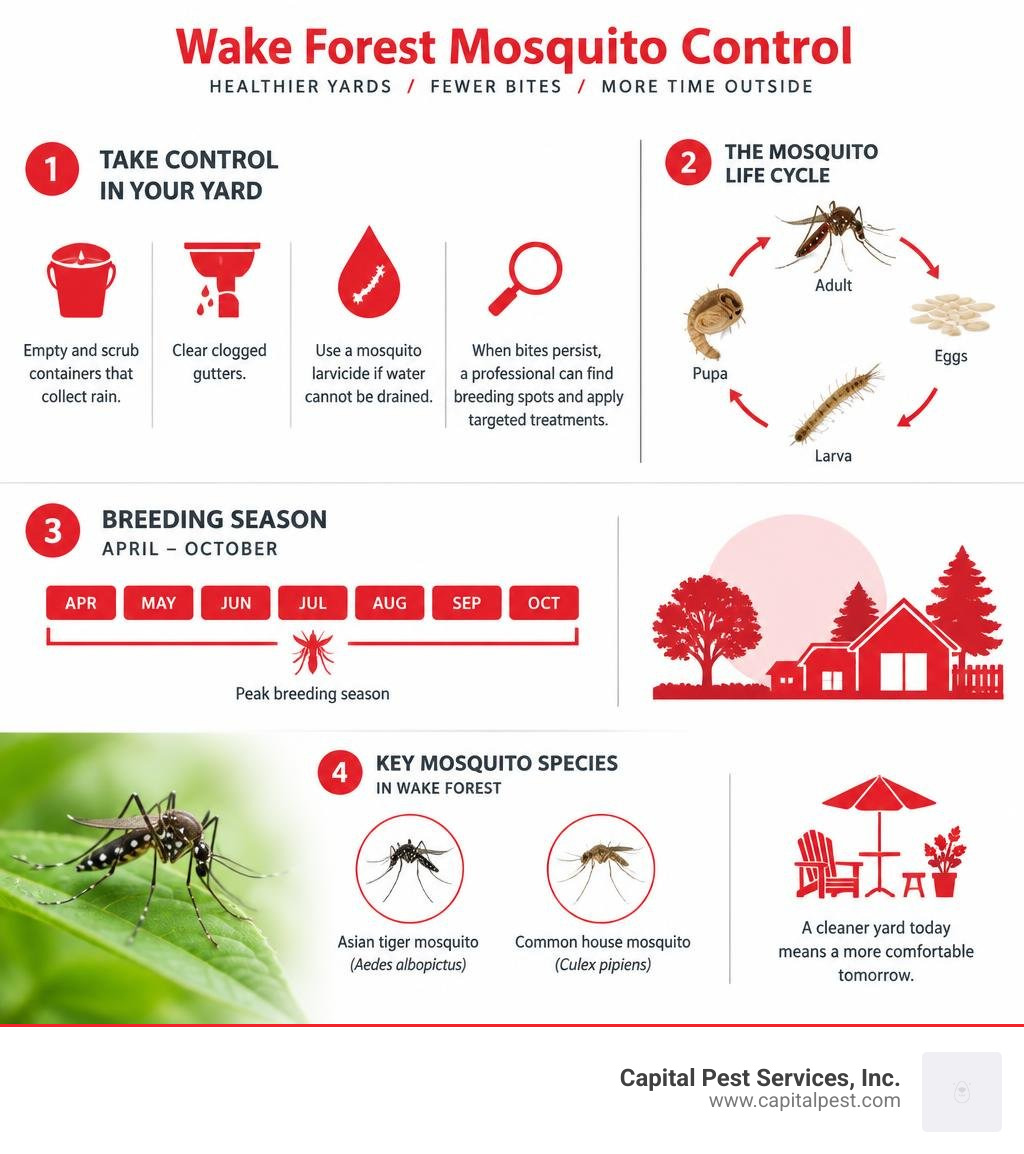
Start with water. Once a week, empty and scrub buckets, plant saucers, birdbaths, and other containers that collect rain. Clear clogged gutters, too. If water cannot be drained, use a mosquito larvicide labeled for that site. When bites persist, a professional can identify breeding spots and apply targeted yard treatments while avoiding flowering plants where bees forage.
Wake Forest’s warm, wet months give mosquitoes plenty of chances to breed. Starting these steps in spring and keeping them up through fall can help you spend more time outside with fewer bites. For a broader look at how mosquitoes develop and why they thrive here, the mosquito life cycle explains the egg-to-adult stages that make weekly water removal so important.
I’m Mitch Taylor, president of Capital Pest Services, Inc., with more than 17 years of pest management experience in the Triangle. When it comes to effective mosquito control, Wake Forest homeowners can achieve lasting relief with a combination of proactive yard habits and proven professional treatments.
Understanding Wake Forest Mosquito Species and Health Risks
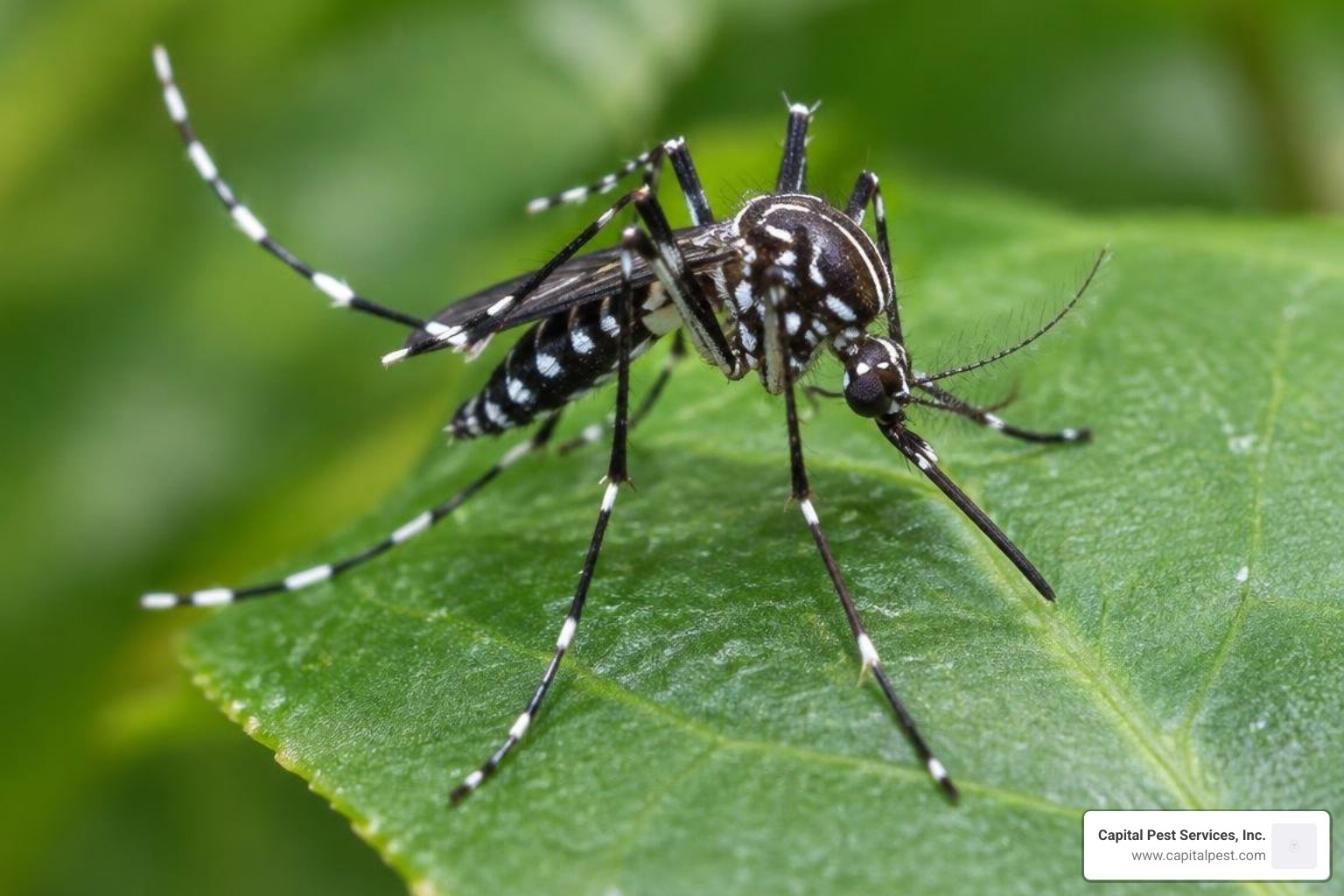
North Carolina is home to over 60 distinct mosquito species, and several thrive right here in the Piedmont region. In Wake Forest, two main species create the biggest headaches for homeowners: the Asian tiger mosquito (Aedes albopictus) and the common house mosquito (Culex pipiens).
The Asian tiger mosquito is notorious for its aggressive, daytime biting habits. Unlike other varieties that emerge primarily at dusk, this striking black-and-white insect hunts all day long, ruining backyard barbecues, gardening, and patio relaxation. They prefer artificial containers for breeding, laying eggs in everything from discarded bottle caps to clogged downspouts. On the other hand, Culex mosquitoes prefer stagnant, organic-rich pools of water and become most active from dusk until dawn.
Beyond itchy, painful welts, these insects carry serious public health risks:
- West Nile Virus (WNV): Wake County has reported over 50 positive mosquito pools for West Nile virus in recent surveillance seasons. This confirms that local transmission remains an active risk for Triangle residents and their pets.
- Eastern Equine Encephalitis (EEE): While rarer, EEE is a severe viral disease that affects humans and horses, carrying a high mortality rate and significant neurological risks.
- Heartworm Disease: Mosquitoes serve as the sole vector for transmitting heartworm larvae to dogs and cats, making backyards unsafe for family pets without proper preventative care.
Our local climate fuels these threats. Wake Forest experiences warm, humid summers alongside heavy spring showers and summer thunderstorms. Combined with the dense tree canopies, rolling hills, and creek beds found throughout neighborhoods near Joyner Park, Heritage, and Falls Lake, our local geography creates the ultimate incubator for mosquito populations.
Comprehensive Mosquito Control in Wake Forest
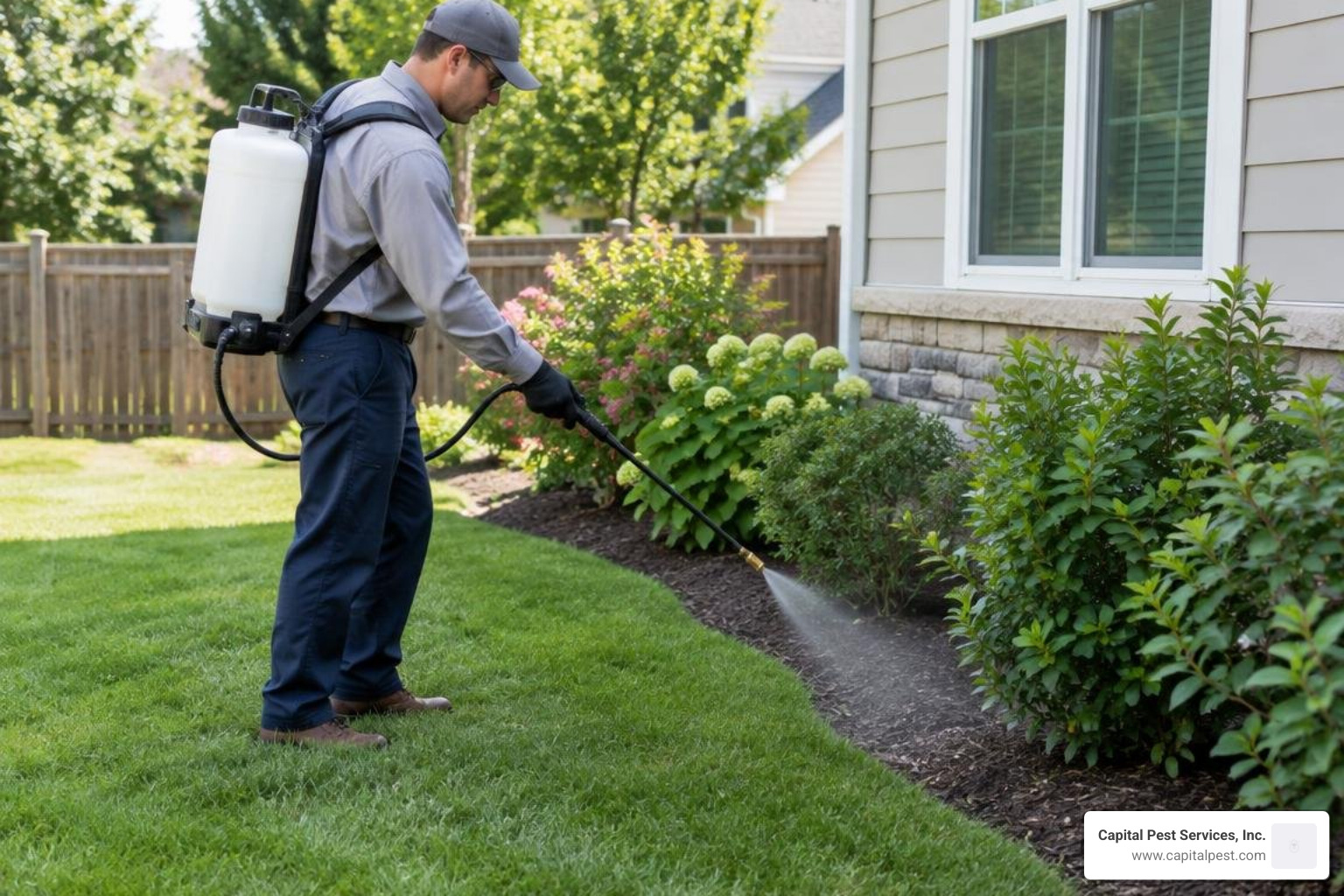
Wiping out mosquitoes requires a multi-layered approach rather than just spraying chemicals randomly. At Capital Pest Services, Inc., we rely on Integrated Pest Management (IPM) to eliminate adult mosquitoes, halt reproduction, and safeguard the local ecosystem.
Our comprehensive approach targets the insects at every stage of their life cycle:
- Source Identification & Larvicides: We locate and treat areas of standing water that cannot be drained. By applying specialized, eco-friendly biological larvicides (such as Bacillus thuringiensis israelensis, or BTI), we prevent aquatic larvae from maturing into biting adults without harming fish or other aquatic life.
- Targeted Perimeter Barrier Treatments: We apply residual treatments to the undersides of dense foliage, shaded turf edges, mulch beds, and beneath decks where adult mosquitoes rest during the heat of the day.
- Pollinator Protection Protocols: We protect beneficial insects like honeybees and butterflies by strictly avoiding blooming flowers, vegetable gardens, and active hives during application.
To explore additional strategies for maintaining outdoor comfort throughout the warm months, check out our guide on smart ways to control backyard pests and enjoy your summer.
Comparing Professional Services and DIY Treatments
Many homeowners attempt to solve backyard mosquito issues using store-bought foggers, citronella candles, or retail hose-end sprayers. While DIY products may offer brief relief for an hour or two, they rarely deliver long-term control because they fail to disrupt the reproductive cycle.
| Feature | Professional Integrated Pest Management | DIY Yard Treatments |
|---|---|---|
| Residual Longevity | 21 to 30 days of continuous protection | Few hours to 2–3 days |
| Application Precision | Micro-droplet backpack misting targeting resting zones | Broad surface spraying; prone to wind drift |
| Larval Control | Target-specific biological larvicides in breeding pools | Usually limited to adult knockdowns |
| Pollinator Safety | Strict protocols avoiding blooming flora and active hives | High risk of unintended beneficial insect exposure |
| Equipment Quality | Commercial-grade mist blowers reaching deep canopies | Low-pressure sprayers with limited foliage penetration |
| Cost Efficiency | High long-term value; minimizes product waste | Repeated purchases add up with minimal lasting impact |
Professional services provide predictable protection by utilizing commercial equipment that reaches deep beneath leaf canopies where mosquitoes harbor. For a deeper breakdown on what to look for when hiring a pest team, read a homeowner’s guide to vetting local mosquito yard treatments.
When to Schedule Mosquito Control in Wake Forest Seasonally
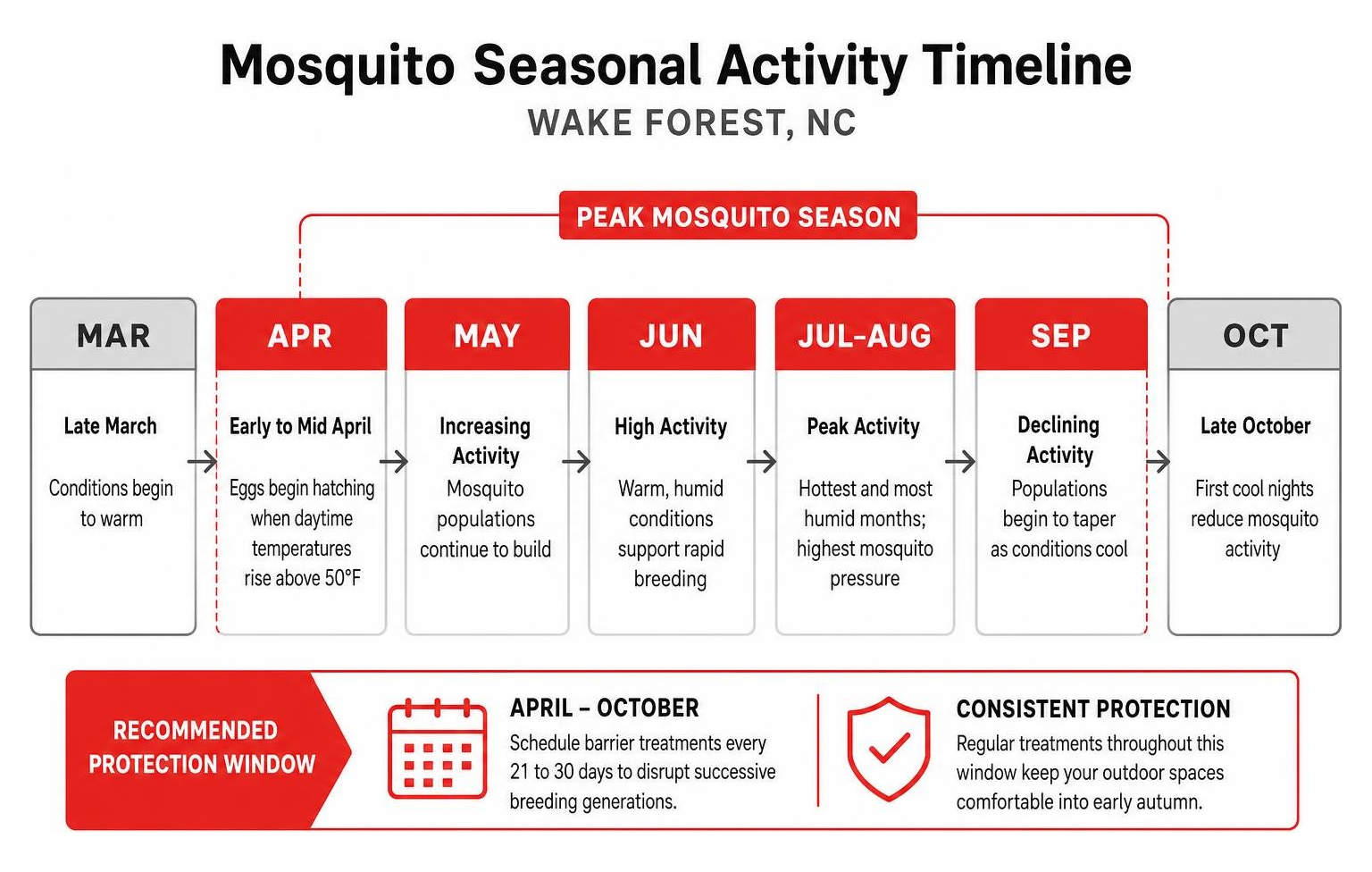
Mosquito activity is directly tied to ambient temperatures. In Wake Forest, mosquito eggs begin hatching once consistent daytime temperatures rise above 50°F, which typically occurs in late March or early April.
The peak season spans from April through October, reaching its height during the hot, humid stretches of July and August. Scheduling barrier treatments every 21 to 30 days throughout this window disrupts successive breeding generations, keeping your lawn comfortable through early autumn.
Proactive Yard Prevention and Breeding Source Elimination
Over 90% of residential mosquito breeding occurs in standing water right on the property. Even a bottle cap filled with rainwater can produce dozens of mosquitoes in under a week.
You can dramatically reduce mosquito activity across your yard by following these preventive best practices:
- Clear Roof Gutters: Pine needles and oak leaves quickly clog gutters in Wake Forest. Standing gutter water creates an ideal, hidden breeding nursery high off the ground.
- Refresh Standing Water Containers: Empty and scrub birdbaths, outdoor pet bowls, and plant saucers at least once every five to seven days to wash away mosquito eggs.
- Manage Yard Drainage: Address low-lying areas, French drains, and downspout extensions that hold water after storms. Ensure tarps covering firewood, boats, or grills are pulled taut to prevent puddling.
- Trim Dense Vegetation: Keep grass mowed and thin out overgrown shrubs along your home’s perimeter to reduce shaded, humid resting zones for adult pests.
Local Regulations and Town Interventions
The Town of Wake Forest actively works to suppress vector populations in public spaces. The Town’s Public Works Department conducts seasonal street spraying operations from April through October, covering over 200 miles of municipal roadways to reduce adult mosquito numbers.
Local standards encourage property owners to eliminate artificial breeding sources to support public health. In addition, Wake Forest residents who notice unusually high mosquito activity near public right-of-ways can contact the Public Works Department to request targeted street spraying, which is typically addressed within 48 hours during peak season.
Community Programs and Municipal Mosquito Control Initiatives in Wake Forest
Wake County Vector Control and municipal health teams conduct regular surveillance to monitor mosquito pool health and track potential virus transmission. While municipal street misting helps suppress mosquitoes along public corridors, these truck-mounted sprays cannot reach the private backyards, dense tree lines, and private patios where mosquitoes breed and rest. Partnering municipal efforts with tailored residential barrier applications ensures complete property protection.
Frequently Asked Questions About Wake Forest Mosquito Control
What is the peak mosquito season in Wake Forest, NC?
The peak season runs from April through October. Activity typically hits its highest levels between June and August, when summer rainfall and high humidity provide ideal breeding conditions.
How do professional mosquito treatments protect beneficial insects like bees?
Professional technicians apply treatments precisely to mosquito resting zones—such as dense brush, shaded shrubs, and beneath decks. Applications deliberately avoid flowering plants, vegetable gardens, and active pollinator areas to safeguard honeybees, butterflies, and ladybugs.
Can the Town of Wake Forest spray mosquitoes near my property?
Yes. Wake Forest residents can contact the Public Works Department to request mosquito spraying along town-maintained streets. Municipal trucks treat public right-of-ways, with typical response times within 48 hours during peak months.
Conclusion
A mosquito-infested yard takes the joy out of outdoor living and poses genuine health risks for your family and pets. Combining weekly water-elimination habits with specialized treatments gives you reliable, season-long relief. As a locally owned, NPA-accredited provider, Capital Pest Services, Inc. delivers eco-friendly barrier applications and Integrated Pest Management tailored to our unique North Carolina climate.
Ready to take your yard back? Contact us today to explore our professional Wake Forest pest control solutions and reclaim your outdoor spaces.
Capital Pest is proud to be a family-owned and operated pest control company serving Raleigh, NC and its surrounding area (Chapel Hill, Wake Forest, Clayton, Pinehurst, Pittsboro, Fuquay-Varina, etc). Contact us for our pest control services today!