Take Back Your Backyard from Biting Mosquitoes This Weekend
Kill Mosquitoes in Your Yard by Breaking the Breeding Cycle
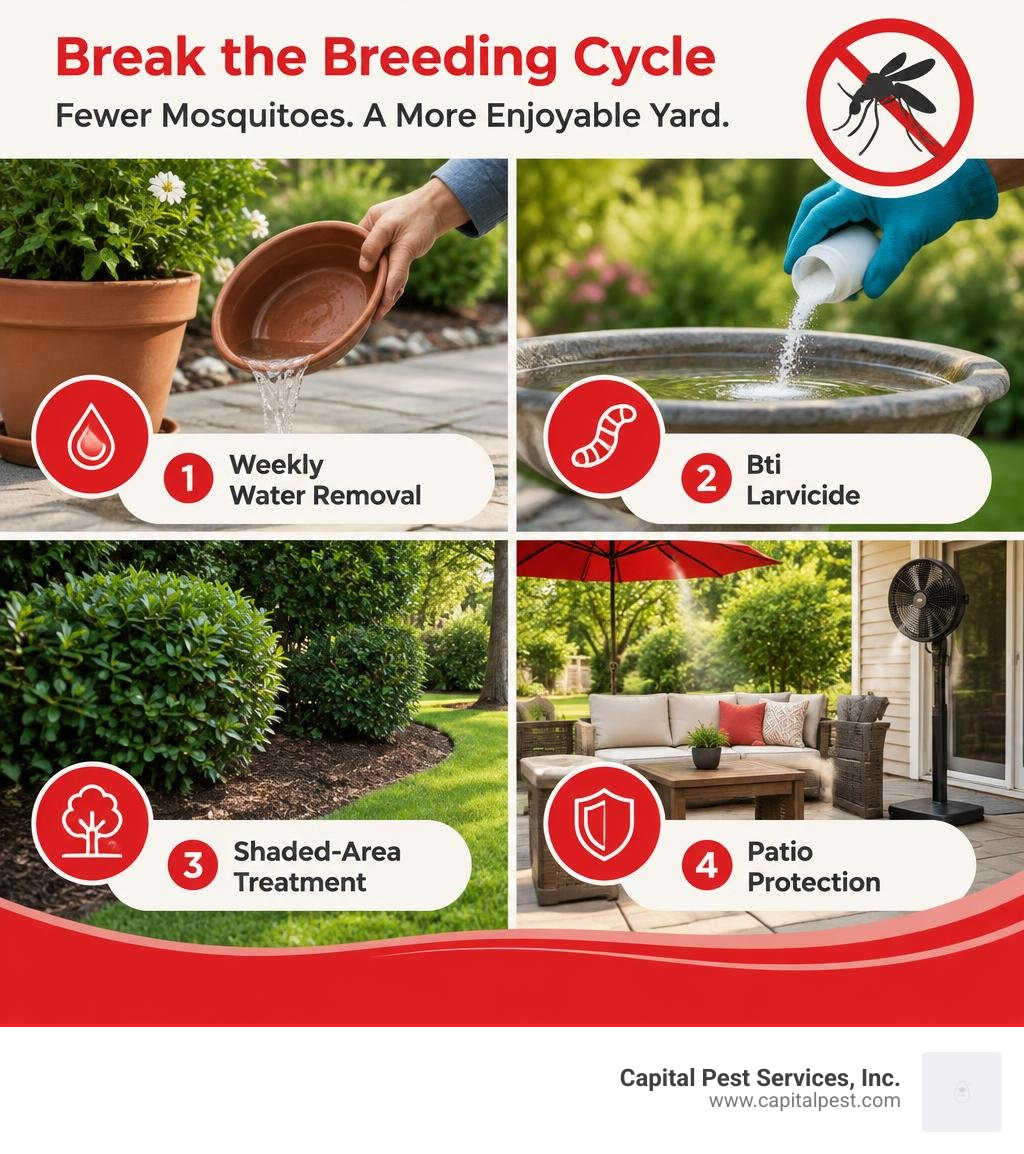
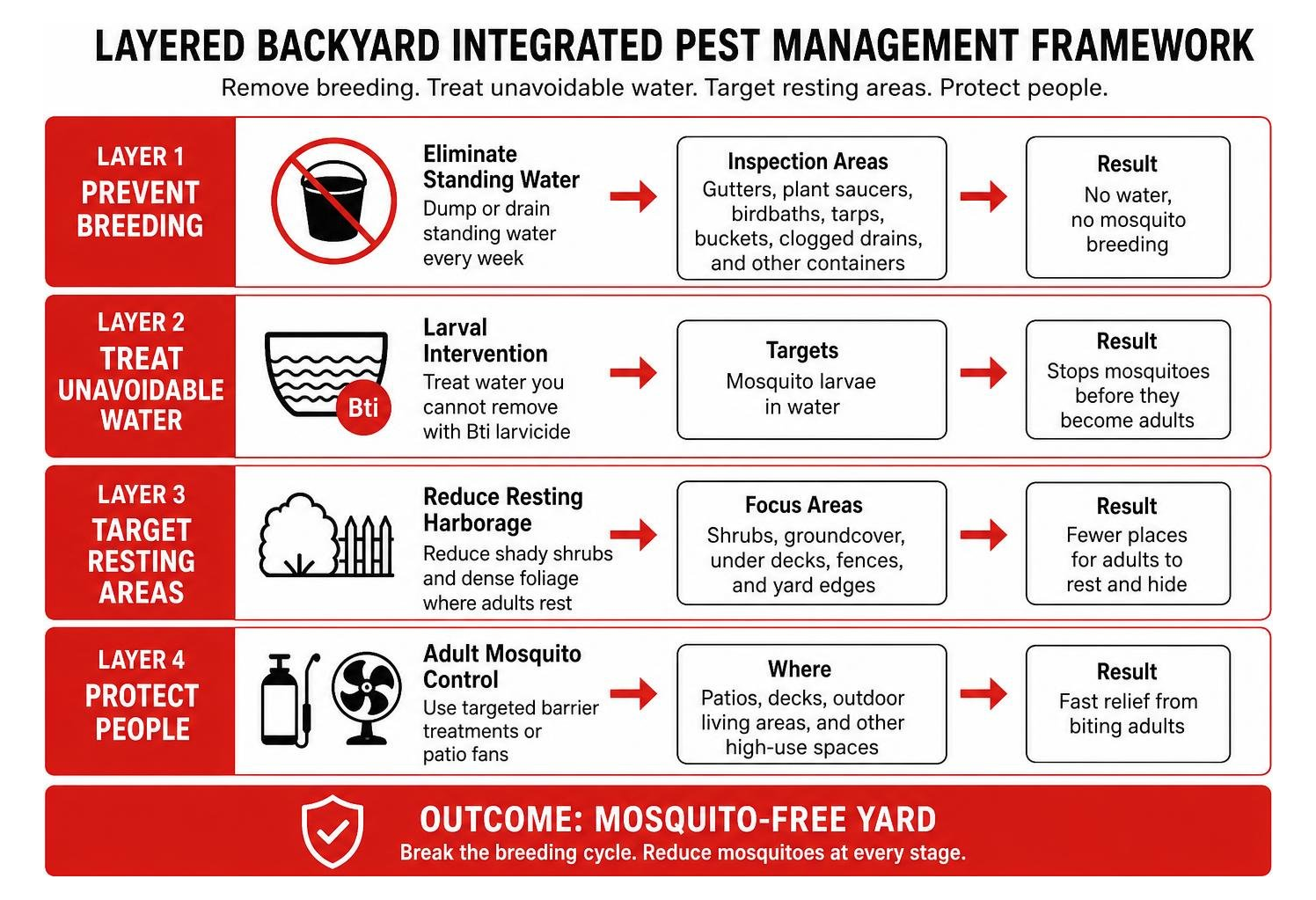
To kill mosquitoes in yard spaces, start with the source: dump or drain standing water every week, treat water you cannot remove with a Bti larvicide, and reduce the shady shrubs where adult mosquitoes rest. Add a targeted barrier treatment or patio fan when you need fast relief from biting adults.
Mosquitoes can go from egg to biting adult in as little as 7 to 10 days during warm, humid Triangle weather. That means a clogged gutter, plant saucer, birdbath, tarp, or even a small water-filled container can restart the problem fast. Asian tiger mosquitoes often bite during the day, while other common mosquitoes are most active near dawn and dusk.
You do not need to spray every inch of your lawn. The winning approach is to remove breeding water, treat unavoidable water, and focus adult control on shaded resting areas around patios, shrubs, decks, and yard edges.
I am Mitch Taylor, President of Capital Pest Services, Inc., with more than 17 years of pest-management experience serving Raleigh-Durham homeowners. In this guide, I will show you practical ways to kill mosquitoes in yard habitats while protecting your family, pets, and beneficial insects.
The Proven Strategy to Kill Mosquitoes in Yard Perimeters and Patios
Controlling mosquitoes across properties in communities like Raleigh, Durham, Cary, Chapel Hill, Wake Forest, and Apex requires an Integrated Pest Management (IPM) approach. IPM does not mean drenching open grass in broad-spectrum chemicals. Instead, it pairs regular property inspections, breeding-site elimination, larval intervention, and targeted adult control.
Mosquitoes are fragile insects that dry out quickly under direct sun. To survive our humid North Carolina summers, adult females spend the heat of the day resting on the cool, shaded undersides of dense foliage, under wooden decks, and around foundation plantings. By mapping out where mosquitoes breed versus where they rest, you can implement an effective, multi-layered barrier plan.
Step 1: Eliminate Standing Water and Breeding Grounds
Source reduction is the most critical step in backyard mosquito management. A single female mosquito lays 100 to 200 eggs at a time, needing as little as a single tablespoon of standing water to complete her brood. In the warm temperatures of late summer, those eggs hatch into biting adults in just 7 to 10 days.
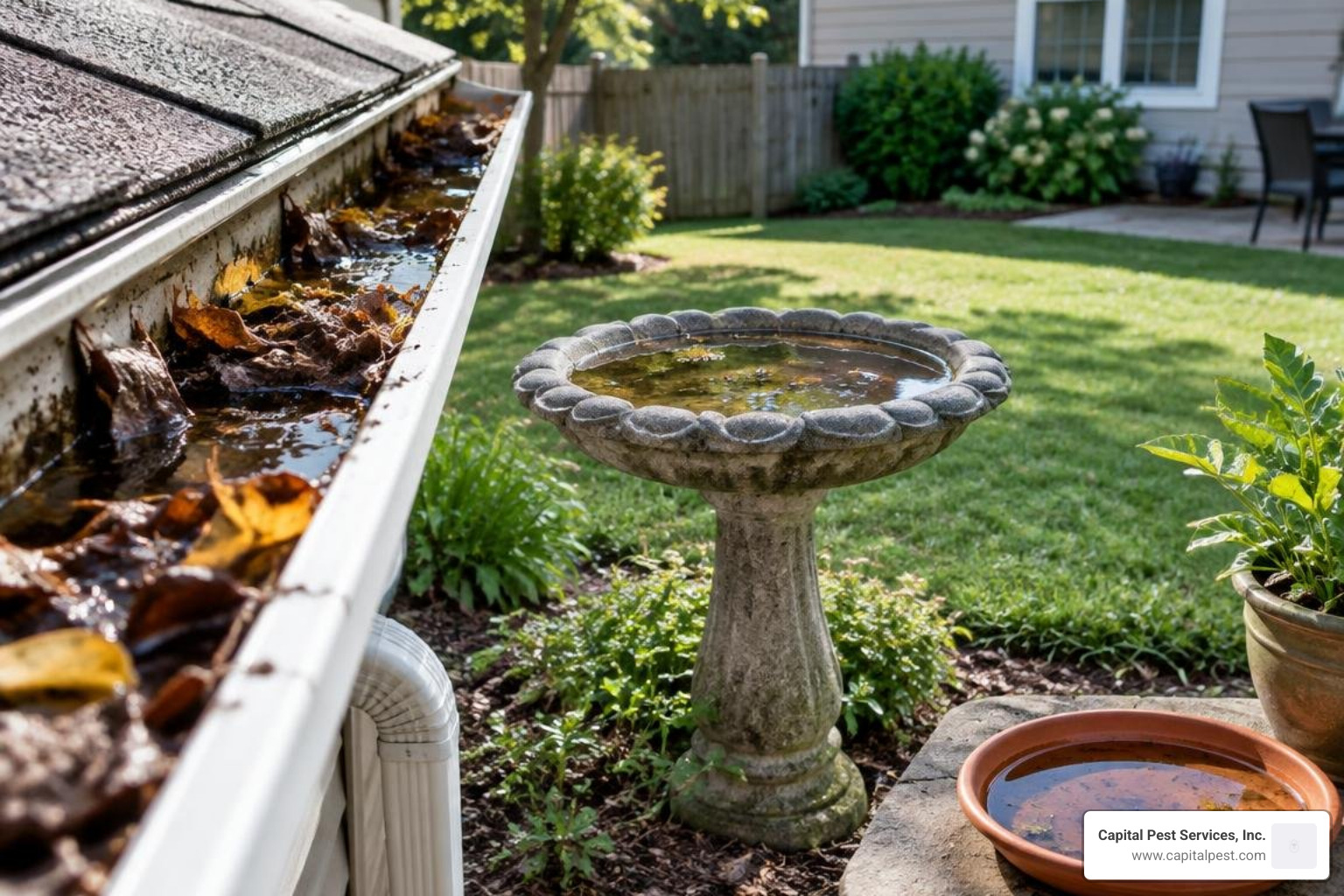
Conduct a weekly walk around your property to inspect and clear common water catchments:
- Clogged Gutters & Downspouts: Decaying leaf litter traps moisture in gutters and corrugated plastic downspout extensions, creating ideal nurseries. Clean gutters regularly and drill small drainage holes in low points of extension pipes.
- Birdbaths & Pet Dishes: Dump and refresh outdoor water basins every 3 to 5 days to interrupt the aquatic development cycle.
- Plant Saucers & Nursery Pots: Empty potted plant saucers after rainstorms or heavy watering sessions.
- Tarps, Fire Pit Covers, & Grill Lids: Straighten loose outdoor covers so water cannot pool in folds and depressions.
- Children’s Toys & Discarded Caps: A stray upturned bucket, wheelbarrow rim, or discarded plastic bottle cap can harbor hundreds of larvae.
For homeowners wanting an in-depth look at systematic habitat reduction, check out this layered integrated pest management guide to help fine-tune your inspection routine.
Step 2: Deploy Biological Larvicides for Non-Drainable Water
Some backyard water sources cannot simply be dumped on the lawn—such as rain-harvesting barrels, decorative ponds, tree hollows, or retention swales. In these areas, biological larvicides prevent adult emergence without disrupting aquatic ecosystems.
The industry standard is Bacillus thuringiensis israelensis (Bti). Bti is a naturally occurring soil bacterium that produces proteins toxic specifically to mosquito, blackfly, and fungus gnat larvae. When swallowed by larvae, Bti destroys their digestive systems within hours. It poses no harm to fish, frogs, birds, honeybees, dogs, or humans.
- Floating Dunks: A single doughnut-shaped Bti dunk treats up to 100 square feet of surface water and slowly releases active bacteria for up to 30 days.
- Granules and Bits: For shallow, dispersed standing water in drainage ditches or bromeliads, quick-acting Bti granules sink and kill existing larvae rapidly.
- Insect Growth Regulators (IGRs): Products containing methoprene prevent pupae from molting into adult biters.
You can also construct a DIY lethal ovitrap, often called a “mosquito bucket of doom.” Place a five-gallon bucket filled with water and a handful of straw or grass clippings in a shaded corner, then drop in a quarter of a Bti dunk. Female mosquitoes are lured into the fermenting water to lay eggs, but none of their offspring survive. You can read more about setting up biological larvicides and ovitraps to attract and neutralize local breeding populations naturally.
Chemical Treatments vs. Eco-Friendly Backyard Alternatives
When adult mosquito pressure is already elevated, combining larval control with an adult knockdown or repellent strategy brings fast outdoor relief. Here is a breakdown of how common treatments compare in efficacy, longevity, and application requirements:
| Method | Active Ingredients | Residual Longevity | Target Life Stage | Environmental & Pollinator Safety Notes |
|---|---|---|---|---|
| Synthetic Residual Barrier | Bifenthrin, Permethrin, Cypermethrin | 21–30 Days | Adult Mosquitoes | Highly effective; keep away from blooming flowers and waterways |
| Botanical Essential Oil Sprays | Cedarwood oil, Geraniol, Peppermint oil | 2–7 Days | Adults & Larvae (contact) | Eco-friendly; low non-target toxicity; requires frequent reapplication |
| Biological Larvicides | Bacillus thuringiensis israelensis (Bti) | 30 Days | Larvae | Highly targeted; zero toxicity to pollinators, pets, fish, or mammals |
| Spatial Repellent Devices | Allethrin, Metofluthrin vapors | 4–9 Hours (per charge/pad) | Adult Mosquitoes (repels) | Localized 15-to-20-foot zone of protection; best for wind-sheltered patios |
| High-Velocity Patio Fans | Air current (physical barrier) | Immediate (while running) | Adult Mosquitoes | Completely non-toxic; prevents landing and disperses human carbon dioxide |
How to Kill Mosquitoes in Yard Foliage with Residual Sprays
Synthetic pyrethroids, such as bifenthrin concentrate, serve as dependable adulticides. These water-based barrier sprays bond to organic surfaces and remain lethal to resting mosquitoes for up to three to four weeks.
To apply a residual barrier correctly:
- Target the Undersides of Leaves: Mosquitoes do not rest on the tops of sunny leaves. Use a pressurized pump sprayer or motorized backpack mist blower to angle spray nozzles upward into the dense interiors of shrubs, ivy ground covers, and under tree canopies up to 10 feet high.
- Treat Structural Harborage: Spray shaded areas beneath wooden decks, along dark foundation walls, and around structural overhangs where daytime temperatures stay cooler.
- Avoid the Lawn: Mosquitoes rarely rest on open, sunlit turfgrass. Spraying grass wastes product and increases chemical runoff risks.
To learn more about professional-grade sprayer selection and perimeter application setups, consult this pro-grade DIY mosquito guide.
Natural and Botanical Options for Pollinator-Safe Control
If you manage backyard beehives, maintain butterfly gardens, or prefer plant-derived products, essential oil formulations offer a viable alternative.
- Cedarwood and Sesame Oil Sprays: Ready-to-use botanical sprays utilize essential oils that disrupt the octopamine neurotransmitters of target pests without threatening beneficial pollinators like honeybees when dried. Products such as the Complete Control Mosquito Kit with Natural Essential Oils offer broad yard coverage for organic-focused management.
- Garlic Formulations: Garlic-based barriers coat vegetation and mask human scent cues for several days, deterring mosquitoes from settling near entertaining areas.
- Physical Airflow: Mosquitoes are weak fliers with large surface areas. Setting up an oscillating or ceiling-mounted outdoor fan on your patio disrupts their flight paths and disperses the carbon dioxide plumes that guide them to you.
DIY Control vs. Professional Extermination Services
Managing backyard mosquitoes can be handled through personal DIY efforts or outsourced to dedicated specialists. Each path comes with practical trade-offs regarding time, cost, and equipment.

A homeowner purchasing an entry-level pump sprayer, a bottle of bifenthrin concentrate, and a pack of Bti dunks can protect an average suburban lot for approximately $50 to $80 per season. However, DIYers must handle product mixing, maintain their equipment, and commit to spraying foliage every few weeks.
By comparison, professional mosquito control programs typically range from $75 to $400 per visit, or roughly $500 to $1,000 across a full North Carolina summer. Professional teams utilize commercial-grade mist blowers that atomize treatments into microscopic droplets, coating the interiors of dense tree canopies and shrubs that standard pump sprayers cannot reach.
When to DIY to Kill Mosquitoes in Yard Habitats vs. Calling a Pro
Consider tackling the job yourself if:
- Your property is a quarter-acre or less with open landscaping and minimal dense underbrush.
- You have time to perform weekly breeding inspections and spray every 21 days.
- Biting pressure is moderate and localized primarily around a single deck or patio.
Professional intervention is recommended when:
- Your yard borders wooded tracts, creeks, greenways, or unmaintained drainage retention ponds.
- The property exceeds a half-acre, making manual hand-pump spraying difficult and uneven.
- Day-biting Asian tiger mosquitoes (Aedes albopictus) persist despite standing-water removal.
- You need a fully coordinated barrier program integrated into broader residential pest control plans.
If you are exploring local service providers, read our guide on vetting local mosquito yard treatments to ensure your contractor adheres to safe, pollinator-conscious practices. For properties larger than an acre, exploring an IPM plan for large yards will provide added structural guidance.
Essential Safety Protocols for Children, Pets, and Pollinators
Regardless of whether you choose DIY applications or professional treatments, basic chemical safety protocols must always be followed:
- Wait for Sprays to Fully Dry: Keep dogs, cats, and children off treated surfaces until the application has dried completely—typically 1 to 2 hours depending on humidity. Once dried, modern synthetic pyrethroids bind to plant surfaces and present minimal dermal transfer risk.
- Protect Pollinator Pathways: Never spray flowering plants, open vegetable gardens, clover patches, or fruit trees in bloom.
- Time Your Applications Wisely: Spray during early morning or late dusk when honeybees and butterflies are not actively foraging and wind speeds are under 5 mph to prevent drift.
- Guard Aquatic Zones: Synthetic adulticides are toxic to aquatic organisms. Maintain a minimum 25-foot untreated buffer zone around koi ponds, streams, and natural lakes.
Common Mosquito Control Mistakes That Ruin Your Outdoor Summer
Many homeowners invest in tools that deliver little real-world relief. Avoid these common pitfalls:
- Relying on Bug Zappers: Ultraviolet light electrocutors kill harmless night-flying moths, beetles, and midges, but mosquitoes make up less than 1% of their catch. Zappers often do more harm than good by destroying natural mosquito predators.
- Using Citronella Candles for Yard-Wide Relief: A citronella candle works only within a radius of a few feet in dead-calm air. A slight breeze disperses the vapor, leaving you unprotected across larger decks.
- Trusting Unproven Ultrasonic Devices: Electronic, sonic, or smartphone pest-repelling frequencies have consistently failed independent laboratory and field trials.
- Using Aerosol Foggers as a Long-Term Strategy: Thermal propane foggers knock down adult mosquitoes flying at that exact moment, but they offer zero residual protection. Without source reduction, new adults will emerge and replace them within days.
- Spraying Midday in Full Sun: Applying liquid treatments in 90-degree heat causes rapid product evaporation and photodecomposition, reducing residual efficacy and increasing the risk of foliage burn.
Frequently Asked Questions About Backyard Mosquito Control
How often should mosquito barrier treatments be reapplied?
A quality synthetic residual barrier spray typically lasts 21 to 30 days. However, heavy summer downpours, frequent sprinkler irrigation, and strong UV sunlight break down the chemical bonds over time. Botanical oils have a shorter lifespan and generally require reapplication every 7 to 14 days.
Do bug zappers and citronella candles actually kill yard mosquitoes?
No. Bug zappers fail because biting female mosquitoes track heat, moisture, and carbon dioxide rather than UV light. Citronella candles produce a minor localized masking effect, but they do not reduce or kill mosquito populations across a yard.
Is it safe for dogs and children to play in the yard after spraying?
Yes, provided you wait for the spray to dry completely. Once dry (usually 1 to 2 hours), the active ingredients are locked onto the leaf surfaces. EPA-registered products used according to label instructions break down naturally without leaving dangerous surface residues.
Conclusion
Reclaiming your yard from aggressive mosquitoes requires a balanced strategy: eliminate standing water weekly, treat permanent water features with biological Bti larvicides, and apply targeted residual treatments to shaded resting spots. By addressing both the aquatic larval stage and the terrestrial adult stage, you break the reproductive cycle and keep your outdoor spaces comfortable.
If you live in Raleigh, Durham, Cary, Wake Forest, Chapel Hill, or surrounding Triangle communities and need reliable, family-safe protection, our team at Capital Pest Services, Inc. is here to help. Explore our professional mosquito control services or contact us today to schedule your seasonal yard inspection.
Capital Pest is proud to be a family-owned and operated pest control company serving Raleigh, NC and its surrounding area (Chapel Hill, Wake Forest, Clayton, Pinehurst, Pittsboro, Fuquay-Varina, etc). Contact us for our pest control services today!