

Smart Ways to Control Backyard Pests and Enjoy Your Summer
Start Backyard Bug Control With Prevention and Targeted Treatment
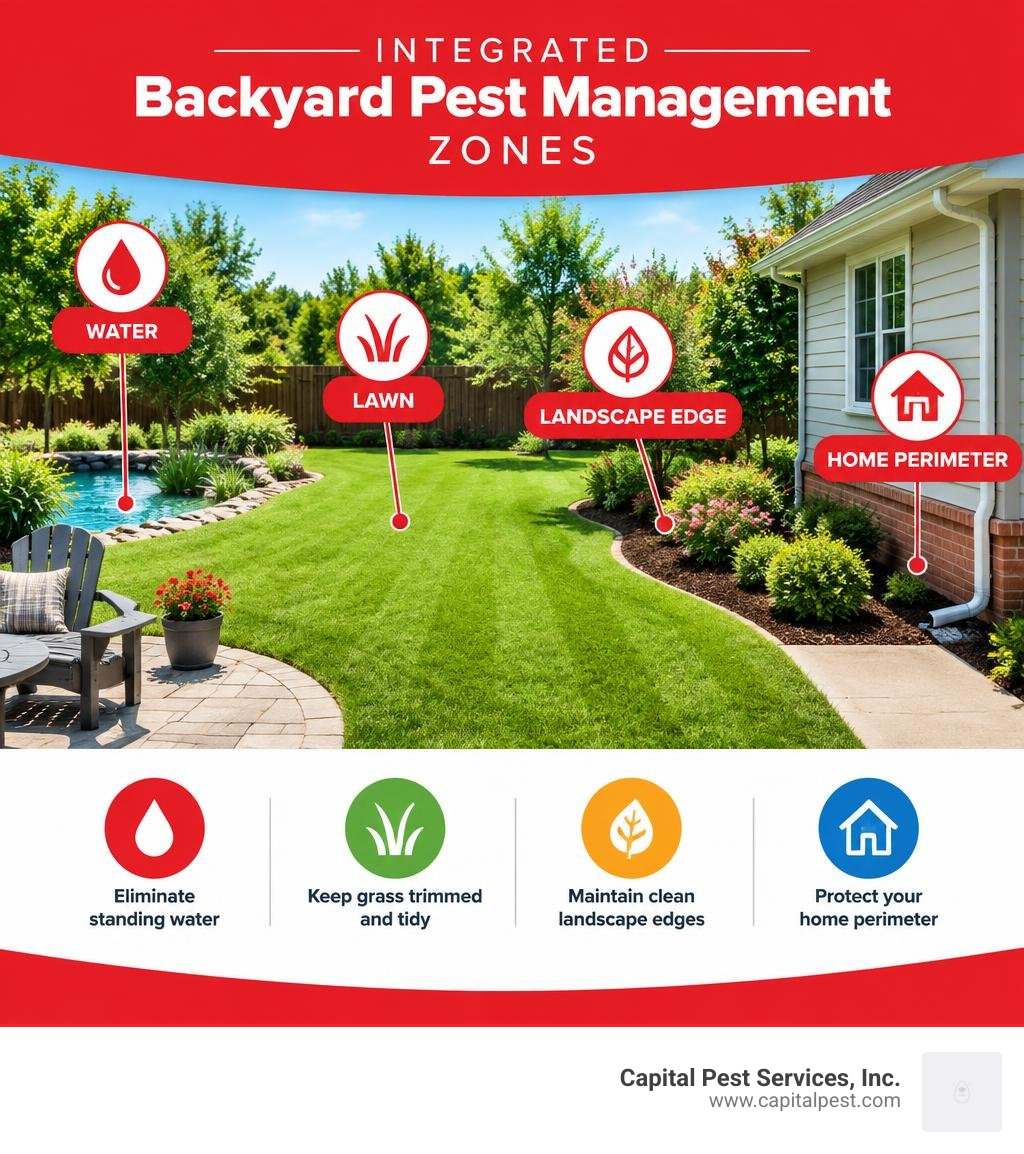
Effective backyard bug control starts with making your yard less inviting to pests, then treating the areas where they live and travel. For a safer, longer-lasting result:
- Empty or refresh standing water to reduce mosquito breeding.
- Mow grass, remove leaf litter, and trim dense shrubs to limit tick, flea, and ant hiding places.
- Use targeted products only where needed, such as a perimeter treatment for crawling insects or a mosquito treatment in shaded resting areas.
- Apply products in calm, dry weather and keep children and pets away until treated surfaces are fully dry.
A single spray can help, but the strongest plan combines habitat cleanup, careful timing, and pest-specific treatment. This approach can reduce mosquitoes near patios, ticks along wooded edges, ants around foundations, and other nuisance insects without treating every inch of the yard.
I am Mitch Taylor, President of Capital Pest Services, Inc., with more than 17 years of experience helping Raleigh-Durham Triangle homeowners build practical backyard bug control plans. The next sections explain how to choose the right method, apply it safely, and protect the people, pets, and pollinators that share your outdoor space.
Choosing the Right Backyard Bug Control Method
Selecting an outdoor pest control product requires matching the delivery mechanism to your primary problem. Different pests live in distinct zones of your landscape, meaning an aerosol fogger designed for flying gnats will not solve an underground grub infestation, and granular turf products will not stop adult mosquitoes resting in high tree canopies.
When mapping out your yard defense, outdoor insect management products generally fall into three functional categories: broad-area surface liquids, localized contact aerosols, and granular barriers. Understanding their operational scope ensures you do not waste product or misapply treatments to non-target areas. For example, review these hose-end spray concentrate specifications to see how broad-coverage concentrates function in outdoor settings.
| Product Type | Primary Delivery Mechanism | Target Zone | Residual Longevity | Best Suited For |
|---|---|---|---|---|
| Hose-End Liquid Concentrates | Garden hose siphon spray | Turfgrass, ornamentals, exterior foundation | 4 to 12 weeks | Mosquitoes, ticks, fleas, surface ants |
| Aerosol Foggers | Pressurized fine mist | Patios, decks, immediate airspace | Minutes to 24 hours | Flies, gnats, wasps, active adult mosquitoes |
| Granular Insecticides | Broadcast spreader | Soil surface, thatch layer, root zone | 4 to 8 weeks | Soil grubs, chinch bugs, subterranean ants |
| Botanical Barrier Sprays | Pump sprayer / hose-end | Shaded borders, mulched perimeters | 2 to 4 weeks | Eco-conscious mosquito and tick suppression |
Liquid Concentrates vs. Aerosol Sprays for Backyard Bug Control
Liquid concentrates with built-in hose-end sprayers (such as QuickFlip dials) automatically blend water with insecticide concentrate as you spray. A single 32-fluid-ounce bottle of concentrate can cover between 5,000 square feet (such as standard consumer pyrethroid sprays) and up to 16,000 square feet for high-yield formulas like OFF!® Hose End Bug Control I. These liquids coat turfgrass, shrubbery, and exterior hardscapes to leave a residual barrier that continues eliminating pests for weeks after drying.
By contrast, aerosol foggers—such as the Backyard Bug Control Outdoor Fogger from Cutter—are formulated for volume-based contact knockdown rather than long-term surface barriers. A standard aerosol fogger can treat an airspace volume of approximately 1,200 cubic feet (an area roughly 8 feet by 10 feet by 15 feet). Foggers dispense microscopic airborne droplets that strike flying insects mid-air. Because the fine mist dissipates rapidly in ambient breezes, foggers provide immediate relief for an evening gathering on a patio but offer virtually zero multi-week residual protection on lawn surfaces.
Granular Insecticides and Perimeter Barrier Treatments
For pests inhabiting the thatch and root zones of your lawn—such as crane fly larvae, armyworms, and nesting ants—granular insecticides offer superior performance over foliar liquid sprays. Applied using a standard rotary broadcast spreader, dry insect granules settle past the blades of grass directly onto the soil.
To activate these treatments, you must lightly water in the granules with roughly 0.25 inches of irrigation, washing the active ingredient into the root layer where subsurface pests feed.
For exterior structure defense, establish a continuous perimeter barrier around your home’s foundation. This technique requires applying a 3-foot band outward onto the soil or mulch and a 3-foot band upward along the masonry foundation wall. Spraying spot or crack-and-crevice treatments around basement window wells, plumbing penetrations, and crawlspace vents halts crawling insects before they migrate indoors. If you notice structural wood damage or soil tubes during this process, our specialized termite control services provide dedicated subsurface soil treatments to protect your property’s framing.
Essential Active Ingredients for Outdoor Pest Management
The effectiveness of any pest product depends directly on its active chemistry. Different chemical classes interact uniquely with insect nervous systems, providing varying balances between rapid knockdown power and long-term environmental persistence.
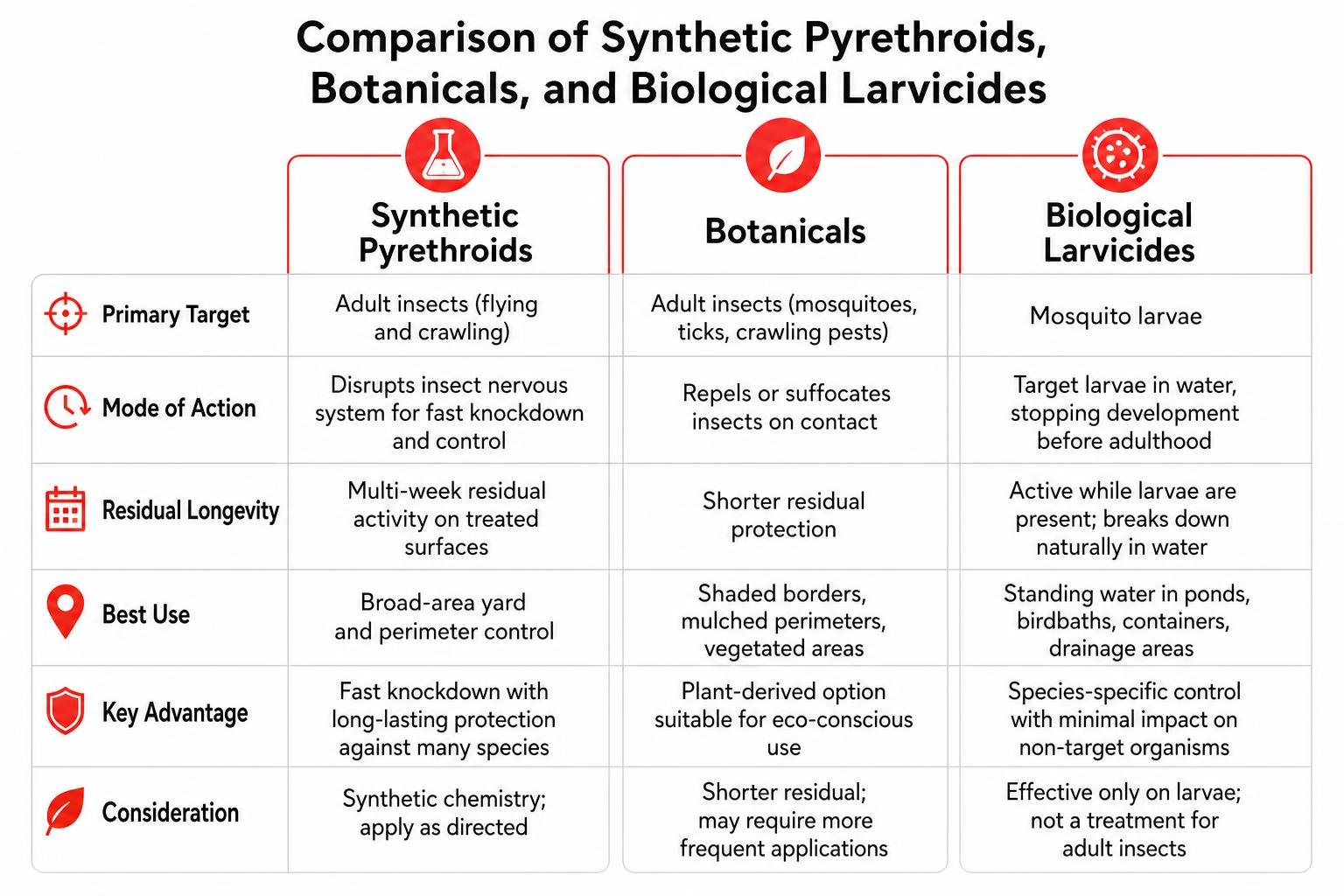
Synthetic Pyrethroids vs. Botanical Oils for Backyard Bug Control
Synthetic pyrethroids are engineered compounds modeled after natural pyrethrins extracted from chrysanthemum flowers. Common examples include:
- Lambda-Cyhalothrin: A fast-acting pyrethroid commonly formulated at 0.16% to 0.5% in yard concentrates. It binds tightly to soil and waxy leaf surfaces, providing multi-week residual activity against more than 110 listed insect species.
- Bifenthrin: A widely used perimeter barrier chemistry with exceptional photostability (resistance to sunlight breakdown) that controls ants, ticks, and chinch bugs.
- Tetramethrin & Phenothrin: Highly volatile pyrethroids designed for aerosol foggers to produce instant muscular paralysis (knockdown) in flying insects on contact.
For homeowners seeking eco-friendly alternatives, botanical oil blends utilize cedarwood, lemongrass, peppermint, and soybean oils. These natural extracts disrupt insect octopamine receptors (a neurotransmitter unique to invertebrates) and dissolve the protective exoskeletons of soft-bodied insects. While botanical sprays break down faster under direct sunlight and high temperatures—requiring reapplication every 14 to 28 days—they leave minimal synthetic residue in soil beds.
Larvicides and Targeted Baits
Targeting adult insects solves only half the problem. An effective pest program attacks insects at their vulnerable larval and colonial stages:
- Bacillus thuringiensis israelensis (Bti): A naturally occurring soil bacterium packaged in solid “dunk” or granular forms. When dropped into birdbaths, rain barrels, or retention ponds, mosquito larvae ingest the Bti proteins, destroying their digestive systems without harming birds, pets, fish, or humans.
- Spinosad: An organic-compliant compound derived from soil actinomycetes used in granular perimeter baits to eradicate crawling pests without broad chemical spraying.
- Solid Ant Baits: When dealing with colony-forming insects, broadcast baits are carried by worker ants back to the queen. If you are experiencing aggressive mound activity in turf, our dedicated ant control protocols eliminate the hidden subterranean nest structure.
Step-by-Step Guide to Applying Yard Pest Treatments
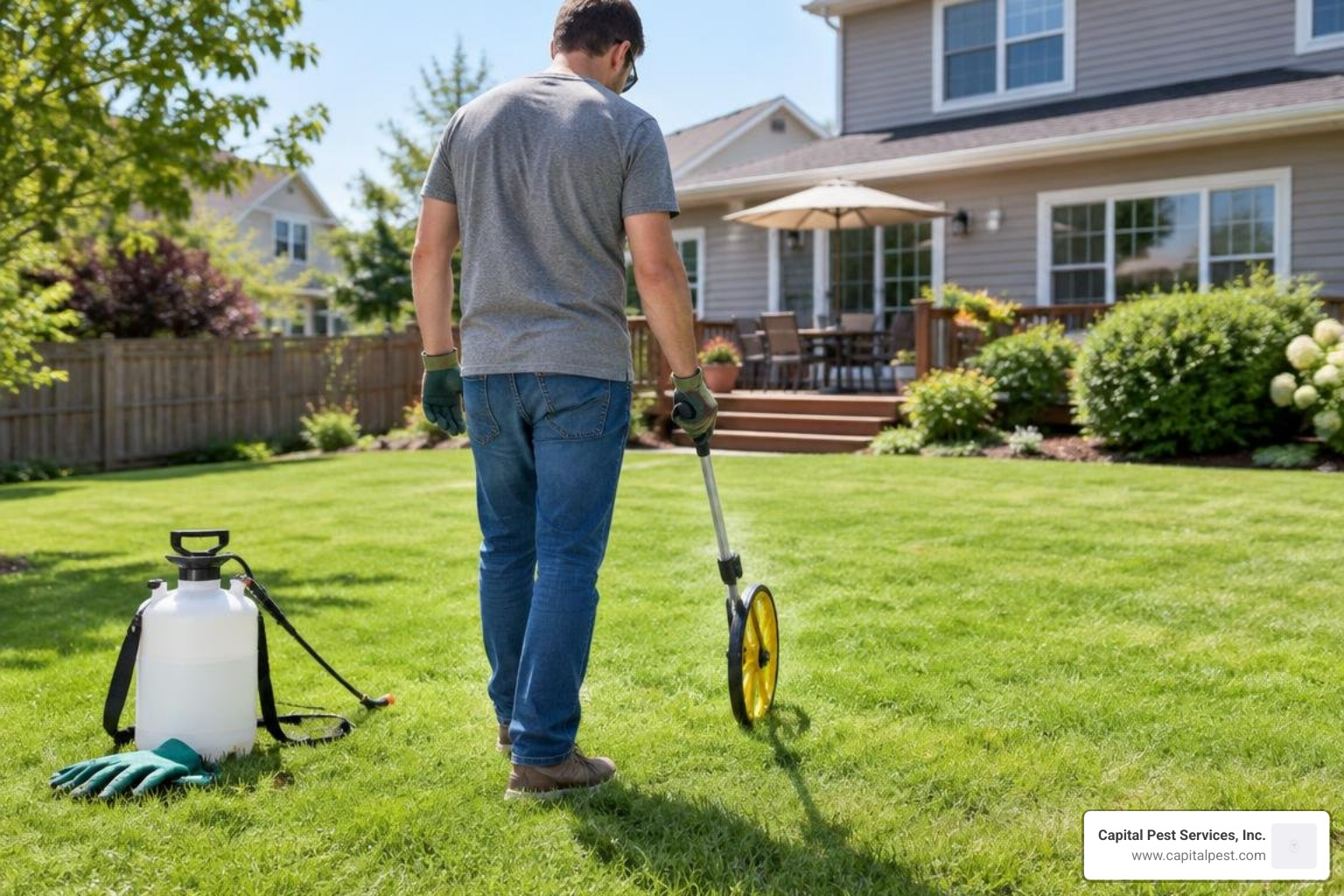
Proper application determines whether a treatment succeeds or fails. Following a systematic process prevents product waste, environmental contamination, and patchy pest coverage. For a broader overview of seasonal scheduling, you can check this DIY yard pest control guide.
Yard Measurement and Dose Calculation
Before opening any chemical concentrate, calculate the exact square footage of your treatment area:
- Measure the Property: Multiply the length of your yard by its width in feet. Subtract the square footage of your home’s footprint, driveway, patios, and swimming pools to determine true lawn and bed square footage.
- Calibrate the Applicator: Review the product label. A standard 32-ounce bottle covering 5,000 square feet distributes roughly 0.64 fluid ounces of concentrate per 100 square feet.
- Maintain Even Walking Speed: When using hose-end sprayers, walk at a steady, deliberate pace. Keep the spray pattern sweeping rhythmically side-to-side, overlapping each pass by 10% to 15% to eliminate untreated gaps.
Timing and Weather Conditions for Peak Efficacy
Environmental timing directly impacts pesticide performance:
- Time of Day: Apply foliar sprays during early morning or late afternoon/dusk. Spraying during midday heat can scorch delicate ornamental foliage and causes fast evaporation.
- Wind Conditions: Never spray if wind speeds exceed 5 mph. Air movement causes spray drift, sending fine mists into neighboring properties, ornamental ponds, or flowering pollinator beds.
- Rain Forecasts: Check that no rain is predicted for at least 24 hours following application. Liquid pyrethroids require complete surface drying (typically 1 to 3 hours) to chemically bond with plant leaves and foundation masonry.
- Seasonal Temperature: Begin preventative yard treatments in early spring once soil temperatures consistently exceed 50°F and overwintering insect eggs begin hatching.
Safety Protocols and Environmental Protection
Pesticide labels are federally enforceable legal documents. Practicing strict environmental stewardship ensures you manage target pests without placing loved ones, non-target wildlife, or municipal waterways at risk.
Protecting Children, Pets, and Pollinators
- Re-Entry Intervals: Always keep children, dogs, and cats indoors throughout the entire application process. They may safely re-enter the lawn once the liquid spray has dried completely (generally 1 to 2 hours depending on humidity). If granules were applied, keep pets off the turf until the product has been watered in and the grass has dried.
- Pollinator Protection: Synthetic pyrethroids are highly toxic to honeybees, native bees, and butterflies. Never apply insecticides directly to blooming plants, fruit blossoms, or flowering clover patches. Spray during dawn or dusk when bees are not actively foraging.
- Indoor Pet Safety: If crawling pests have established nesting sites indoors along with your yard problem, review our comprehensive residential pest control services to safely treat interior zones.
Safe Storage, Disposal, and Runoff Prevention
- Impervious Surfaces: Avoid spraying chemical concentrates directly onto concrete driveways, sidewalks, asphalt, or patio pavers. Pyrethroids cannot bind to non-porous surfaces; rain will wash the chemical into storm drains, causing severe toxicity to aquatic life in local streams and watersheds.
- Storage Protocols: Store leftover pesticide concentrates upright in their original labeled containers. Place them in a secure, well-ventilated, frost-free location out of reach of children and domestic animals.
- Container Disposal: Never reuse an empty pesticide bottle for household purposes. Triple-rinse empty containers, pour the rinse water back into your active lawn treatment zone, and dispose of the bottle in regular household trash according to municipal regulations.
Frequently Asked Questions About Outdoor Pest Management
How long does residual outdoor pest control last after application?
Under ideal conditions, professional-grade and consumer synthetic pyrethroid sprays provide residual insect control for 4 to 12 weeks. High-end concentrates like OFF!® Bug Control I maintain barrier control on outdoor vertical surfaces for up to 8 weeks, while specialized products like Cutter Backyard Bug Control Spray Concentrate deliver up to 12 weeks of suppression against crickets, earwigs, and ants.
However, intense summer heat, UV sunlight degradation, and frequent heavy rainstorms accelerate chemical breakdown, often reducing practical outdoor residual longevity down to 3 to 4 weeks during peak summer months.
Can liquid insect sprays be safely applied to edible garden vegetables?
Only products explicitly labeled for agricultural food crops may be applied to home vegetable patches. When using food-safe formulations, you must strictly observe the manufacturer’s Pre-Harvest Interval (PHI)—the mandatory waiting period between chemical application and food harvesting.
For instance, certain pyrethroid garden sprays require a 1-day PHI for brassicas and leafy greens, a 5-day PHI for tomatoes, and up to a 21-day PHI for sweet corn. Never apply generic structural foundation barriers or standard lawn concentrates to edible crops, and never spray firewood intended for domestic heating.
When should homeowners hire a professional versus doing DIY pest control?
While DIY hose-end sprays work well for routine summer maintenance on smaller properties, professional treatment becomes essential under heavy infestation pressures. Situations calling for certified technicians include:
- Severe, widespread tick populations bordering deep wooded acreage.
- Persistent subterranean yellowjacket or wasp colonies.
- Pervasive lawn grub infestations destroying turf root systems.
- Severe mosquito populations breeding across complex topography.
If you are evaluating service providers, read our guide on vetting professional mosquito yard treatments to understand licensing, application safety standards, and service warranties.
Conclusion
Reclaiming your backyard from biting, stinging, and destructive pests does not require spraying every square inch of your lawn with indiscriminate chemicals. By combining clean cultural practices—such as clearing yard debris and draining standing water—with targeted perimeter treatments, properly timed applications, and calibrated barrier products, you can maintain a comfortable, pest-free yard throughout the entire summer.
When property acreage, heavy pest pressure, or recurring insect cycles exceed what off-the-shelf products can manage, working with a local professional team makes all the difference. Serving Raleigh, Durham, Chapel Hill, Cary, Apex, Wake Forest, and communities throughout the Triangle, Capital Pest Services, Inc. delivers customized, integrated pest management programs tailored to your landscape. Explore our targeted mosquito control programs to secure full-season protection for your outdoor spaces.
Capital Pest is proud to be a family-owned and operated pest control company serving Raleigh, NC and its surrounding area (Chapel Hill, Wake Forest, Clayton, Pinehurst, Pittsboro, Fuquay-Varina, etc). Contact us for our pest control services today!