Rats in the Attic: Safe Trapping and Long-Term Exclusion
Signs and Evidence of Rodent Activity
If you have rats in attic spaces, the solution is to place heavy-duty snap traps along active runways, confirm zero activity for 5 to 7 consecutive days, and then seal every exterior roofline gap with chew-proof materials. This three-step sequence prevents trapped rodents from dying in wall voids while permanently locking new rats out.
Because attics provide quiet, warm shelter undisturbed by daily household foot traffic, rodents quickly turn these upper levels into nesting headquarters. If you suspect an active infestation, look for these telltale signs:
- Nocturnal Scrambling and Scurrying: Rats are primarily active after dark. You will hear them running along drywall ceilings, moving inside wall voids, or scratching against joists.
- Chewed and Shredded Insulation: Rodents tear fiberglass or cellulose insulation to build soft, enclosed nests near warm utility lines or HVAC units.
- Dark, Pellet-Shaped Droppings: Feces scattered along wooden beams, across ceiling drywall, or directly on top of HVAC air handlers indicate established routes.
- Grease Marks (Sebum Trails): Rats have oily coats. As they squeeze along rafters, pipes, and wall studs, they leave dark, greasy smudge marks along repetitive runways.
- Urine Stains and Pungent Odors: A heavy, stale, musky ammonia scent often builds up in confined attic spaces when urine accumulates over time.
Scratching Noises, Droppings, and Chewed Materials
Differentiating between mice, rats, and squirrels is critical before setting your control plan in motion. Squirrels are diurnal—meaning you will hear them scampering early in the morning or late in the afternoon. In contrast, mice and rats run around almost exclusively at night.
Rats leave substantially larger physical evidence than mice. Their incisors grow continuously throughout their lives, forcing them to chew non-stop against hard structural materials like timber, PVC pipes, and wiring to keep their teeth trimmed.
| Identifying Feature | Roof Rats & Norway Rats | House Mice |
|---|---|---|
| Dropping Size & Shape | 1/2 to 3/4 inch long, thick, spindle-shaped with blunt or pointed ends | 1/8 to 1/4 inch long, slender, pointed at both ends (resembles dark rice) |
| Auditory Signs | Heavier scampering, distinct thumping, persistent loud gnawing on wood | Light pattering, faint scratching, rapid tapping behind baseboards |
| Gnaw Mark Size | Broad, rough tooth marks roughly 1/8 inch wide on joists, siding, and conduit | Fine, delicate scratches and small nibble holes |
| Primary Attic Habitat | Tops of joists, roof trusses, inside HVAC trunk lines, deep insulation tunnels | Shallow nesting pockets in corners, cardboard storage boxes, loose clutter |
Health and Fire Hazards of Rats in Attic Spaces
Rodents in your attic are far more than a simple nuisance—they pose serious safety hazards to your household:
- Documented Fire Hazards: The U.S. Fire Administration recognizes rodent gnawing as a leading cause of unexplained residential structure fires. Rats frequently strip the protective plastic jacketing off high-voltage electrical wires, exposing bare copper and creating short-circuit fire risks in dry attic spaces.
- Airborne Pathogens: Rats can carry and transmit over 35 communicable diseases, including Salmonella, Leptospirosis, and Hantavirus. When droppings dry out, HVAC air handlers pull fine fecal particles and allergen-laden dust directly into your family’s living areas.
- Secondary Pest Introductions: Attic rodents carry fleas, ticks, and mites that quickly migrate through ceiling fixtures down into bedrooms and living spaces.
For homeowners managing complex infestations, our residential pest control services integrate comprehensive property evaluations with certified treatment plans.
How Rodents Enter Rooflines and Upper Levels
Roof rats (Rattus rattus) are agile climbers equipped with specialized pads on their feet that allow them to scale brick walls, utility conduits, siding, and stucco. If an opening exists along your roofline, rodents will exploit it.
Rats can squeeze their flexible bodies through an exterior hole as small as a half-inch—roughly the size of a nickel or quarter. Once an initial gap is located, they use their teeth to enlarge the surrounding wood or aluminum until they fit comfortably inside.

Common Gaps, Vents, and Overhanging Branches
Our field inspections across North Carolina homes consistently reveal several structural vulnerabilities:
- Unscreened Soffit and Gable Vents: Standard plastic louvers or thin fiberglass mesh are easily torn through by adult rats seeking warmth.
- Roof-to-Fascia Gaps: Gaps where the roof decking fails to meet the fascia board provide a wide-open runway into attic eaves.
- Damaged Ridge Caps and Dormers: High roof junctions that lack secure metal screens allow rodents to slip directly under roof shingles.
- HVAC and Plumbing Line Penetrations: Holes drilled for refrigerant lines, electrical chases, and plumbing stacks often leave unsealed gaps.
- Overhanging Tree Canopies: Heavy tree limbs growing within six feet of the roof act as direct bridges, giving roof rats safe passage away from ground predators.
Rat Biology, Reproduction, and Survival Rates
Understanding rodent biology makes clear why fast intervention is essential. A single female rat can produce up to 12 pups per litter and breed every 3 to 4 weeks. Under ideal conditions, a single pair of rats can lead to dozens of descendants within months, quickly growing into an entrenched colony if left unchecked.
Rats also establish distinct scent markers. They deposit chemical pheromone trails along their regular travel routes, signaling to outside rodents that your attic is a safe, sheltered nesting zone. While studying humane rat behavior research highlights how intelligent and adaptable these animals are, their survival in human dwellings relies on fast structural access:
- Without Water: Adult rats typically dehydrate within 3 to 5 days, though hot, dry summer attics accelerate this timeline.
- Without Food: A rat can survive 1 to 2 weeks by burning stored body fat, feeding on insects, or chewing through paper and cardboard materials.
Step-by-Step Guide to Removing Rats in Attic Spaces
Permanently eliminating an attic rodent problem requires a systematic approach. Rushing ahead without following the right order often makes the issue worse.

Why Snap Traps Beat Poison Baits Indoors
Never use rodenticides or loose poison baits inside an attic.
When a rat consumes anticoagulant bait, it does not immediately drop dead near the bait station. Instead, it seeks shelter in the deepest, most inaccessible areas of your home—such as interior wall cavities, drop ceilings, or under heavy insulation. The rat dies in these hidden voids, leading to weeks of foul odors, insect breeding, and costly drywall cutouts to retrieve the carcass.
Poison baits also pose secondary poisoning hazards to household pets and local wildlife if a poisoned rat manages to exit outdoors before dying. Heavy-duty, rat-sized snap traps remain the safest, most reliable, and most humane method for indoor rodent removal. They ensure positive capture, immediate disposal, and zero lingering decomposition smells in your walls.
Where to Position Traps for Rats in Attic Runways
Setting traps randomly across the center of the attic floor yields low catch rates. Rats are naturally neophobic (suspicious of new objects) and prefer traveling tightly along structural boundaries.
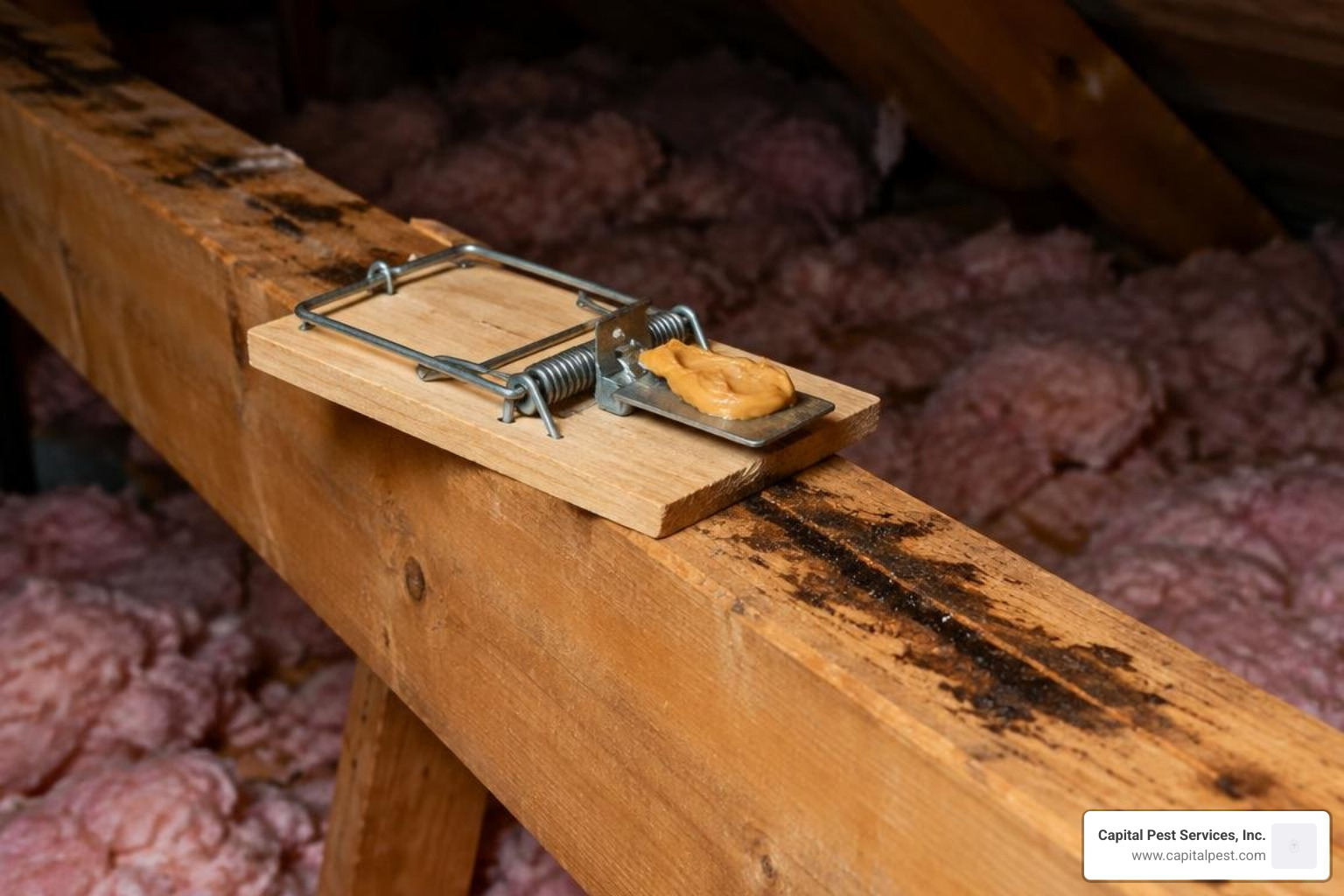
- Perpendicular Placement: Place snap traps perpendicular to walls, roof joists, and top plates, with the baited trigger face pointing directly toward the wall surface.
- Target Active Grease Trails: Set traps directly along dark sebum trails, near fresh droppings, or alongside torn insulation runs.
- Trap Spacing: Space traps 6 to 10 feet apart along active runways to intercept movement from both directions.
- Optimal Baiting: Bait triggers with high-protein food such as thick peanut butter, cured bacon strips, or nesting materials like cotton balls and dental floss.
Exclusion Timing: Trapping Before Sealing
A common DIY mistake is immediately sealing exterior roof openings while rats are still living in the attic.
If you seal exterior entry points before removing the resident animals, you trap live rodents inside. Desperate for food and water, they will chew through interior drywall, damage PVC plumbing lines, and die inside wall cavities.
The Proper Sequence:
- Leave primary exterior roof runs open while deploying snap traps inside the attic.
- Check and reset traps every 24 hours, safely bagging any captured rodents.
- Continue trapping until you achieve zero catches and zero audible noise for 5 to 7 consecutive days.
- Once indoor activity has ceased, seal all exterior entry gaps to lock out future rodents permanently.
Attic Decontamination and Long-Term Exclusion
Once the active population is gone, thorough cleanup and structural proofing protect your home’s air quality and structure.
CDC-Compliant Wet Cleaning and Insulation Care
Never use a household broom or standard dry vacuum on rodent droppings. Sweeping dry rodent waste aerosolizes infectious pathogens, creating immediate respiratory hazards.
- Wear Proper PPE: Put on heavy rubber gloves and a tightly sealed N95 or HEPA respirator before entering the attic space.
- Apply Disinfectant: Spray droppings, urine stains, and nesting debris thoroughly with an EPA-registered disinfectant or a 1:10 household bleach solution (1 part bleach to 10 parts water). Let the solution soak for at least 5 minutes to neutralize bacteria and viruses.
- Wet Removal: Wipe up the damp droppings using disposable paper towels, place all contaminated debris inside heavy-duty plastic bags, seal them tightly, and dispose of them in outdoor trash receptacles.
- Insulation Remediation: Heavily contaminated or compressed insulation must be extracted, the subfloor sanitized, and fresh insulation installed to restore thermal efficiency.
Reviewing practical attic rodent exclusion insights can help you identify subtle structural vulnerabilities around ridge vents and soffits before starting repairs.
Rodent-Proofing Materials and Exterior Maintenance
Rats can easily chew through standard materials like expanding spray foam, rubber, plastic, and soft wood. Long-term exclusion requires durable, chew-proof building materials:
- Galvanized Hardware Cloth: Install 1/4-inch heavy-gauge galvanized steel mesh over all soffit openings, gable vents, and crawl space louvers. Fasten the mesh with screws and washers rather than light staples.
- Sheet Metal Flashing: Fit galvanized sheet metal or copper flashing around roof valleys, fascia gaps, and chimney intersections.
- Stainless Steel or Copper Mesh: Pack small structural gaps, weep holes, and exterior pipe penetrations tightly with copper mesh before sealing over them with exterior-grade elastomeric caulking.
- Vegetation Management: Trim all overhanging tree branches at least six to eight feet away from your roofline to eliminate natural climbing bridges.
Frequently Asked Questions About Attic Rodents
How long can a rat survive inside an attic without food or water?
In an attic with zero moisture access, an adult rat typically dehydrates within 3 to 5 days. However, attics often provide moisture through AC condensation drain lines, roof leaks, or bathroom vent pipes. If water is accessible, a rat can survive on stored items, insects, and scavenged crumbs for 1 to 2 weeks.
When should I call a professional pest control service?
You should reach out to a licensed professional if you hear frequent daytime noises, notice extensive chewed electrical wiring, encounter foul odors from dead animals inside wall voids, or have an infestation that persists despite DIY trapping. Large infestations require specialized exclusion tools, commercial-grade sanitizing equipment, and complete attic restoration.
What is the most effective bait for attic snap traps?
Sticky, protein-rich baits yield the highest success rates. Creamy peanut butter blended with rolled oats, bacon grease, or small dried fruit pieces works well. For female rats focused on building nests, tying cotton balls, yarn, or dental floss securely to the trigger mechanism is also an effective strategy.
Professional Prevention and Long-Term Protection
Dealing with rats in your attic requires a careful sequence: identifying active runs, removing the animals with well-placed snap traps, sanitizing contaminated zones, and sealing every vulnerable roof gap with chew-proof materials.
Capital Pest Services, Inc. provides dependable pest management solutions across Raleigh, Durham, Wake Forest, Cary, Chapel Hill, Apex, and the surrounding Triangle communities. If you are dealing with persistent attic noises or need a structural exclusion plan, explore our expert rodent control solutions or contact our team today to schedule an inspection.
Capital Pest is proud to be a family-owned and operated pest control company serving Raleigh, NC and its surrounding area (Chapel Hill, Wake Forest, Clayton, Pinehurst, Pittsboro, Fuquay-Varina, etc). Contact us for our pest control services today!