Raleigh Homeowner’s Guide to Eliminating Bathroom Pests for Good
How to Get Rid of Bathroom Pests in Raleigh
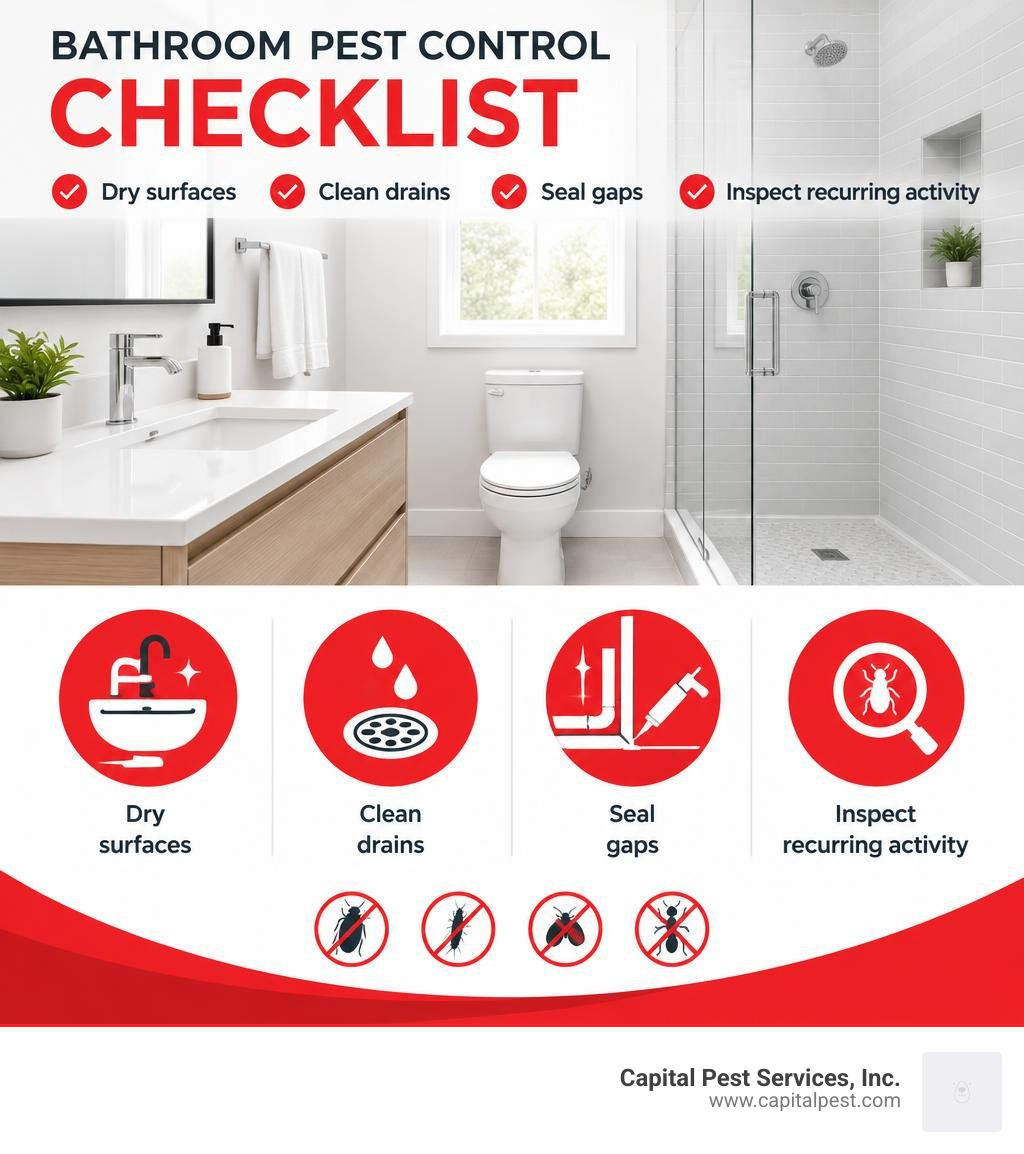
For bathroom pest control in Raleigh, start with the water: fix leaks, run the exhaust fan during and after showers, and clean buildup from drains. Seal gaps around pipes and baseboards, and keep floors and counters dry. These steps make the bathroom less inviting to roaches, silverfish, drain flies, and ants. If pests keep returning, a professional can find where they are entering or breeding.
Raleigh’s humid summers can make damp bathrooms especially attractive to pests, but leaks and poor ventilation can cause trouble year-round.
I’m Mitch Taylor, president of Capital Pest Services, Inc. In more than 17 years of pest control bathroom raleigh homeowners can turn to, I’ve learned that lasting results start with finding the moisture and entry points behind the problem.
Quick pest control bathroom raleigh definitions:
Common Bathroom Invaders in Triangle Area Homes
The climate in North Carolina creates a welcoming environment for bugs outdoors, but nobody wants those same critters sharing their morning shower. Between our hot, humid summer afternoons and moderate winters, the Triangle area experiences high ambient moisture levels that drive bugs directly into residential structures.
Bathrooms serve as the ultimate indoor oasis for insects. They provide standing water droplets, condensation on drywall, and dark, secluded spaces behind baseboards, vanities, and plumbing access panels. When outdoor temperatures spike or drop sharply, pests navigate through microscopic foundation cracks or follow incoming water pipes straight to your bathroom.
Cockroaches and Silverfish in High-Moisture Zones
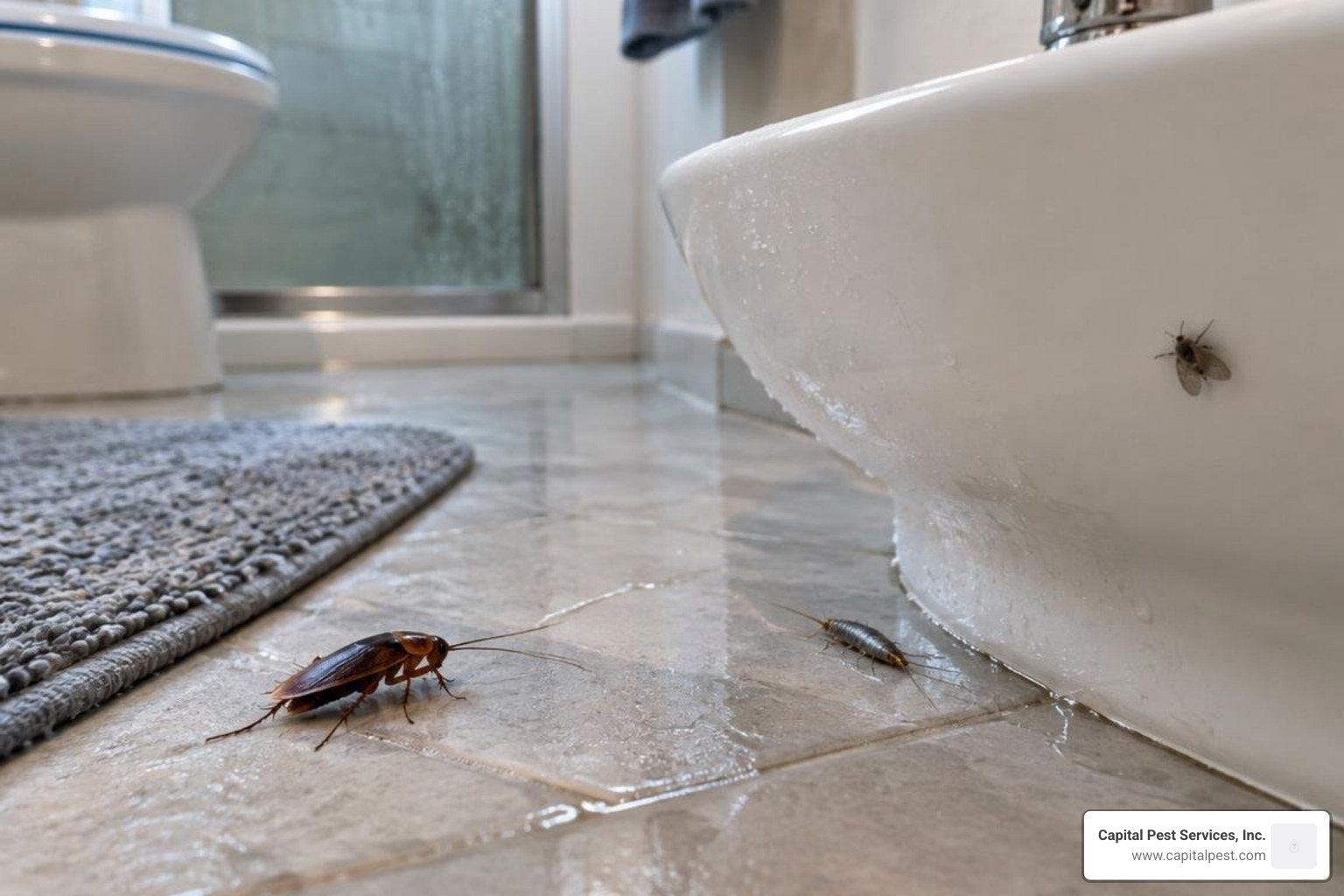
Cockroaches are remarkably widespread across our region. In fact, cockroaches are found in 63% of homes in the southern United States, including Raleigh, and bathrooms are a prime hiding spot due to continuous moisture. We frequently see two main varieties: American cockroaches (often called palmetto bugs or water bugs) that wander in from mulch beds and crawl spaces, and German cockroaches, which establish heavy indoor infestations inside vanity cabinets and behind warm water heater lines. If you are struggling with these resilient invaders, learning how to eliminate a cockroach infestation in 5 easy steps can help you take back your space.
Silverfish are another frequent nocturnal visitor. These teardrop-shaped, silvery insects thrive in humid environments with low ventilation. Silverfish can survive for up to a year without food, but they require high humidity to prevent dehydration, making bathrooms their ideal habitat. They feast on starches, paper products, wallpaper paste, and even microscopic mold spores growing along damp grout lines.
Drain Flies, Springtails, and Ants
If you notice tiny, moth-like insects hovering lazily around your sink or tub, you are likely dealing with drain flies. Drain flies lay up to 300 eggs in organic matter found inside bathroom plumbing traps. The gelatinous sludge that accumulates from soap scum, shed hair, and skin cells creates an ideal breeding ground for their larvae.
Other moisture-dependent insects include springtails and booklice. Moisture-loving pests like springtails and booklice are found in 30% of bathrooms with poor ventilation in humid climates like Raleigh. Springtails are tiny, jumping bugs that gather around damp tile edges, while booklice feed on micro-fungi behind vanity mirrors.
Ants also regularly target bathrooms. Moisture-seeking species, such as odorous house ants and pharaoh ants, follow utility lines in search of water sources. Understanding why ants love your bathroom and simple tricks to make them leave helps break their scent trails before they establish permanent satellite nests inside your drywall.
Primary Causes and Seasonal Shifts in Raleigh Bathrooms
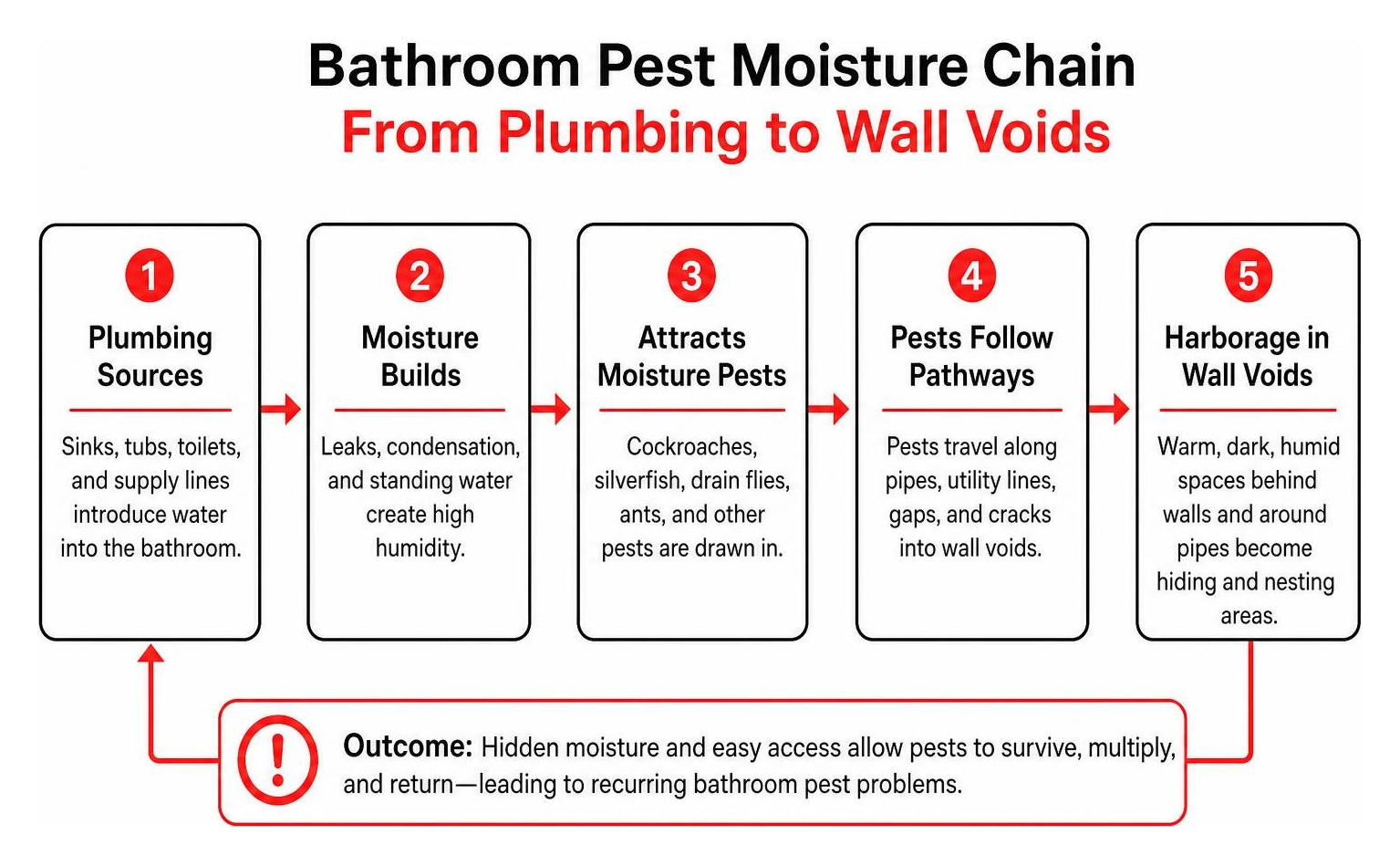
Pest activity in Wake County and surrounding communities ebbs and flows with seasonal weather patterns. Over 50% of pest control calls in Raleigh during summer months involve bathroom-related issues like ants, cockroaches, or silverfish. High exterior heat dries out natural topsoil, forcing subterranean pests to follow exterior supply lines inward toward cool, air-conditioned indoor plumbing.
During late autumn and winter, the dynamic shifts. Pests seek shelter from cooling outdoor temperatures, settling into warm subfloors, wall voids surrounding hot water pipes, and crawl spaces directly underneath ground-floor bathrooms.
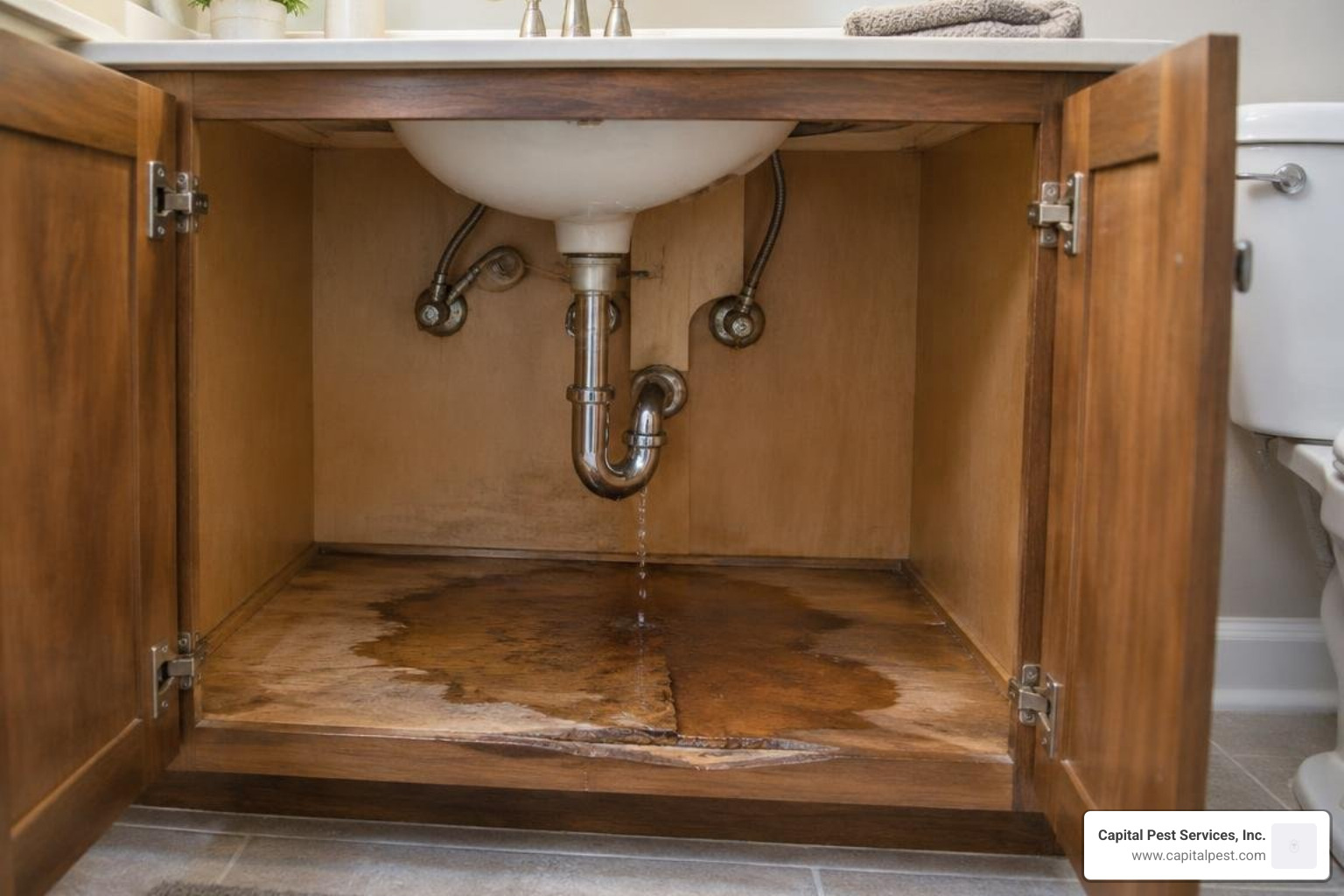
Several structural factors turn standard bathrooms into high-risk insect habitats:
- Hidden Pipe Leaks: Pin-hole leaks or loose P-traps create slow drips that soak subfloors and drywall without being immediately visible.
- Cracked Grout and Deteriorated Caulk: Gaps along the tub basin or shower pan allow water to seep behind ceramic tiles, creating hidden colonies of mold and attracting silverfish and booklice.
- Inadequate Ventilation: Bath fans that are underpowered or rarely run leave steam trapped against ceilings and trim for hours after each shower.
- High Crawl Space Humidity: In our local soil conditions, unencapsulated crawl spaces transfer moist ground air upward through pipe penetrations into bathrooms.
Step-by-Step Prevention and Bathroom Maintenance
Eliminating bathroom pests requires a combination of moisture reduction, physical exclusion, and thorough cleaning routines.
- Control Ambient Humidity: Always run your bathroom exhaust fan during showers and leave it running for at least 20 minutes afterward. Ensure the fan vents directly outside rather than into your attic.
- Seal Structural Entry Points: Inspect the gaps where plumbing lines emerge from the wall beneath your vanity and behind the toilet. Fill wide gaps with expanding foam or copper mesh, and finish the perimeter with 100% silicone caulk.
- Deep Clean Your Plumbing Traps: Remove hair and physical debris from pop-up sink stoppers and shower drains. Use an enzyme-based drain cleaner monthly to break down the biofilm that sustains drain fly larvae.
- Repair Grout and Fixture Seals: Re-caulk baseboards and the seams surrounding tubs and vanities to eliminate damp voids where pests can hide.
| Treatment Approach | Best Used For | Mechanism of Action | Longevity / Limitations |
|---|---|---|---|
| Boiling Water / Vinegar Flush | Minor drain buildup | Flushes loose surface debris | Temporary; fails to remove thick subterranean biofilm |
| Enzyme Drain Cleaners | Organic sludge & drain flies | Biologically consumes hair, soap scum, and protein matter | Highly effective for organic buildup; requires consistent application |
| Silicone Caulking | Silverfish & ant exclusion | Physically seals cracks, voids, and pipe wall penetrations | Multi-year protection against physical entry |
| Professional IPM Treatments | Persistent or multi-species infestations | Targeted residual barriers, insect growth regulators, micro-dusts | Comprehensive protection addressing root causes and crawl space vectors |
DIY Methods vs. Professional Pest Control for Bathroom Infestations in Raleigh
Simple DIY approaches—such as flushing drains with hot water or wiping countertops with vinegar—work well for surface sanitation and clearing minor scent trails. However, DIY solutions often fall short when dealing with established infestations deep within wall cavities or subfloor plumbing lines. Over-the-counter bug sprays frequently act as repellents, scattering pests deeper into the home rather than eliminating the breeding population. Professional integrated pest management applies targeted products directly to harborages while protecting your indoor air quality.
Preventing Rodent and Heavy Pest Entry Through Bathroom Plumbing
In older Triangle homes, unsealed plumbing chases under bathtubs can become entry highways for larger pests. Mice and rats can squeeze through openings as small as a dime. You can implement smart homeowner strategies for fast and reliable mouse removal by installing tight metal escutcheon plates around pipes, packing gaps with stainless steel wire wool, and inspecting subfloors from inside the crawl space.
Comprehensive Solutions for Bathroom Pest Control in Raleigh
At Capital Pest Services, Inc., our service approach follows strict Integrated Pest Management (IPM) guidelines compliant with North Carolina structural pest control regulations. Rather than relying on generic spray treatments, we focus on identifying the specific moisture sources, entry pathways, and harborage zones that allow bathroom pests to thrive.
Signs You Need Expert Pest Control for Bathroom Pests in Raleigh
You should contact a professional when you observe:
- Persistent Drain Flies: Flies that continue emerging despite thorough drain cleaning.
- Visible Cockroach Droppings: Pepper-like specks in vanity drawers or under sinks.
- Unexplained Wood Damage: Soft, chewed, or damp wood along bathroom baseboards and framing, which may signal moisture-loving carpenter ants or wood-boring pests.
- Foul, Musty Odors: Persistent oily or musky smells originating behind vanities, which often indicate dense insect aggregations.
- Recurring Daytime Sightings: Seeing nocturnal insects like roaches or silverfish out in broad daylight often points to high population pressure inside hidden wall voids.
Treatment Methods, Inspection Costs, and Hiring Standards
When addressing complex bathroom pest problems, our technicians inspect crawl spaces, subfloors, plumbing runs, and attic spaces adjacent to wet walls. Treatments may include specialized micro-encapsulated formulations, targeted bait matrices, biological drain treatments, and non-invasive dust applications in wall voids.
We recommend reviewing our comprehensive residential pest control plans to choose between targeted one-time interventions or year-round preventative perimeter protection. When selecting a service partner, prioritize a local, NPA-accredited company. Learn more about finding a reliable licensed exterminator in Raleigh without the hassle to ensure your property receives safe, expert care.
Frequently Asked Questions About Bathroom Pests in Raleigh
Why do pests suddenly appear in my Raleigh bathroom during summer?
Raleigh’s summer heat and humidity dry out natural outdoor food and water sources. Pests such as American roaches and ants migrate indoors along foundation lines, attracted by condensation on cold-water pipes, damp bath mats, and plumbing traps.
What are the average costs for bathroom pest extermination in Raleigh?
Costs vary depending on the target species, infestation severity, and whether structural crawl space moisture issues are present. Basic localized drain treatments differ from comprehensive whole-home barrier services. Many homeowners find that scheduled quarterly maintenance plans provide the most cost-effective long-term protection.
Can drain flies cause structural damage to Raleigh homes?
Drain flies do not chew wood or damage plumbing pipes. However, their presence indicates standing organic sludge and high moisture, which can support mold growth, attract larger pests, and lead to wood decay over time if leaks go unaddressed.
Conclusion
A pest-free bathroom starts with proactive moisture management, sealed entry points, and routine plumbing maintenance. Because our local climate creates ongoing humidity challenges, addressing both indoor conditions and outdoor perimeters is essential for lasting relief.
Capital Pest Services, Inc. provides expert residential pest management throughout Raleigh, Durham, Cary, Wake Forest, Chapel Hill, Apex, and surrounding Triangle communities. Contact our local team today to schedule an inspection and keep your home protected year-round.
Capital Pest is proud to be a family-owned and operated pest control company serving Raleigh, NC and its surrounding area (Chapel Hill, Wake Forest, Clayton, Pinehurst, Pittsboro, Fuquay-Varina, etc). Contact us for our pest control services today!