Quick Rat Control: Proven Tactics for Immediate Results
Introduction
The fastest way to kill rats immediately is to deploy modern plastic snap traps or electronic stun traps perpendicular along active baseboard runways, baited with a high-calorie attractant such as peanut butter mixed with rolled oats. These mechanical devices deliver an instant kill upon trigger, hold the carcass for quick removal, and avoid the delayed mortality and hidden carcass risks associated with rodenticide baits.
Rats are among the most persistent, destructive, and dangerous pests that can invade a structure. Whether dealing with Norway rats burrowing near foundations or roof rats nesting in attics, a rodent presence demands prompt action. A rat’s incisor teeth grow continuously—approximately 5 inches per year—driving them to chew constantly through wood, drywall, PVC plumbing, and even electrical wiring, which poses severe structural and fire hazards.
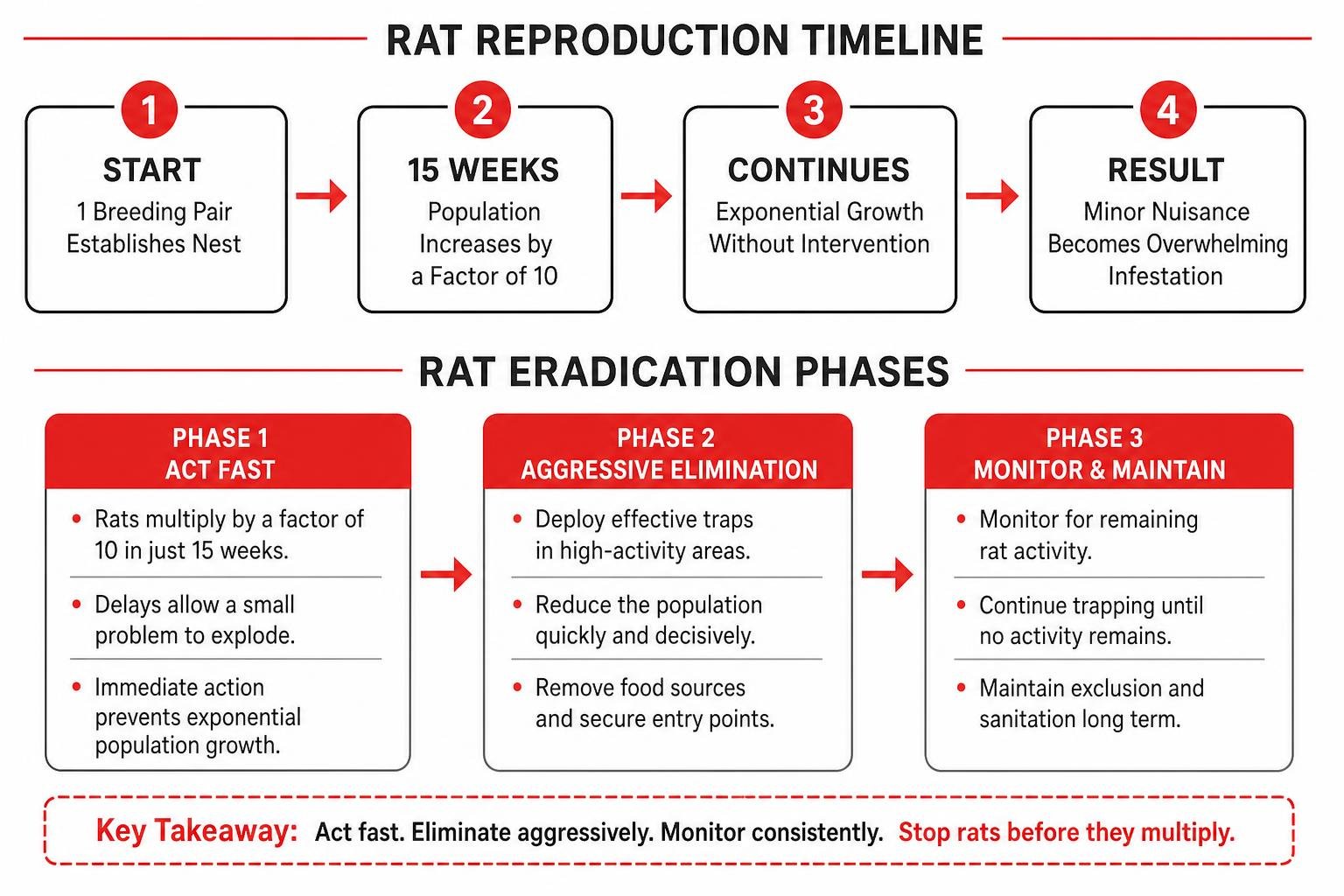
Beyond property damage, the health risks are significant. Rats bite roughly 50,000 people each year in the United States, with more than 15,000 reported rat bite injuries requiring direct medical evaluation annually. They serve as vectors for dangerous pathogens, including leptospirosis, salmonellosis, murine typhus, and hantavirus. Because a single breeding pair can spark an exponential surge—where Norway rat colonies can multiply by a factor of 10 in just 15 weeks—hesitation allows a minor nuisance to evolve into an overwhelming infestation.
Mechanical Traps vs. Baits: What Will Kill Rats Fast?
When immediate elimination is the objective, homeowners must weigh physical traps against chemical baits. Traps deliver rapid physical termination, allowing for immediate carcass recovery. Chemical baits, by contrast, rely on ingestion and metabolic absorption, which inherently requires time.
| Feature / Metric | Snap Traps (Modern Plastic/Wood) | Electronic Stun Traps | Rodenticide Baits (Acute / SGAR) |
|---|---|---|---|
| Speed of Kill | Milliseconds upon trigger | Seconds (high-voltage shock) | 24 hours to 7+ days |
| Immediate Catch Confirmation | Yes (visible carcass) | Yes (indicator light/chamber) | No (rats wander away) |
| Risk of Odor in Walls | Near zero (retained at trap) | Zero (retained inside unit) | High (rats often die inside voids) |
| Non-Target Safety Risk | Low-to-Moderate (pinch hazard) | Low (enclosed entry tunnels) | High (toxic to pets, kids, wildlife) |
| Capacity | Single rodent per set | Single or multi-kill units | Multiple rodents per station |
How Modern Snap and Electronic Traps Kill Rats Fast
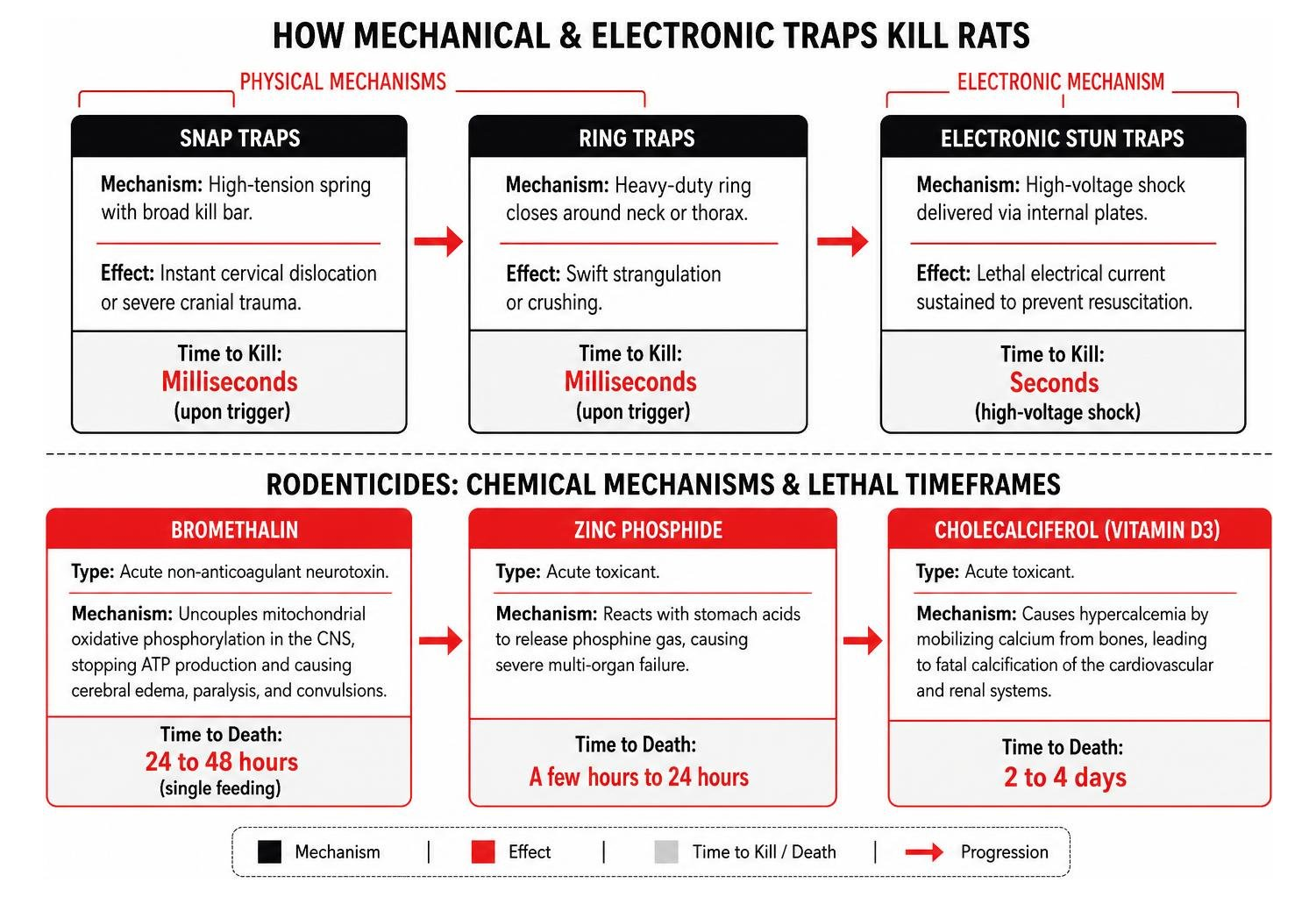
Physical traps are the fastest lethal tools available. Modern mechanical devices, such as the Victor® Power Kill® Rat Trap, utilize high-tension springs paired with broad, high-impact kill bars. When a rat triggers the oversized pedal, the bar snaps down with tremendous kinetic force, causing instant cervical dislocation or severe cranial trauma. Similarly, precision snap mechanisms, like the technology seen in the Victor Quick Kill design, eliminate the slow, partial-crush failures often associated with degraded, century-old wooden snap models.
Ring-design traps offer another modern mechanical alternative. These units pull a heavy-duty strangulation or crushing ring around the pest’s neck or thorax upon entry, providing swift termination while holding the carcass for clean disposal.
Electronic stun traps use high-voltage electrical current. When a rat steps onto the internal metal plates, the circuit delivers a lethal shock (typically thousands of volts) sustained over several minutes to prevent resuscitation. This provides a clean, bloodless, and instantaneous kill that remains safely enclosed within an insulated plastic housing.
The Truth About “Instant” Rodenticides
A widespread misconception in pest management is the existence of an “instant-kill” poison. As detailed in educational resources on how different poisons act, no commercial or professional chemical rodenticide kills a rat instantly.
Even the most fast-acting toxic compounds require several hours to circulate, metabolize, and shut down vital organs. In rodent physiology, an instantaneous chemical kill would actually be counterproductive: rats are neophobic and cautious eaters. If a toxicant acted within seconds or minutes, the animal would exhibit distress immediately in front of its colony members, causing immediate bait shyness across the remaining population. Slower chemical progression ensures that the target consumes a full, lethal dose while allowing others in the colony to feed freely.
Fast-Acting Rodenticides: Types, Timelines, and Chemical Mechanisms
Rodenticides are categorized into acute non-anticoagulant toxicants, second-generation anticoagulant rodenticides (SGARs), and first-generation anticoagulants. For large infestations where trapping dozens of individual rodents is mechanically difficult, understanding chemical timelines is essential. In-depth technical guides regarding effective rodenticides and infestation management break down how active ingredients achieve colony control.
Rodenticide Options Designed to Kill Rats Fast
- Bromethalin: A potent, non-anticoagulant neurotoxin. It works by uncoupling mitochondrial oxidative phosphorylation in the central nervous system, which halts cellular energy (ATP) production. This leads to fluid buildup within the myelin sheaths of the brain and spinal cord (cerebral edema), resulting in paralysis, convulsions, and death within 24 to 48 hours from a single feeding.
- Zinc Phosphide: An acute toxicant primarily restricted to agricultural and professional applications. Once ingested, the stomach acids react with the chemical to release lethal phosphine gas into the bloodstream and gastrointestinal tract, causing severe multi-organ failure within a few hours to 24 hours.
- Cholecalciferol (Vitamin D3): Mobilizes calcium from the rodent’s bones into its bloodstream, inducing severe hypercalcemia and fatal calcification of the cardiovascular and renal systems. Mortality typically occurs within 2 to 4 days.
- Second-Generation Anticoagulants (SGARs – Brodifacoum, Difethialone, Bromadiolone): These compounds, utilized in commercial formulations such as RATSAK Rapid Strike Soft Bait and Ultra Power Fast Action Baits, disrupt the vitamin K epoxide reductase cycle in the liver, preventing blood clotting. Though a single feeding provides a lethal dose (a 1-ounce bait block can deliver lethal doses for up to 10 rats), death occurs via internal hemorrhaging over 4 to 7 days, sometimes taking up to two weeks.
Managing Toxicity Risks to Children, Pets, and Wildlife
The potency of acute rodenticides introduces severe non-target hazards. Poison control centers across the United States receive over 15,000 calls each year regarding accidental ingestions or pesticide exposures involving children under the age of six.
Domestic pets face two distinct hazards:
- Primary Poisoning: Direct consumption of unsecured bait blocks or soft sachets.
- Secondary Poisoning: Ingestion of a poisoned rat carcass by a predatory or scavenging cat, dog, hawk, or owl.
While anticoagulant toxicities can be managed with an accessible antidote (Vitamin K1 therapy administered by a veterinarian over several weeks), neurotoxins like bromethalin have no specific antidote. Treatment for bromethalin poisoning is limited to supportive care, decontamination, and reducing cerebral swelling.
To mitigate these risks:
- Never scatter loose pellets or place open bait trays.
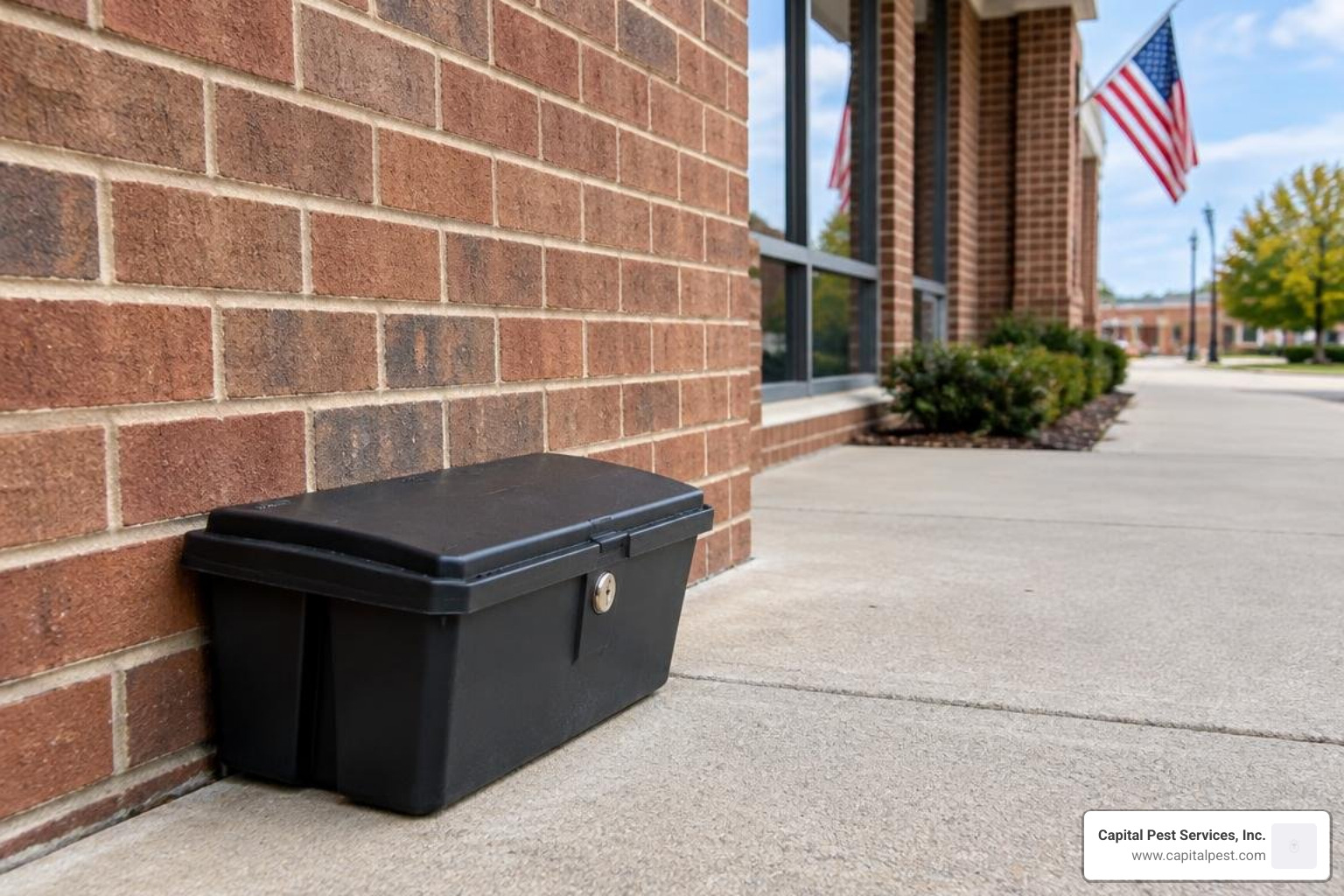
- Always secure rodenticides inside Tier 1 tamper-resistant, lockable bait stations.
- Anchor bait stations firmly to exterior foundations, out of reach of children and domestic animals.
Step-by-Step Tactical Trap and Bait Placement for Immediate Results
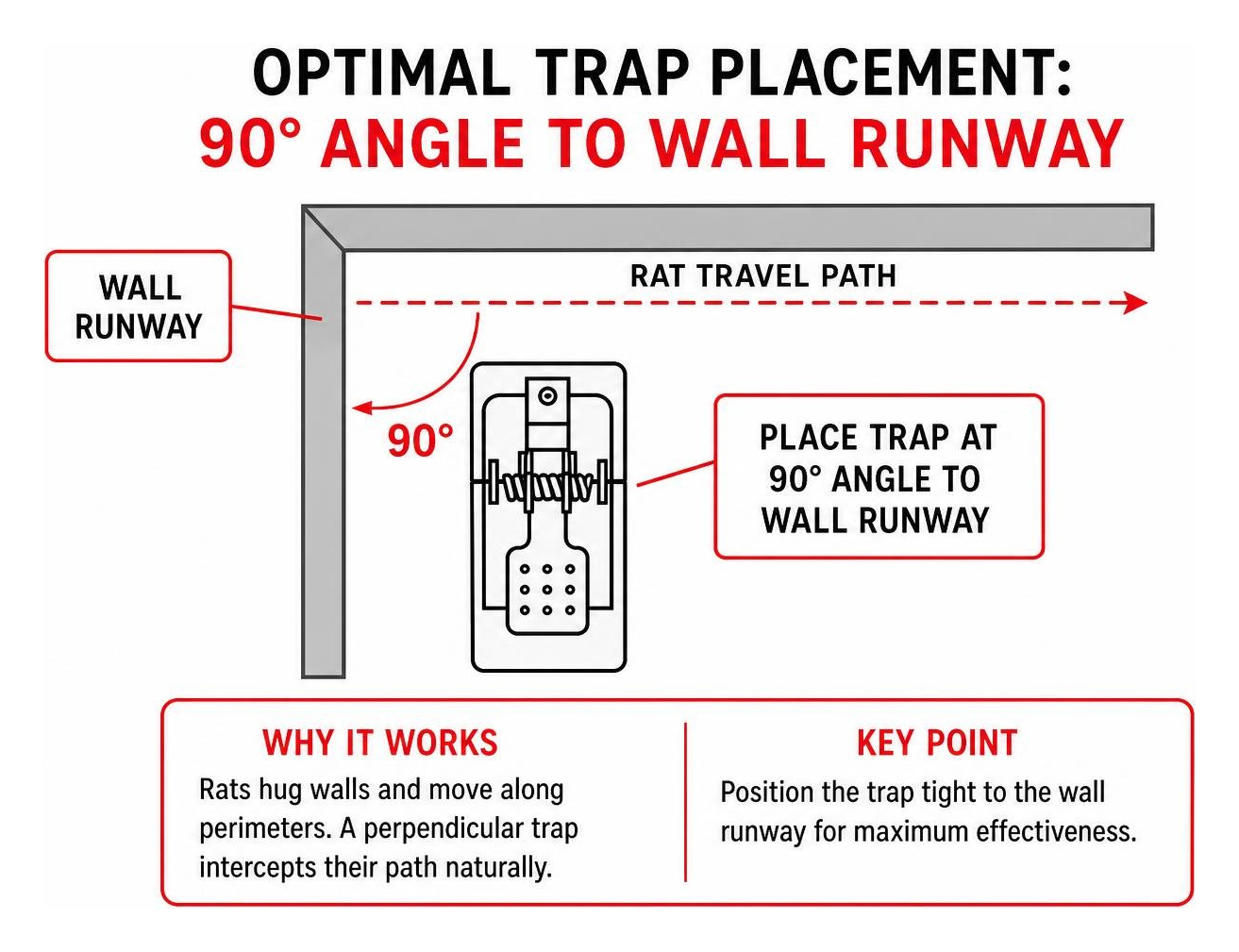
Setting traps haphazardly in the middle of a room rarely produces results. Rats are thigmotactic, meaning they rely on their sensitive whiskers (vibrissae) to navigate along structural perimeters, walls, and pipes in low-light environments.
1. Identify Runway Indicators
Inspect baseboards, sill plates, attic joists, and crawlspace pipes for shiny black droppings (roughly 1/2 to 3/4 inch long with blunt ends for Norway rats; pointed ends for roof rats) and dark, greasy rub marks left by sebum in their fur.
2. Practice Scent Management
Rats possess an exceptional sense of smell. Always wear nitrile or heavy work gloves when handling traps and lures. Unwashed hands transfer human odors, cooking oils, or pet scents to the hardware, triggering neophobic avoidance.
3. Select High-Value Attractants
While cheese is a traditional lure, rats prefer high-calorie, aromatic foods. Effective bait selections include:
- Smooth or chunky peanut butter mixed with rolled oats
- Hazelnut-cocoa spread
- Bacon grease or small pieces of cooked bacon
- Raw nesting material (cotton balls, dental floss, twine) tied securely to the trigger pedal for pregnant females
4. Optimize Spatial Placement
- Place snap traps perpendicular (at a 90-degree angle) to the wall, with the baited trigger facing the baseboard. This forces the rat to step directly on the pedal whether approaching from the left or right.
- When setting bait stations outdoors, space them at 15- to 30-foot intervals along exterior foundation walls, positioning them directly between suspected burrow locations and food sources.
Avoiding Odors and Rats Dying Inside Walls
A major drawback of using chemical baits indoors is carcass location. Poisoned rats do not instinctively “leave the house to find water”—they retreat to the safest, darkest parts of their home range, which are typically wall cavities, attic insulation, subflooring, or deep crawlspaces.
The decomposition of a mature rat inside a closed wall void produces an intense, nauseating odor that can persist for weeks, attracting blowflies, carpet beetles, and secondary pests. To avoid this outcome:
- Prioritize mechanical and electronic traps for all indoor zones (kitchens, attics, basements, living areas). Traps hold the deceased rodent in place for immediate bagging and disposal.
- Reserve rodenticide baiting strictly for exterior perimeter control inside tamper-resistant hardware.
- If you suspect a rat has expired within a crawlspace or accessible void, inspect the area immediately while wearing a HEPA respirator and gloves, double-bag the carcass, and treat the vicinity with an enzymatic odor neutralizer.
Structural Exclusion to Prevent Re-Infestation
Killing the rats currently inside a structure solves only half the problem. Rats can squeeze through gaps as small as 1 inch wide—about the diameter of a quarter—while mice can enter holes the size of a dime.
When DIY Methods Fall Short: Why Professional Intervention Is Needed
While standard traps and sanitation efforts are effective for isolated encounters, extensive infestations often outpace DIY measures. In large residential properties or commercial settings, rat colonies can establish complex networks of underground burrows, attic pathways, and hidden nesting pockets within insulation.
Professional pest management is recommended when:
- Scratching sounds, ceiling noises, or visual sightings persist despite continuous trapping.
- Bait is avoided due to deeply ingrained behavioral neophobia or genetic resistance.
- Rats are nesting in high-voltage service panels, ductwork, or inaccessible crawlspaces.
- The property requires restricted-use rodenticides, specialized tracking powders, or large-scale exclusion modifications.
At Capital Pest Services, Inc., we deliver comprehensive residential pest control programs across Raleigh, Durham, Cary, Chapel Hill, Wake Forest, Apex, Morrisville, Holly Springs, Fuquay-Varina, Garner, Clayton, Knightdale, Wendell, Zebulon, Rolesville, Youngsville, Franklinton, Oxford, Pittsboro, and Sanford. Our team combines structural exclusion, targeted removal, and eco-friendly IPM principles to eliminate active colonies without compromising indoor air quality or non-target safety.
Frequently Asked Questions About Fast Rat Control
What is the absolute fastest way to kill a rat inside the house?
The fastest method to kill a rat indoors is a heavy-duty, modern plastic snap trap or an electronic stun trap placed directly along active baseboard runways. These mechanical devices deliver an instant kill upon contact, eliminating animal suffering and ensuring the carcass is held securely for rapid removal before foul odors develop.
Why do fast-acting poisons take several hours to a few days to work?
Even acute rodenticides must pass through the digestive tract, enter the bloodstream, and disrupt cellular or neurological processes to cause mortality. This delay is biologically intentional: if a toxicant produced instantaneous death, other members of the rat colony would observe the distress, associate it with the food source, and develop bait shyness, making complete eradication nearly impossible.
How can I get rid of rats without putting my pets at risk?
To protect pets, use enclosed electronic traps or snap traps secured within locked, tamper-resistant bait boxes where pets cannot insert paws or snouts. Avoid using open chemical rodenticides indoors, as both direct bait consumption and the ingestion of poisoned carcasses (secondary poisoning) present serious health hazards to dogs and cats.
Conclusion
Eliminating a rodent infestation requires speed, precision, and structural exclusion. While chemical baits are useful tools for reducing dense outdoor populations over several days, high-impact mechanical and electronic traps remain the fastest, safest, and most reliable method for removing rats from indoor spaces.
If you are dealing with persistent rat activity, gnawed wiring, or recurring sightings in the Raleigh-Durham Triangle area, our licensed specialists are here to help. Rely on our proven expert rodent control services to clear active pests and protect your home against future invasions.
Capital Pest is proud to be a family-owned and operated pest control company serving Raleigh, NC and its surrounding area (Chapel Hill, Wake Forest, Clayton, Pinehurst, Pittsboro, Fuquay-Varina, etc). Contact us for our pest control services today!