

North Carolina Roach Defense: Defeat the Giant American Cockroach
Identifying the American Cockroach and NC Roach Lookalikes
Effective American cockroach control in NC starts with reducing crawl space moisture below 60% relative humidity, sealing foundation gaps larger than 3/8 of an inch, and applying targeted gel baits or insecticidal dusts as part of an Integrated Pest Management plan. Because these insects breed in damp outdoor harborage and enter through utility penetrations, dry floor drains, and worn door sweeps, long-term control depends on exclusion and moisture abatement rather than surface sprays alone.
Nothing ruins a quiet evening in the Triangle quite like turning on the kitchen light and watching a two-inch insect sprint across the floor. In North Carolina, we often refer to these giant intruders as “palmetto bugs” or “waterbugs,” but scientifically they are Periplaneta americana, the American cockroach.
Before implementing any treatment plan, proper species identification is essential. Treating an American cockroach invasion requires a different tactical approach than dealing with smaller interior roaches. A comprehensive overview of cockroach species common to North Carolina reveals distinct behavioral differences among regional pests.
| Feature | American Cockroach | German Cockroach | Smoky Brown Cockroach | Oriental Cockroach |
|---|---|---|---|---|
| Adult Size | 1.5 – 2.0 inches (35–40 mm) | 0.5 – 0.6 inches (13–16 mm) | 1.25 – 1.5 inches (30–38 mm) | 1.0 – 1.25 inches (25–32 mm) |
| Color | Reddish-brown with yellowish/tan band on pronotal shield | Light brown to tan with two dark parallel stripes on back | Uniformly dark mahogany or shiny blackish-brown | Shiny black to dark reddish-brown |
| Wings & Flight | Fully developed wings; can glide short distances in heat | Fully developed wings, but rarely flies; runs rapidly | Fully developed wings; strong, active flyer attracted to lights | Short wings in females, 3/4 length in males; cannot fly |
| Primary Habitat | Sewers, basements, crawl spaces, utility chases | Indoor kitchens, bathrooms, pantries, appliance voids | Tree hollows, attics, roof lines, decorative mulch beds | Cool, damp basements, floor drains, damp crawl spaces |
| Reproduction | ~16 eggs per ootheca; up to 14 capsules per female | 30–48 eggs per ootheca; rapid breeding cycle indoors | ~20 eggs per ootheca; moderate outdoor reproduction | ~16 eggs per ootheca; slow seasonal life cycle |
Adult American cockroaches are the giants of the pest world. They possess long, thread-like antennae and a distinctive yellowish figure-eight pattern around the edge of the pronotal shield (the shield-like plate directly behind their head). When ambient temperatures climb above 85°F, these insects can take advantage of their wing spans to glide from trees or rooflines straight toward open windows and porch lights.
Life Cycle and Biological Habits
Understanding the American cockroach life cycle explains why a small perimeter breach can quickly turn into a chronic challenge. In North Carolina, the American cockroach is primarily a peridomestic species—meaning it thrives in the structures immediately surrounding human activity, such as municipal storm drains, crawl spaces, and commercial steam tunnels.
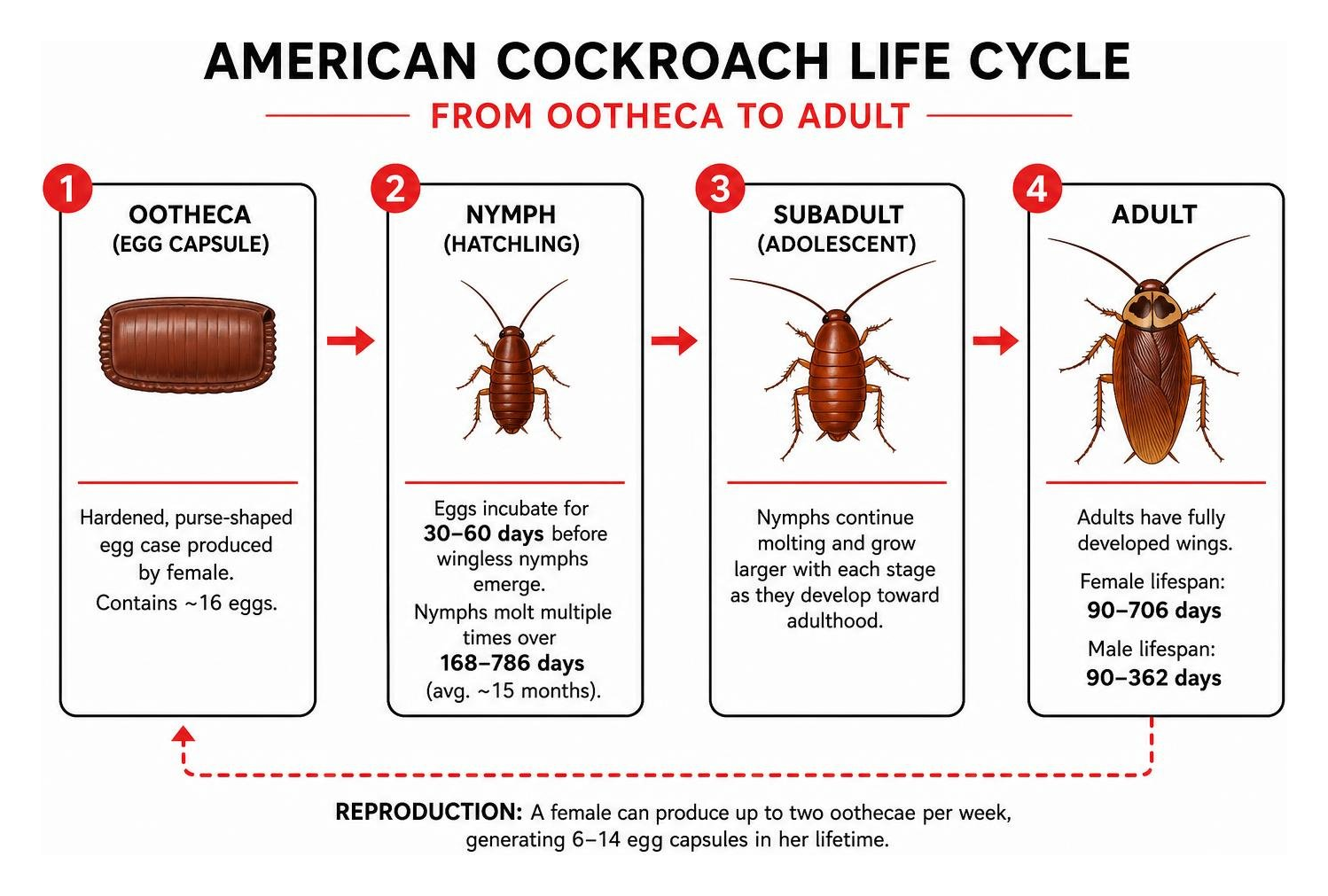
A female American cockroach produces hardened, purse-shaped egg cases called oothecae. Here is how their biological timeline unfolds:
- Egg Capsule Production: A single female can produce up to two oothecae per week under optimal conditions, generating 6 to 14 egg capsules in her lifetime. Each capsule contains approximately 16 embryos.
- Hatching & Development: The eggs incubate for 30 to 60 days before wingless nymphs emerge. Depending on local humidity and temperature, nymph development involves multiple molts over a period ranging from 168 to 786 days (averaging roughly 15 months).
- Adult Lifespan: Adult females can survive anywhere from 90 to 706 days, while adult males typically live between 90 and 362 days. Under ideal conditions, a single female can produce over 300 offspring during her lifetime.
- Extreme Resilience: Adult American cockroaches can survive for up to three months without eating food and can last an entire month without water.
Health Risks to Families and Pets
Because American cockroaches forage in sanitary sewers, drain lines, garbage disposals, and compost piles before wandering across residential food preparation surfaces, they present genuine health hazards.
- Pathogen Transmission: As they crawl through decaying organic matter and waste lines, their legs and bodies pick up dangerous bacteria. They mechanically transfer pathogens including Salmonella enterica, Escherichia coli (E. coli), and Pseudomonas aeruginosa directly onto countertops, dishes, and open food containers.
- Allergens and Asthma: Cockroaches continually shed their exoskeletons as they molt, leaving behind microscopic fragments, saliva, and fecal matter (which often resembles coarse ground black pepper). These airborne particles are potent allergen triggers known to exacerbate chronic asthma symptoms in children and sensitive adults.
- Secondary Pet Risks: Curious cats and dogs often hunt and consume these large roaches. While the insect itself is not venomous, ingesting roaches carrying chemical residues or harmful intestinal bacteria can lead to severe gastrointestinal distress for household pets.
Why American Cockroaches Invade North Carolina Properties
Our humid subtropical climate in the Triangle makes cities like Raleigh, Durham, Cary, and Chapel Hill prime territory for peridomestic insects. While American cockroaches prefer living outdoors in warm, damp, organic environments, weather shifts regularly push them into living spaces.
During prolonged summer droughts, roaches enter seeking standing water and cool plumbing lines. Conversely, heavy rainfall saturates city sewer lines and mulch beds, forcing colonies upward into crawl spaces, basements, and ground-level utility rooms.
The primary environmental attractants include:
- Excess Ground Moisture: Standing water around foundation footings, downspouts emptying right next to the foundation, and poorly ventilated crawl spaces create an ideal microclimate.
- Accessible Food Residue: Overflowing outdoor trash cans, pet food bowls left out overnight, and unsealed compost bins provide an endless food supply.
- Thick Organic Mulch: Heavy layers of pine straw or wood mulch placed flush against foundation walls provide dark, humid harborage right next to structural entry points.
Common Structural Vulnerabilities
American cockroaches can flatten their bodies to squeeze through tiny structural openings. Any gap larger than 3/8 of an inch is an open door for an adult roach.
- Plumbing Penetrations: Unsealed gaps around water supply pipes, drain lines, and air conditioning line sets running through foundation walls.
- Crawl Space Vents & Access Doors: Damaged vent screening or warped crawl space access doors that allow easy passage.
- Worn Weatherstripping: Gaps along the bottoms of exterior doors, garage doors, and sliding patio tracks.
- Dry Floor Drains: Floor drains in basements or utility rooms with evaporated P-traps, providing a direct highway from the municipal sewer line into the home.
Step-by-Step American Cockroach Control NC Protocol
Achieving lasting eradication requires a structured Integrated Pest Management (IPM) approach. IPM minimizes reliance on broad-spectrum chemical sprays by emphasizing structural exclusion, moisture reduction, targeted baiting, and continuous monitoring. The North Carolina Department of Agriculture & Consumer Services outlines these regulatory and safety best practices in their guide on Cockroach Control and Prevention.
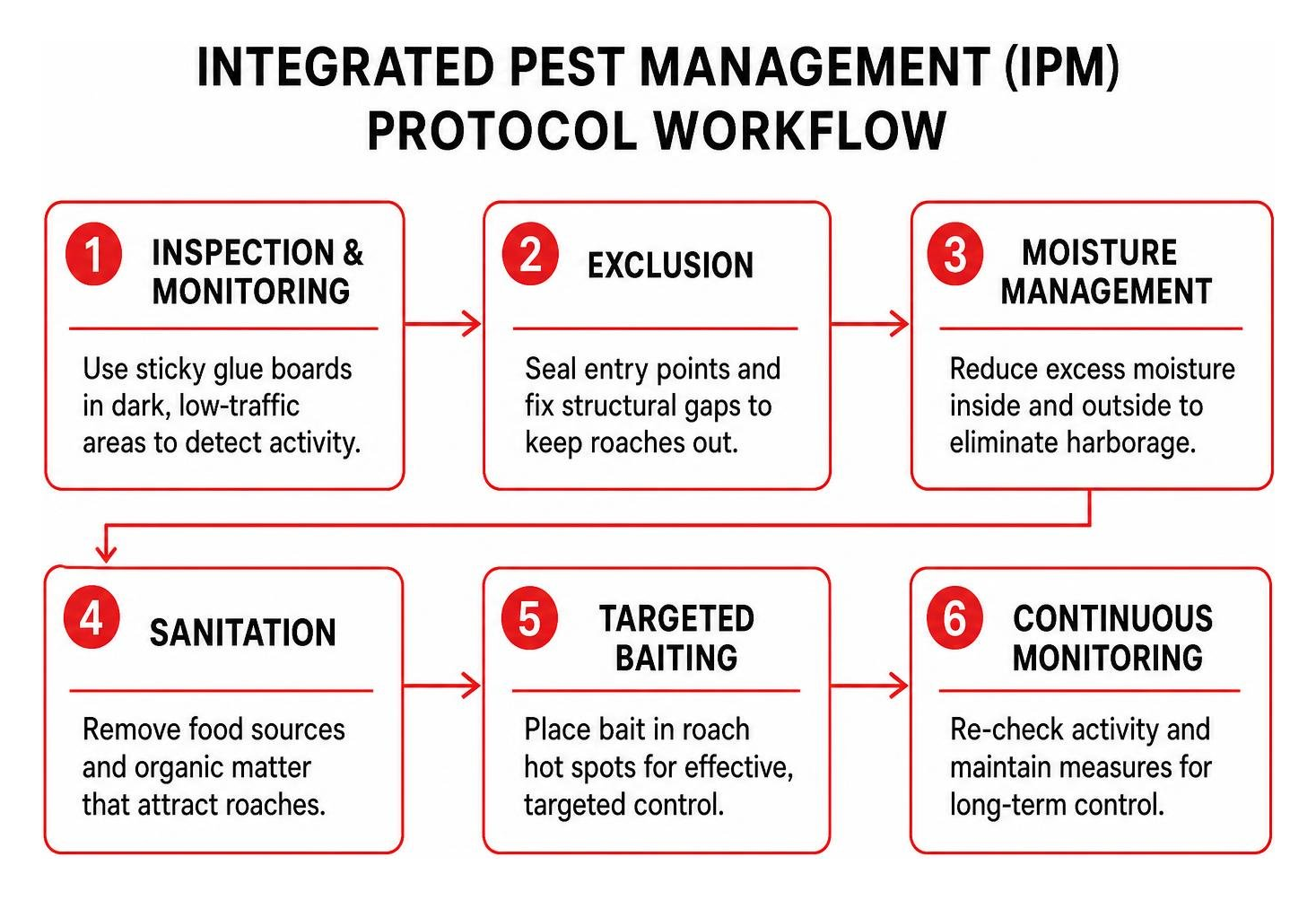
Step 1: Inspection and Monitoring
Place non-toxic sticky glue boards against baseboards in dark, low-traffic areas:
- Next to water heaters and washing machines
- Inside crawl space access points and basements
- Beneath kitchen sinks and behind bathroom vanities
- Along the perimeter walls of attached garages
Check traps weekly. Catching a single nymph indicates active indoor breeding, whereas catching an isolated adult may simply indicate an exterior entry point that needs to be sealed.
Step 2: Sanitation and Moisture Abatement
- Repair dripping faucets, sweat-prone plumbing lines, and leaking outdoor hose bibbs.
- Ensure crawl space relative humidity stays below 60% by installing vapor barriers or using dedicated dehumidifiers.
- Pour a bucket of water down seldom-used basement or laundry floor drains once a month to keep the plumbing P-traps full and prevent roaches from climbing up through the pipes.
- Keep kitchen surfaces swept and wiped down, and store dry goods and pet food in rigid, airtight containers.
Indoor Elimination and Targeted Treatments
When roaches establish indoor harborage, spraying liquid pesticides at random across open baseboards can actually backfire—it repels roaches, scattering them deeper into wall voids and subfloors. Instead, use targeted applications:
- Gel Baits and Granular Baits: Apply small, pea-sized placements of professional-grade cockroach gel bait inside dark cabinet corners, around pipe collars, and inside utility closets. Baits are consumed by foraging roaches and carried back to harborage areas.
- Inorganic Dusts (Boric Acid or Silica Aerogel): Using a hand duster, inject fine layers of boric acid or amorphous silica dust into closed wall voids, behind switch plates, and underneath large kitchen appliances. These dusts cling to the cockroach’s exoskeleton and work mechanically to dehydrate the insect when it grooms itself. Always apply dusts in very light, barely visible layers; heavy piles will simply be avoided by roaches.
- Insect Growth Regulators (IGRs): Introduce IGR compounds (such as hydroprene or pyriproxyfen) to disrupt the molting process of nymphs and sterilize adult females, breaking the reproductive cycle long-term.
Exterior Perimeter Defense and Exclusion
The most effective long-term defense is keeping these pests from stepping inside in the first place. For comprehensive property care, combine home exclusion with targeted lawn pest management to eliminate outdoor nesting sites before roaches reach your foundation.
- Seal Foundation Penetrations: Apply premium silicone-acrylic caulk or expanding polyurethane foam around exterior pipe chases, conduit lines, and outdoor spigots.
- Screen Open Vents: Install heavy-duty, corrosion-resistant 1/8-inch hardware mesh over all foundation crawl space vents, attic ridge vents, and plumbing exhaust stacks on the roof.
- Upgrade Door Thresholds: Replace dried-out or torn rubber sweeps along exterior entry doors and garage overhead doors. Ensure you cannot see daylight around or beneath any closed door.
- Establish a Landscape Buffer: Pull wood mulch and pine straw back at least 12 inches from your foundation wall, replacing it with crushed gravel or river stone to create a dry, unappealing barrier. Prune tree limbs and dense shrubs back at least 2 feet from siding and rooflines to eliminate aerial bridges.
When to Call a Professional Exterminator
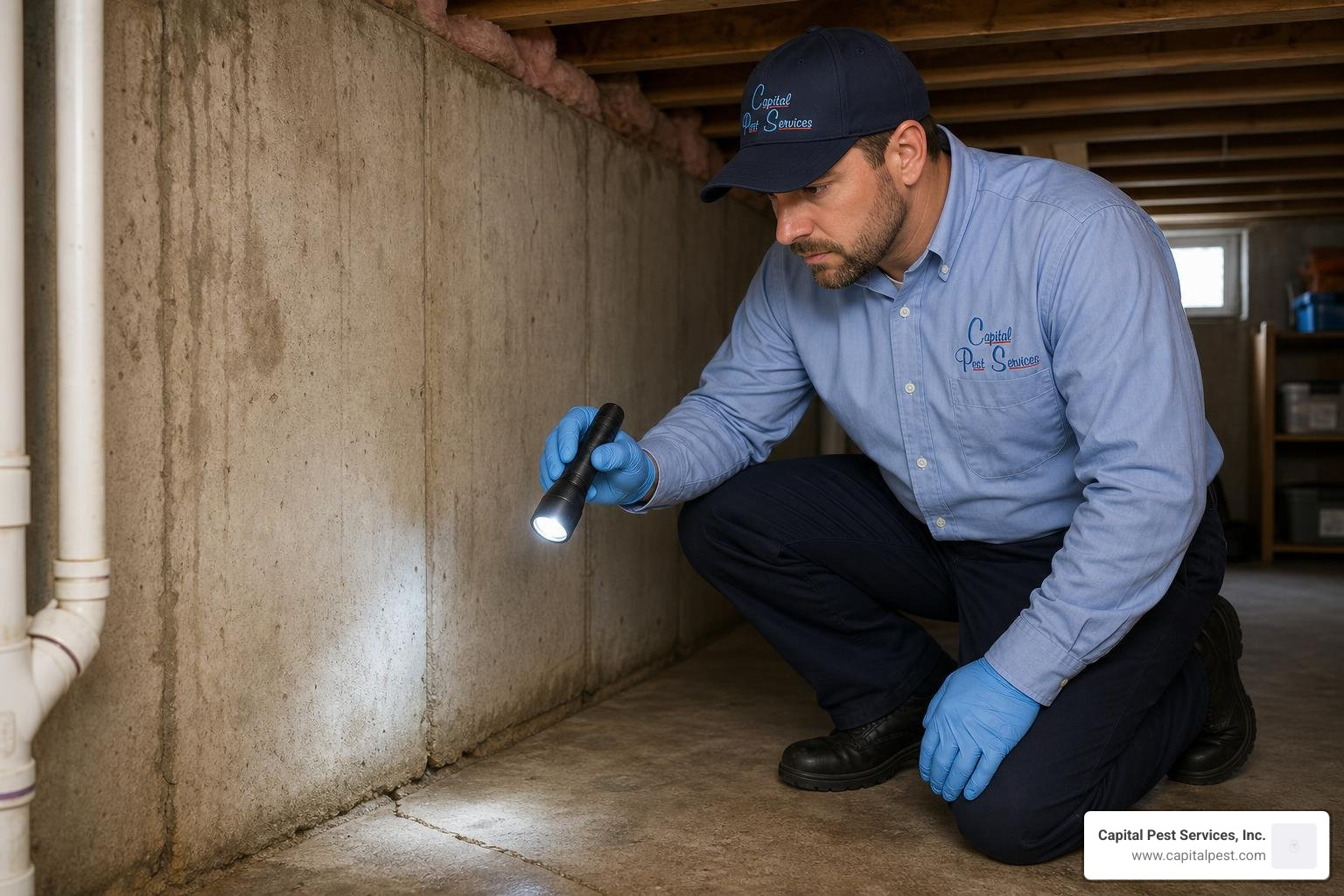
While finding an occasional dead roach after a torrential downpour can be handled with simple DIY exclusion, persistent sightings require professional intervention.
Consider bringing in a licensed professional if:
- You consistently catch roaches on sticky monitoring boards across multiple rooms.
- You find dark, capsule-shaped oothecae glued to subflooring, joists, or water heater panels.
- You notice a distinct, oily, musty odor in basements, crawl spaces, or utility areas.
- The structure is a commercial property, multi-unit dwelling, or older home (built before 1980) with complex utility lines and inaccessible crawl spaces.
In the state of North Carolina, all commercial structural pest management activities are strictly governed by the North Carolina Structural Pest Control Committee under the NCDA&CS, adhering strictly to EPA FIFRA regulations. Licensed exterminators are trained to identify exact species pressure points and handle specialized equipment safely.
Why DIY American Cockroach Control NC Efforts Often Fail
DIY efforts often fall short because over-the-counter bug bombs and aerosol foggers only affect the few insects out in the open. They fail to penetrate deep wall voids, subfloors, and sewer connections where American cockroaches actually nest.
Additionally, aerosol foggers leave behind chemical residues on open surfaces without reaching unhatched egg cases. Once those eggs hatch weeks later, the infestation restarts. Over-applying retail pyrethroid sprays can also contaminate bait placements, making baits unpalatable to foraging roaches.
Professional American Cockroach Control NC vs. DIY Methods
| Feature | Professional IPM Service | Standard DIY Methods |
|---|---|---|
| Inspection Scope | Comprehensive attic, crawl space, void, and perimeter analysis | Surface-level visual inspection in living spaces |
| Material Access | Commercial-grade microencapsulated suspensions, specialized IGRs, systemic baits | Diluted retail aerosols, basic glue traps, general sprays |
| Application Equipment | Precision void injectors, power sprayers, specialized hand dusters | Retail trigger bottles and aerosol cans |
| Long-Term Strategy | Root-cause remediation, exclusion guidance, and cyclical monitoring | Temporary surface knockdown without solving entry routes |
| Safety & Regulation | NCDA&CS certified, EPA label compliant, targeted placement | Risk of over-application, surface contamination, and bait spoilage |
Our team provides comprehensive residential pest control programs tailored to the unique pest pressures in our service areas—from Raleigh, Durham, and Chapel Hill to Cary, Apex, Wake Forest, Holly Springs, and beyond. Explore our year-round pest control plans to keep your property protected against roaches, ants, and other seasonal invaders.
Frequently Asked Questions About American Cockroaches in NC
How do American cockroaches enter North Carolina homes?
American cockroaches enter homes primarily through unsealed utility penetrations, foundation gaps, dry plumbing floor drains, worn door sweeps, and uncapped crawl space vents. They can also travel directly from municipal sewer connections through plumbing lines if the P-traps have dried out.
Can American cockroaches fly inside houses?
Yes, although they rarely take flight from a standstill. American cockroaches are capable of gliding flight, especially in hot, humid conditions (temperatures above 85°F). They typically launch themselves from elevated spots like trees, rooflines, attics, or wall tops, gliding downward toward light or moisture sources.
How long does it take to eradicate an infestation?
Complete eradication typically takes between 4 to 8 weeks. Because American cockroach oothecae are naturally resistant to insecticides and nymphs take time to emerge and encounter treatments, a successful IPM strategy relies on multi-week monitoring, targeted baiting, and structural exclusion to stop new invaders from entering.
Conclusion
Controlling giant American cockroaches in North Carolina is not about spraying every baseboard with harsh chemicals—it is about understanding their biology, eliminating their moisture sources, and cutting off their indoor access points. By prioritizing structural exclusion, managing crawl space humidity, and using targeted baiting protocols, you can keep these pests out of your home for good.
If you are dealing with persistent roach sightings in Raleigh, Durham, Cary, or the surrounding Triangle communities, our team is here to help. Capital Pest Services brings decades of local experience, NPA accreditation, and an integrated, eco-conscious approach to solve your toughest pest problems.
Contact us today to schedule your comprehensive inspection and secure professional cockroach control for lasting peace of mind.
Capital Pest is proud to be a family-owned and operated pest control company serving Raleigh, NC and its surrounding area (Chapel Hill, Wake Forest, Clayton, Pinehurst, Pittsboro, Fuquay-Varina, etc). Contact us for our pest control services today!