How to Eliminate Rodent Infestation on a Budget
Stop a Rodent Infestation Without Overspending
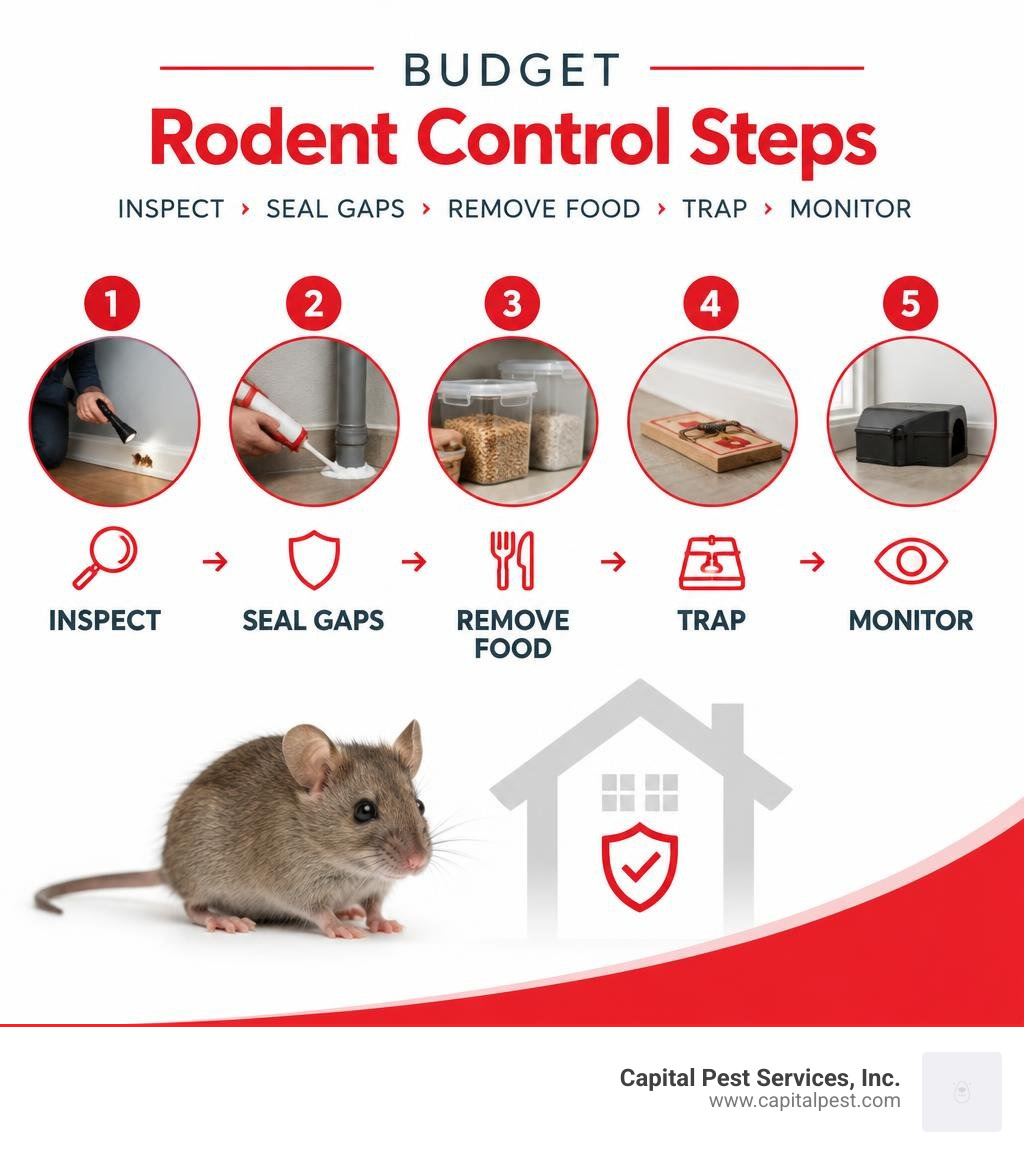
The most affordable way to eliminate rodents is to remove their food and shelter, seal entry holes, and use well-placed snap traps. Start today by storing food in hard containers, cleaning crumbs and pet food, fixing leaks, sealing gaps around pipes and doors, and placing traps along walls where you find droppings or gnaw marks.
Mice can enter through gaps as small as 1/4 inch, while rats may squeeze through an opening about the size of a quarter. That means a low-cost inspection and a few basic repairs can prevent far more damage than bait or traps alone.
Rodents can contaminate food, damage wiring and insulation, and spread germs through urine and droppings. A budget-friendly plan works best when it combines exclusion, sanitation, trapping, and follow-up checks rather than relying on one product.
I am Mitch Taylor, President of Capital Pest Services, Inc., with more than 17 years of experience helping Raleigh-Durham homeowners solve rodent control problems through practical integrated pest management. Next, learn how to spot the early signs before a small rodent issue becomes a costly infestation.
Identifying Signs of a Rodent Infestation
Catching an infestation early is the most reliable way to save money on pest control. When a single female house mouse enters your living space, she can produce 5 to 10 litters per year with 5 or 6 pups per litter. Within a few short months, a pair of mice can turn into a colony of dozens.
Rodents are secretive, nocturnal creatures. You will almost certainly notice physical evidence of their daily routines before you ever catch a glimpse of the rodents themselves.
Droppings and Urine Markings
Rodent droppings are the most obvious indicator of activity:
- House Mice: Produce small, dark droppings roughly 1/8 to 1/4 inch long with pointed ends (similar to grains of black rice). An adult mouse produces 50 to 75 pellets per day.
- Roof Rats: Leave spindle-shaped droppings that are about 1/2 inch long with pointed ends.
- Norway Rats: Leave blunt, capsule-shaped droppings measuring 1/2 to 3/4 inch in length.
Urine trails often accompany droppings along baseboards and beneath appliances. Over time, rodent urine combines with body grease and dirt to create small, pillar-like mounds in areas of heavy traffic.
Grease Rub Marks (Sebum Trails)
Rodents possess poor eyesight and navigate by maintaining physical contact with walls and baseboards (a behavior known as thigmotaxis). Their fur carries natural oils, dirt, and sebum that leave dark, greasy smudges along baseboards, entry points, and structural beams. Fresh marks appear soft and smear easily, while older trails dry out and become brittle.
Gnaw Damage and Structural Hazards
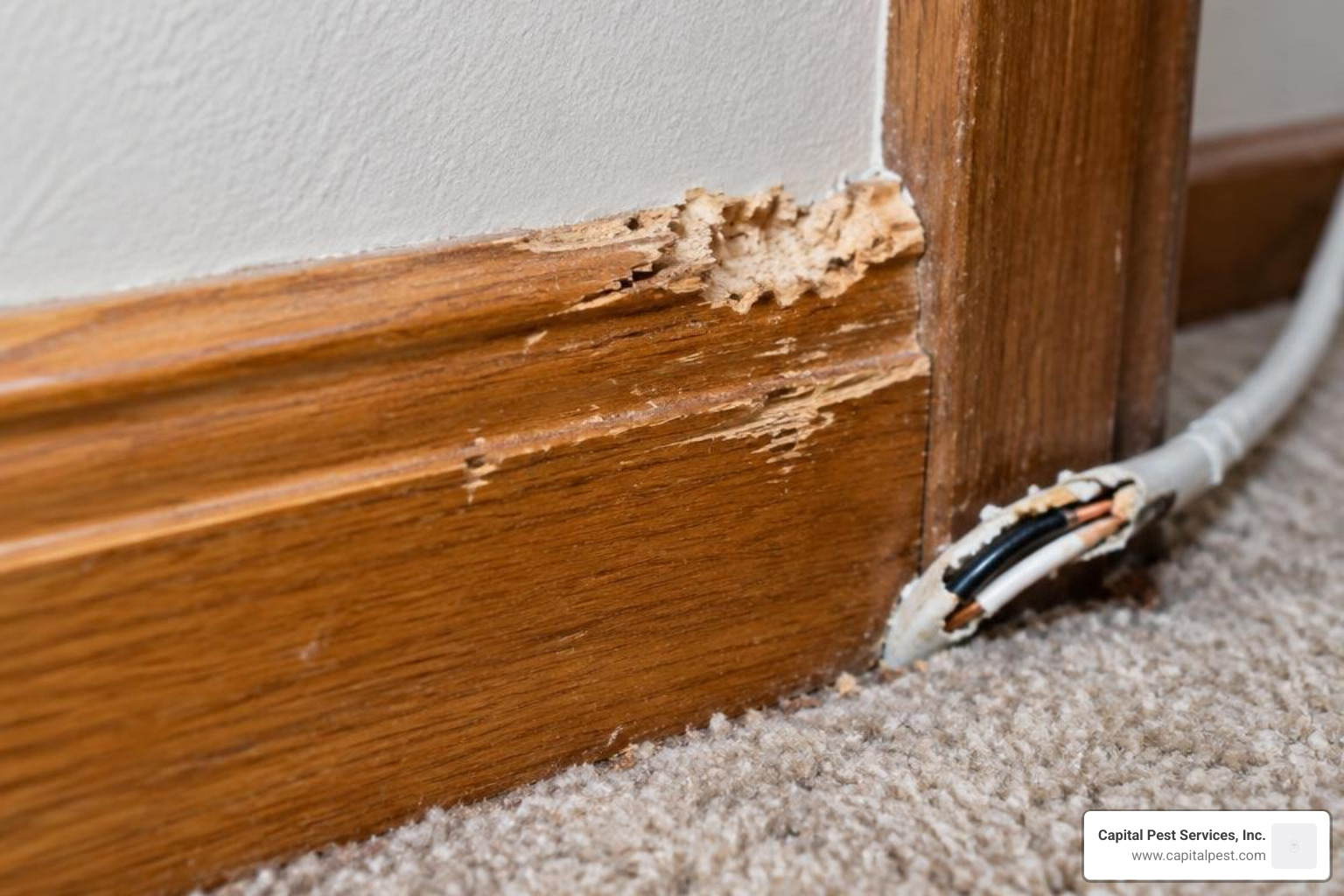
A rodent’s incisor teeth grow continuously at a rate of several inches per year. To prevent overgrowth, they constantly gnaw on hard materials, including wood framing, drywall, plastic water pipes, and electrical wiring.
Gnawed wiring represents a major hidden cost of unchecked infestations, introducing significant fire hazards behind walls and inside attic spaces. Fresh gnawing reveals light-colored wood or shiny metal, turning darker over time.
Scratching Sounds and Nesting Materials
Nocturnal scratching, scurrying, and squeaking inside wall voids, crawl spaces, or drop ceilings strongly indicate nesting activity. Rodents shred soft household items to build insulated nests:
- Fiberglass or cellulose insulation
- Cardboard and paper towels
- Fabric, upholstery batting, and clothing scraps
Recognizing Physical Entry Dimensions
Rodents have flexible skeletal structures that allow them to squeeze through gaps that seem impossibly small:
- A house mouse can compress its body through an opening the size of a dime (1/4 inch or roughly 6 mm).
- A rat requires a gap no larger than a quarter (1/2 inch to 3/4 inch).
Understanding these tiny margins helps you focus your budget where it matters most: sealing physical access points. For formal guidance on identifying health hazards, refer to the CDC rodent infestation guidelines.
Low-Cost Exclusion and Habitat Modification
Exclusion—physically barring rodents from entering your home—is the single most permanent and cost-effective rodent control measure available. Chemical baits and traps only remove the rodents currently inside; without proper structural sealing, new pests will immediately replace them.
Sealing Common Entry Points
Walk your home’s exterior perimeter with a flashlight, pencil, and notepad. If a standard pencil fits into a crack or gap, a mouse can squeeze through it.
- Utility Penetrations: Inspect areas where plumbing pipes, HVAC refrigerant lines, natural gas pipes, and electrical conduits enter siding or foundations. Pack these openings tightly with coarse stainless steel mesh or copper mesh, then seal with expanding polyurethane foam or exterior caulk. Rodents cannot chew through metallic mesh without injuring their teeth.
- Doors and Windows: Install heavy-duty nylon-brush or rubber-and-metal door sweeps along the bottom of exterior doors, garage entries, and crawl space access panels. Check that weatherstripping around ground-level windows forms a tight seal.
- Attic and Foundation Vents: Cover exterior vents with galvanized 1/4-inch hardware cloth. Ensure soffit vents, ridge vents, and roofline transitions are firmly secured against roof rats.
For detailed biological exclusion recommendations, review the UC IPM house mouse pest notes.
Eliminating Food and Water Attractants
An adult house mouse eats up to 20% of its body weight daily and feeds across roughly 200 small nibbling meals every night. Eliminating easy meals forces rodents to seek bait placed on your traps.
- Airtight Storage: Transfer cereal, rice, pet food, birdseed, and pantry staples from cardboard boxes into glass, heavy plastic, or metal containers with locking lids.
- Pet Food Discipline: Never leave pet food in bowls overnight. Feed pets during set daytime hours and immediately remove leftovers.
- Waste Management: Keep indoor and outdoor garbage cans covered with tightly fitting, animal-proof lids. Rinse recyclables thoroughly before placing them in bins.
- Moisture Elimination: Fix dripping spigots, leaking under-sink plumbing, and sweating condensation lines. Rodents need reliable hydration, particularly Norway rats.

Exterior Habitat Modification
The exterior perimeter of your home should never provide harborage or easy climbing paths for rodents:
- Trim Vegetation: Cut back tree limbs, vines, and shrubs at least 3 feet away from your roofline and exterior siding to eliminate elevated highways for roof rats.
- Clear Clutter: Move firewood piles, lumber stacks, and dense compost piles at least 20 feet away from the home foundation, elevating stored wood at least 18 inches off the ground.
- Eliminate Standing Water: Clear clogged gutters, empty bird baths regularly, and remove items that collect standing rainwater.
If you find that structural vulnerabilities in your crawl space or attic are too extensive for simple DIY fixes, investing in professional residential pest control solutions can prevent thousands of dollars in structural and electrical repairs.
Core Principles of Budget-Friendly Rodent Control
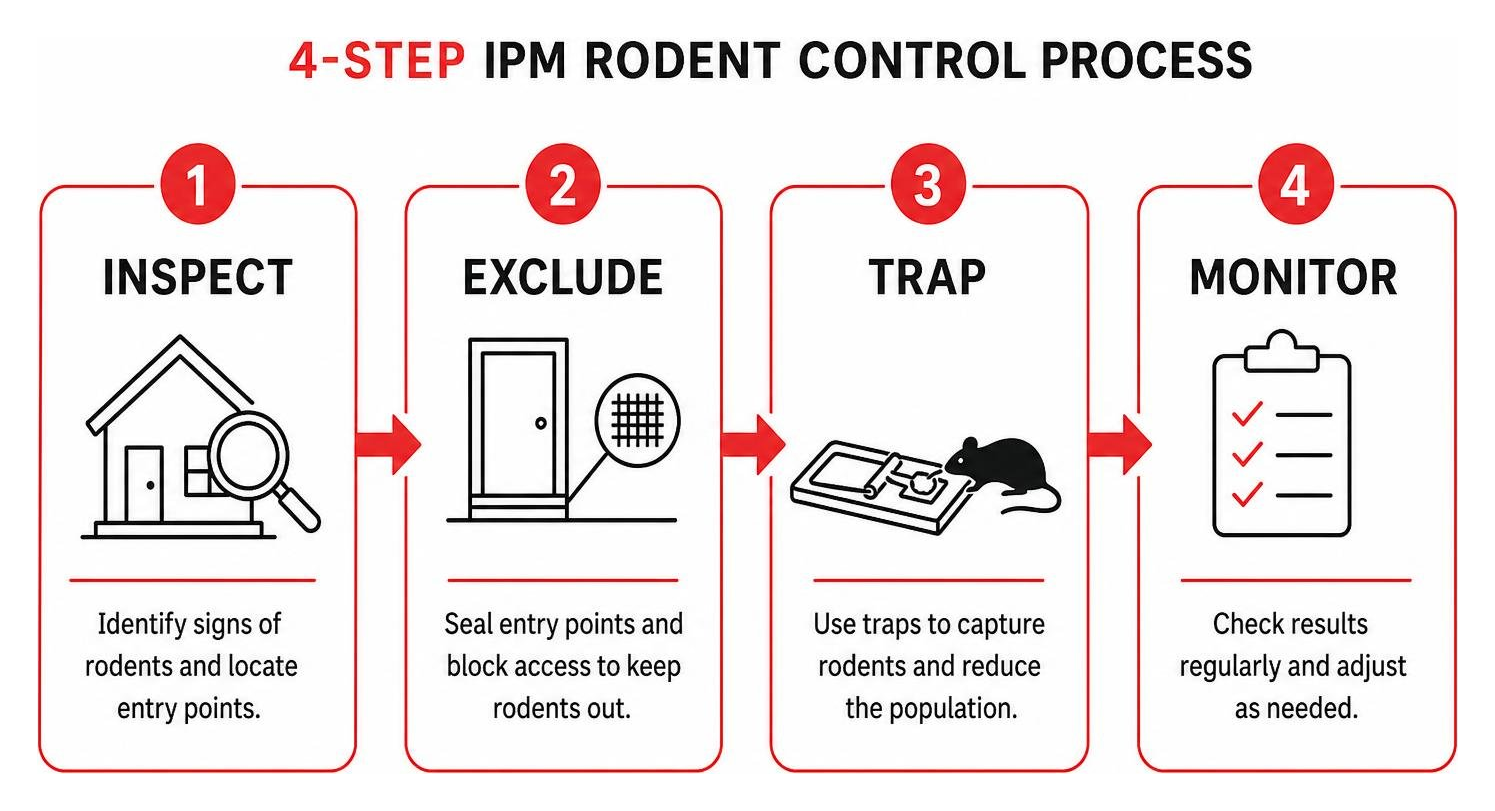
Achieving reliable results on a modest budget requires a systematic Integrated Pest Management (IPM) approach rather than random, unguided trap placement.
Why Snap Traps Beat Poison Baits on a Budget
While over-the-counter rodenticide baits might seem convenient, standard wooden or plastic snap traps offer distinct practical and financial advantages:
- Instant Confirmation: Traps provide immediate proof of capture, allowing you to gauge population levels and verify that your placement strategy is working.
- No Hidden Odors: Rodents that consume poison bait often crawl deep inside drywall voids, floor joists, or subflooring to die. The resulting decomposition creates foul odors that last for weeks and can require costly drywall removal to remediate.
- Safety for Non-Target Animals: Loose rodenticide baits inside a home create poisoning risks for children, household dogs, and cats. Furthermore, poisoned rodents that wander outdoors can cause secondary poisoning in neighborhood pets, hawks, and owls.
- Reusable Value: Modern plastic snap traps can be washed, reset, and reused dozens of times, costing only a couple of dollars per trap.
Affordable Rodent Control Trapping Techniques
Setting traps effectively relies on understanding rodent behavior. Rodents are creatures of habit that run tight along vertical baseboards rather than crossing open floor spaces.
Step 1: Strategic Placement and Alignment
- Perpendicular Alignment: Place snap traps perpendicular (at a 90-degree angle) to walls, baseboards, and foundation edges, with the baited trigger facing the wall. When a mouse scurries along the baseboard, it runs directly over the trigger mechanism.
- Spacing: For house mice, space traps every 4 to 8 feet along active runways. For rats, space traps 10 to 15 feet apart. Rodents rarely travel far from their nests if food is nearby—mice typically forage within a 10- to 30-foot radius.
- Back-to-Back Trapping: In areas with heavy activity, place pairs of traps parallel to the wall, triggers facing outward in opposite directions. A rodent approaching from either side will hit a trigger immediately.
Step 2: Selecting Budget-Friendly Baits
Rodents are drawn to high-calorie, aromatic foods. You do not need to buy expensive commercial lures when common pantry staples work better:
- Peanut Butter: The gold standard for both mice and rats. It adheres firmly to the trigger plate, forcing the rodent to exert pressure to remove it.
- Oatmeal and Peanut Butter Paste: Rolling rolled oats into peanut butter creates an irresistible, high-protein attractant.
- Bacon Bits or Cooked Sausage: Ideal for Norway rats, which prefer meats and greasy proteins.
- Nesting Materials: For female mice preparing to give birth, a small piece of cotton ball, yarn, or dental floss tied securely to the trigger makes an effective non-food lure.
- Hazelnut Spread or Chocolate: Highly attractive to roof rats and house mice alike.
Pro Tip (Pre-Baiting): If you are dealing with cautious rats (which exhibit neophobia, or fear of new objects), place baited, unset traps in active areas for 2 to 3 days. Once the rodents become accustomed to feeding freely from the triggers, set the spring mechanisms all at once for a high-success catch rate.
Long-Term Rodent Control and Population Monitoring
Eliminating an active infestation is only half the battle. Maintaining a rodent-free home requires routine monitoring and proactive population suppression.
Natural Predators and Barn Owl Boxes
Encouraging natural biological controls on larger rural or suburban properties reduces rodent numbers before pests ever approach your foundation. A single family of barn owls can consume up to 3,000 rodents per year. Installing an inexpensive raptor nesting box on an elevated pole or outbuilding provides sustainable outdoor management without chemicals.
Fertility-Control Baits
Modern IPM programs increasingly utilize eco-friendly rodent fertility control baits. Unlike traditional toxic rodenticides that risk secondary poisoning, fertility baits disrupt the reproductive cycles of male and female rodents. In a 2022 field study on a California poultry farm, integrating fertility control into existing pest management protocols reduced rat activity by 94%.
Tracking Powders for Activity Audits
To confirm whether rodents remain active in your crawl space, garage, or attic without buying specialized cameras, sprinkle a light, thin dusting of unscented talcum powder or flour along suspected baseboard pathways. Check the area 24 hours later with a flashlight:
- Crisp footprints or tail-drag lines reveal active runways and help you pinpoint exactly where to place traps.
- Undisturbed powder indicates that the runway has been abandoned.
For comprehensive regional management techniques, consult the British Columbia rat and mouse management guide.
Safe Cleanup and Disease Prevention Protocols
Once trapping has removed the rodents, cleaning up nesting areas and waste must be handled carefully to prevent disease transmission.
Wild rodents are known reservoirs for over 35 diseases worldwide, including Hantavirus Pulmonary Syndrome, Salmonellosis, Leptospirosis, Rat-Bite Fever, and Lymphocytic Choriomeningitis (LCM). It is estimated that roughly 5% of house mice across the United States carry and can transmit the LCM virus.
The Golden Rule: Never Sweep or Vacuum Dry Waste
Never sweep or vacuum dry rodent droppings, urine trails, or nesting materials with a household vacuum. Sweeping and dry vacuuming aerosolize pathogen-laden particles into the air, creating direct inhalation risks for Hantavirus and other respiratory infections.
Step-by-Step Safe Cleanup Process
- Ventilate the Space: Open exterior doors and windows in the affected room or outbuilding for at least 30 minutes prior to cleaning to allow fresh air circulation.
- Put On Protective Gear: Wear non-porous rubber, latex, or nitrile gloves, eye protection, and an N95 respirator mask.
- Wet Down the Contaminants: Thoroughly spray all droppings, urine stains, dead carcasses, and nesting debris with a household disinfectant or a freshly mixed solution of 1.5 cups of household bleach per gallon of water. Allow the disinfectant to soak the area for 5 to 10 minutes to neutralize active bacteria and viruses.
- Wipe Up with Disposable Towels: Use damp paper towels to pick up the soaked droppings and debris. Place all waste directly into a heavy-duty plastic garbage bag.
- Double-Bag and Seal: Place the paper towels, gloves, and carcasses into the bag, tie it securely, and seal that bag inside a second plastic trash bag. Dispose of the double-bagged waste in a covered outdoor trash container.
- Mop and Sanitize Surrounding Surfaces: Mop hard floors and wipe down nearby baseboards, countertops, and shelving with disinfectant solution.
- Personal Hygiene: Wash gloved hands with soap and water before removing gloves. Once gloves are discarded, wash bare hands thoroughly with warm water and antibacterial soap.
Frequently Asked Questions About Eliminating Rodents
What is the most effective budget method to remove mice?
The most cost-effective and reliable method is pairing mechanical snap traps with rigorous sanitation and structural exclusion.
Relying on traps alone without removing open food sources or sealing exterior gaps leads to a never-ending cycle of reinvasion. Store food in airtight glass or metal containers, seal pencil-sized gaps around your home’s foundation using stainless steel mesh and silicone caulk, and set a dozen snap traps along active baseboards baited with small amounts of peanut butter.
How small of an opening can rats and mice fit through?
A house mouse can compress its skeleton to squeeze under door gaps and through wall openings as small as 1/4 inch (about the size of a dime).
Rats require an opening of roughly 1/2 inch to 3/4 inch (about the size of a quarter). When performing DIY exclusion repairs, seal any exterior opening, crack, or vent larger than 6 mm using metal mesh, sheet metal flashing, or cementitious mortar.
When is DIY trapping no longer enough for an infestation?
While DIY trapping works well for isolated, small-scale rodent issues, professional intervention becomes necessary under several conditions:
- You notice gnaw marks on exposed electrical wiring, HVAC ductwork, or flexible plumbing lines inside walls or attic spaces.
- Trapping yields multiple rodents every day for over two weeks, indicating a large, established breeding colony.
- Rodents have infested difficult-to-reach structural areas, such as enclosed drop ceilings, multi-layer floor systems, or encapsulated crawl spaces.
- Scratching sounds persist inside wall cavities despite aggressive trapping in living areas.
In these situations, professional pest management prevents compounding property damage and eliminates hidden nesting harborage.
Conclusion
Eliminating a rodent infestation on a budget does not require expensive gimmicks, ultrasonic repellers, or hazardous chemical poisons. By following an Integrated Pest Management framework—sealing structural gaps, removing accessible food and water, placing snap traps strategically along travel runways, and practicing safe cleanup—you can rid your living space of rodents permanently while keeping costs low.
If your rodent problem proves persistent, or if you prefer the peace of mind that comes with certified professionals, Capital Pest Services, Inc. is here to help. Serving homeowners throughout the Raleigh-Durham Triangle—including Raleigh, Durham, Cary, Chapel Hill, Wake Forest, Apex, Holly Springs, Morrisville, Garner, Clayton, Fuquay-Varina, and surrounding communities—we deliver NPA-accredited, eco-friendly expert rodent control solutions tailored to protect your home and family.
Contact our team today to establish an affordable, comprehensive defense for your property.
Capital Pest is proud to be a family-owned and operated pest control company serving Raleigh, NC and its surrounding area (Chapel Hill, Wake Forest, Clayton, Pinehurst, Pittsboro, Fuquay-Varina, etc). Contact us for our pest control services today!