How to Eliminate Cockroach Infestation in 5 Easy Steps
Understanding Common Roaches and Associated Health Risks
To eliminate a cockroach infestation, start by inspecting harborage areas with a flashlight and sticky monitors, then remove food and water sources through strict sanitation, seal entry points and hiding gaps, apply targeted gel baits or dusts, and monitor traps to verify control. This five-step Integrated Pest Management (IPM) approach works because cockroaches have survived on Earth for over 300 million years—longer than dinosaurs—and require a thoughtful, strategic plan. Across North Carolina, four primary species invade residential and commercial properties: German cockroaches, American cockroaches, Oriental cockroaches, and Brownbanded cockroaches. Correctly identifying the culprit determines where you must look and how you treat the space.
| Species | Adult Size | Color & Markings | Primary Indoor Habitat | Reproductive Speed |
|---|---|---|---|---|
| German Cockroach | 0.5 to 0.6 inches | Light brown/bronze with 2 dark parallel stripes on pronotum | Warm, humid kitchens, bathrooms, behind appliances | Extremely fast (~30–48 eggs per capsule; multiple generations per year) |
| American Cockroach | 1.5 to 2.0+ inches | Reddish-brown with yellowish figure-8 pattern on shield | Basements, crawl spaces, utility rooms, floor drains | Moderate (~16 eggs per capsule; ~400+ lifetime offspring) |
| Oriental Cockroach | 1.0 to 1.25 inches | Glossy dark brown to jet black; short wings | Damp basements, crawl spaces, plumbing voids, foundations | Slow (~16 eggs per capsule; takes up to 18 months to mature) |
| Brownbanded Cockroach | 0.5 inches | Tan to light brown with two light horizontal bands across wings | High cabinets, ceilings, behind wall art, warm electronics | Fast to moderate (~13–18 eggs per capsule; deposits up to 14 cases) |
Identifying Household Cockroach Species
Understanding species-specific biology provides an immediate tactical advantage:
- German Cockroaches (Blattella germanica): The most common indoor pest in our region. A single female produces an egg case (ootheca) containing 30 to 48 eggs. Unlike other species, she carries this ootheca until about 24 hours before hatching, shielding her young from environmental hazards and natural predators. A mated female can produce several thousand descendants in less than a year. They spend about 75% of their lives tucked deep inside narrow cracks near warmth and moisture.
- American Cockroaches (Periplaneta americana): Often referred to locally as “waterbugs” or “palmetto bugs,” these large pests thrive in warm, dark, high-moisture commercial sewer systems, basements, and foundation gaps. Although adults possess fully developed wings and can glide short distances, they primarily run when disturbed.
- Oriental Cockroaches (Blatta orientalis): Prefer cool, very wet environments. They are common invaders of crawl spaces, basements, and ground-level utility penetrations. Because they struggle to climb smooth vertical surfaces, you will almost always find them scurrying along floorboards.
- Brownbanded Cockroaches (Supella longipalpa): Unlike German roaches, they avoid high moisture and prefer warm, dry, elevated harborages. They commonly hide in upper kitchen cabinets, inside electronics (like gaming consoles and televisions), and behind picture frames.
For comprehensive diagnostic keys and behavioral details, review the COCKROACH MANAGEMENT MANUAL .
Health Risks and Indoor Allergens
Cockroaches are far more than an aesthetic nuisance; they carry significant health risks. Their foraging habits in trash bins, sewer lines, and compost introduce bacteria directly onto kitchen counters and food-prep surfaces. Pathogens mechanically transmitted by roaches include Salmonella, Staphylococcus, Streptococcus, Escherichia coli, and various intestinal protozoa.
Beyond bacterial contamination, cockroach debris is a major allergen source. Shed skins (exuviae), decaying insect bodies, and fecal droppings contain potent protein antigens. Research indicates that between 23% and 60% of urban residents with asthma show direct sensitivity to cockroach allergens. Inhaling these microscopic airborne particles triggers chronic inflammation, bronchial constriction, and acute asthma attacks, particularly in young children. Applying a methodical IPM intervention dramatically lowers indoor allergen levels and improves respiratory health, as outlined in the Cockroaches guidelines provided by the National Pesticide Information Center.
The 5-Step IPM Strategy for Long-Term Cockroach Control
Integrated Pest Management (IPM) solves infestations systematically. Instead of spraying broad-spectrum chemicals that leave unnecessary chemical residues across living spaces, IPM focuses on inspection, exclusion, moisture reduction, and precision baiting. You can review the scientific framework behind this approach in the How to Get Rid of Cockroaches: A Step-by-Step IPM Plan | Pest Control Insider guide.
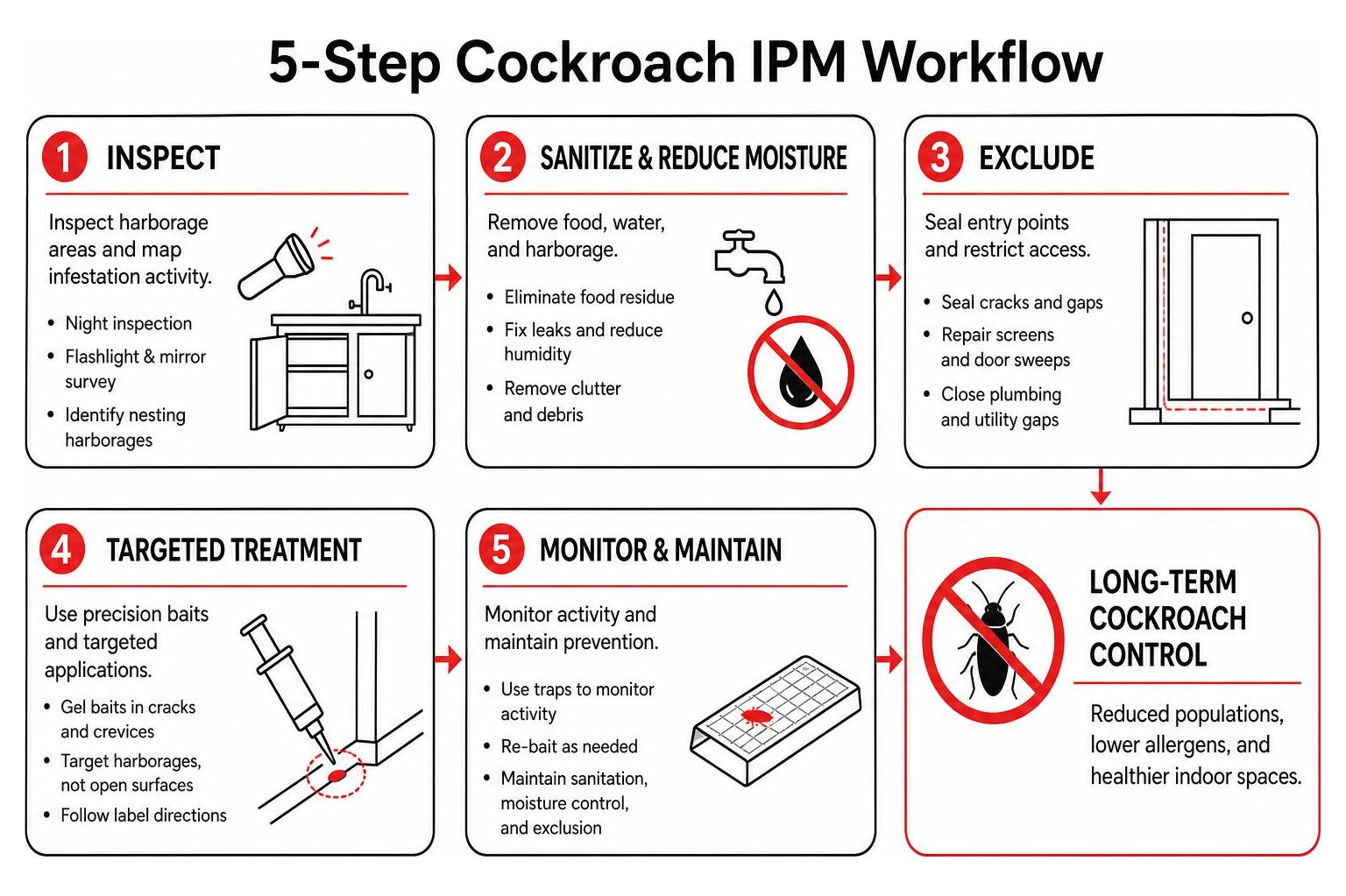
Step 1: Inspect Harborage Areas and Map Infestation Activity
Before applying any treatments, pinpoint the exact locations of the nesting harborages:
- Conduct a Flashlight & Mirror Survey: At night, inspect narrow gaps behind refrigerators, underneath dishwashers, beneath kitchen sinks, along cabinet hinges, and around the motor housings of major appliances.
- Identify Tell-Tale Clues: Look for dark, pepper-like fecal speckling along corners, discarded brown ootheca casings, cast-off translucent skins, and distinct, musty aggregation odors.
- Deploy Sticky Insect Monitors: Number your sticky traps and position them flush against baseboards, behind toilets, and next to trash cans. Traps baited with food attractants—such as apple or blueberry oil formulations, which field studies show can boost capture rates by over 100%—help you map relative population density across different rooms. Record your baseline counts after 48 to 72 hours.
Step 2: Eliminate Moisture and Food Residues Through Strict Sanitation
Cockroaches cannot survive without reliable water and food. German roaches can live for weeks without eating, but they will die in days without hydration:
- Eliminate Standing Water: Repair leaky plumbing under sinks, dry wet shower pans, empty pet water bowls overnight, and clean moisture trays under refrigerators.
- Deep Clean Cooking Residues: Pull appliances away from walls to scrape away grease splatters and food crumbs trapped between the counter and stove.
- Secure Food Storage: Transfer dry pantry goods, cereal boxes, and pet food into airtight glass or hard plastic containers.
- Maintain Clean Surfaces: Wipe down countertops nightly with a mild vinegar solution, wash dirty dishes immediately after meals, and empty kitchen trash into a tightly lidded exterior bin every evening.
Step 3: Seal Structural Entry Points and Harborage Gaps
Exclusion eliminates hiding spaces and stops roaches from migrating between rooms or adjoining units:
- Use 100% silicone caulk to seal gaps along kitchen backsplashes, cabinet bases, and baseboards.
- Fill wider voids around sink drainpipes, gas lines, and electrical conduits using expanding urethane foam or copper mesh.
- Install high-density nylon brush door sweeps on all exterior doors leading out to garages or ground-level patios.
- If your home suffers from entry points around foundational voids or exterior walls, integrating physical exclusion with our comprehensive residential pest control services provides a protective barrier against outdoor invaders.
Step 4: Implement Targeted Cockroach Control with Baits and Dusts
Modern cockroach baits are the cornerstone of effective indoor eradication:
- Gel Baits: Products formulated with active ingredients like indoxacarb, dinotefuran, or fipronil work via delayed toxicity. For example, Apex Cockroach Gel Bait offers targeted palatability that encourages rapid consumption. Apply bait in small, pea-sized beads (or thin 1-inch lines) directly into dark crevices, under cabinet hinges, and behind appliances—never in broad, thick smears on open countertops.
- The “Secondary Kill” Domino Effect: Cockroaches are coprophagous (they eat feces) and necrophagous (they eat dead colony members). When a foraging roach consumes bait, returns to its harborage, and dies, other roaches consume its toxic excretions and carcass. This horizontal transfer spreads the active ingredient deep within the colony, eliminating nymphs that never leave the nesting void.
- Inorganic Insecticidal Dusts: Apply pharmaceutical-grade boric acid or amorphous silica gel inside dry wall voids, behind electrical faceplates, and underneath kickplates using a hand duster. Keep dust applications light and barely visible; thick mounds act as a repellent, causing insects to simply walk around the treated zone. Boric acid remains active indefinitely as long as it stays dry.
- Insect Growth Regulators (IGRs): Introduce IGRs (such as hydroprene or pyriproxyfen) alongside baits. These compounds mimic juvenile hormones, preventing nymphs from molting into reproductive adults and producing sterile, twisted-wing adults.
Step 5: Monitor Progress and Rotate Active Ingredients
Control requires verified results, not guesswork:
- Review Follow-Up Monitor Counts: Check your sticky traps every 7 to 14 days. A successful treatment will show a steep drop in adult captures followed by a temporary surge in dying nymphs as egg cases hatch, culminating in clean traps.
- Rotate Chemical Classes: Cockroaches reproduce rapidly and can develop behavioral aversion (such as glucose aversion, where roaches refuse to eat sweet bait matrices) or physiological resistance. Rotate between different active ingredients (for instance, alternating between indoxacarb, avermectin, and phenylpyrazoles) every 90 to 120 days.
- Reapply Bait as Consumed: Inspect your bait placements weekly. If foraging roaches have eaten the gel completely, replenish the small beads until feeding activity stops entirely.
Why Foggers Fail and What Low-Toxicity Alternatives Work Best
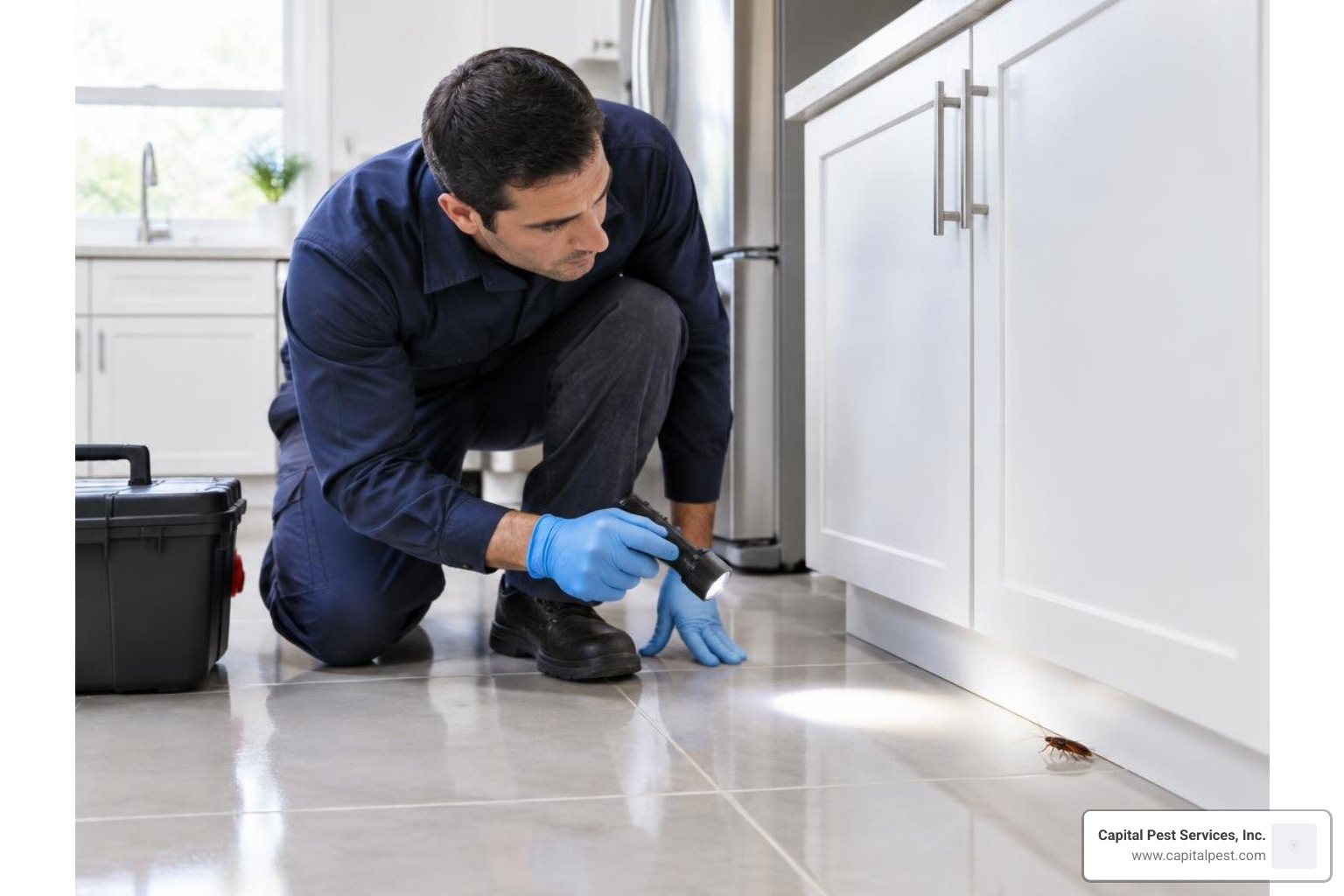
When homeowners spot cockroaches scurrying across the kitchen floor, their initial impulse is often to buy grocery store aerosol “bug bombs” or total-release foggers. This is consistently one of the biggest mistakes in pest management.
The Dangers and Inefficacy of Bug Bombs
Total-release foggers do not work against cockroaches for several reasons:
- Poor Penetration: Foggers release a broad upward cloud of aerosolized pyrethroids that quickly settles on exposed horizontal surfaces (couches, counters, utensils, and floors). Because German roaches spend three-quarters of their lives hidden inside protected wall voids and deep crevices, the aerosol mist never reaches their harborages.
- Colony Scattering: The irritating solvents and repellent pyrethroids in foggers agitate the insects, prompting them to scatter deeper into ceilings, adjacent bedrooms, and adjoining apartments—turning a localized kitchen issue into a multi-room infestation.
- Safety & Explosion Hazards: Aerosol foggers rely on flammable petroleum propellants. If placed near a pilot light, water heater, or refrigerator compressor, concentrated vapors can ignite, creating severe residential fire and explosion hazards.
- Unnecessary Chemical Residues: Settling aerosols coat surfaces where children play and food is prepared, increasing household exposure risks without solving the underlying pest population.
Effective Non-Chemical and Low-Impact Treatments
Instead of aerosol foggers, low-toxicity mechanical and physical control options deliver reliable results:
- HEPA-Filtered Vacuuming: Using a vacuum cleaner equipped with a HEPA filter allows you to immediately capture large clusters of live adults, nymphs, oothecae, and allergen-laden droppings. Once finished, seal the vacuum bag in an airtight plastic container and freeze it for 24 hours to neutralize captured insects before disposal.
- Desiccant Dusts: Diatomaceous earth and engineered silica gel abrade the waxy outer lipid layer of the cockroach’s exoskeleton, causing the insect to dehydrate and perish naturally. These dusts work through physical action rather than neurotoxicity.
- Mechanical Traps and Attractants: Sticky monitoring boards fitted with natural pheromone lures or fruit oil extracts help reduce adult populations and provide clear tracking data without adding pesticides to the living space.
- Drain Management: Installing fine-mesh drain covers and cleaning sink traps with biological enzyme foams removes organic sludge, eliminating a prime feeding and breeding ground for American and Oriental roaches.
Frequently Asked Questions About Cockroach Elimination
Why are bug bombs not recommended for cockroach control?
Bug bombs release pesticide aerosols upward into open room air, which fails to penetrate the deep cracks, wall voids, and appliance housings where cockroaches hide. The chemical repellents in these products scatter the colony across other rooms, and their flammable propellants create real flash-fire risks when used near standard kitchen appliances.
How do I prevent cockroaches from developing resistance to gel baits?
To avoid physiological resistance and bait aversion, never rely on a single product for extended periods. Rotate between gel baits that feature distinct chemical classes and differing food matrices (such as rotating between indoxacarb, dinotefuran, and abamectin) every three to four months. In addition, avoid spraying repellent liquid insecticides over your bait placements, as chemical contamination prevents roaches from consuming the bait.
When should I hire a professional exterminator for roaches?
You should consult a licensed pest professional if you observe cockroaches active during daylight hours (a sign of high population density), if roach sightings persist after four weeks of targeted baiting, or if you live in multi-family housing where pests move freely through utility chases. Professional technicians have access to commercial-grade Insect Growth Regulators, specialized void-injection equipment, and advanced IPM tools needed to eliminate deep structural colonies.
Conclusion
Successfully eliminating a cockroach infestation requires a steady, methodical approach: thorough inspection, strict sanitation, structural exclusion, targeted bait application, and routine trap monitoring. Skipping steps or turning to aerosol foggers will only scatter the colony, lengthen the infestation, and introduce unnecessary chemical residues into your living spaces.
At Capital Pest Services, Inc., we provide homeowners and property managers throughout Raleigh, Durham, Chapel Hill, Cary, Wake Forest, Apex, Morrisville, and surrounding Triangle communities with reliable, long-lasting pest solutions. Our National Pest Management Association (NPMA) accredited team utilizes low-toxicity, science-backed Integrated Pest Management protocols tailored to your home’s unique layout.
If you are dealing with a stubborn infestation and want it resolved quickly and safely, contact our team to schedule our specialized cockroach control service today.
Capital Pest is proud to be a family-owned and operated pest control company serving Raleigh, NC and its surrounding area (Chapel Hill, Wake Forest, Clayton, Pinehurst, Pittsboro, Fuquay-Varina, etc). Contact us for our pest control services today!