

How to Choose the Right Local Bug Exterminator for Your Lawn
Understanding Common Yard Pests and Treatment Methods
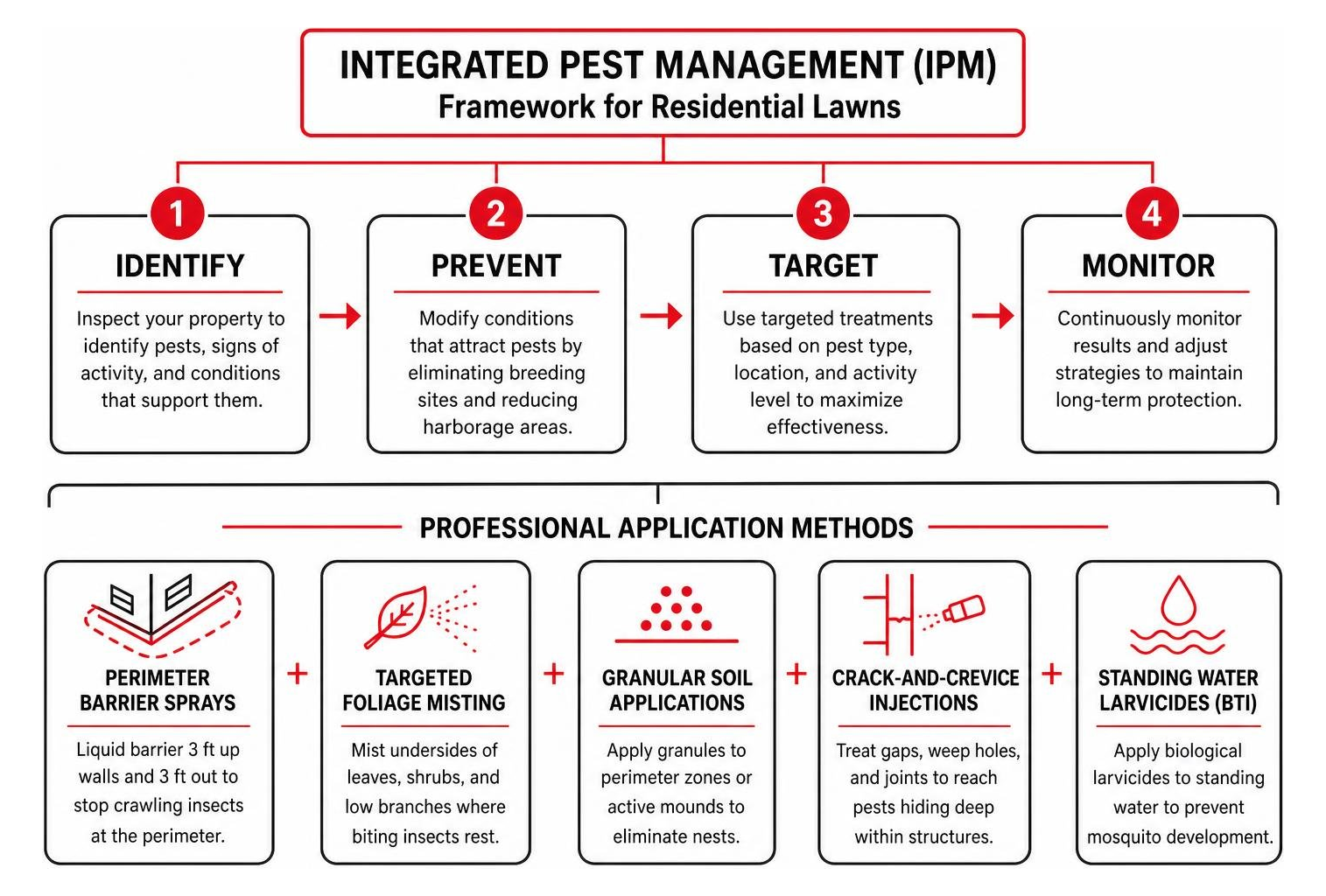
To choose the right local bug exterminator for your lawn, start by confirming that the company is licensed, insured, and locally based in the Triangle region, then ask for a free inspection that identifies the specific pests on your property and a written treatment plan that includes re-treatment guarantees. A reliable provider will use Integrated Pest Management (IPM), a systematic approach that emphasizes long-term prevention through a blend of physical adjustments, habitat disruption, and targeted treatments, rather than simply blasting pesticide across the grass without identifying the underlying breeding grounds.
Every lawn has its own microclimate. In the Triangle region—stretching from Cary and Raleigh to Chapel Hill and Wake Forest—hot summers and seasonal rains create prime habitats for destructive and biting insects. Before hiring anyone, it pays to understand what is crawling through your turf and how a professional will treat it. For a deeper breakdown of outdoor pest elimination, explore our guide on vetting local mosquito yard treatments to learn how professional outdoor applications work.
Identifying Regional Lawn Pests and Infestation Signs
Yard pests in North Carolina generally fall into three categories: turf damagers, stinging or biting invaders, and perimeter pests trying to enter your foundation.
- Mosquitoes: Breeding in stagnant water pooled in birdbaths, gutters, low-lying garden beds, or tarps, mosquitoes multiply rapidly when temperatures stay above 50°F.
- Ticks: Thriving in shaded lawn borders, tall grasses, leaf litter, and woodpiles, ticks pose serious health risks to pets and family members across Clayton, Garner, and Morrisville.
- Fire Ants & Turf Ants: Fire ant mounds can quickly ruin turf aesthetics and deliver painful stings, while foraging ant control issues often start with trails running directly from the yard across concrete footings.
- Lawn Grubs: The subterranean larval stage of beetles feeds on root structures, causing spongy turf and dead brown patches.
- Perimeter Invaders & Spiders: Mulch beds next to your foundation provide damp, undisturbed homes for centipedes, sowbugs, and spider control challenges, which then migrate into basements and crawlspaces.
- Stinging Insects: Ground-nesting yellow jackets and hornets near deck footings or shrubs make regular yard maintenance dangerous, requiring dedicated hornet and wasp control.
Professional Application Methods: Barrier Sprays, Granules, and IPM
A well-executed pest control program uses precise methods to target insects where they shelter and breed, avoiding unnecessary chemical runoff:
- Perimeter Barrier Sprays: Technicians apply a liquid residual barrier roughly 3 feet up the exterior wall and 3 feet out onto the soil and mulch bed. This creates a continuous shield that stops crawling insects before they reach your siding or weep screeds.
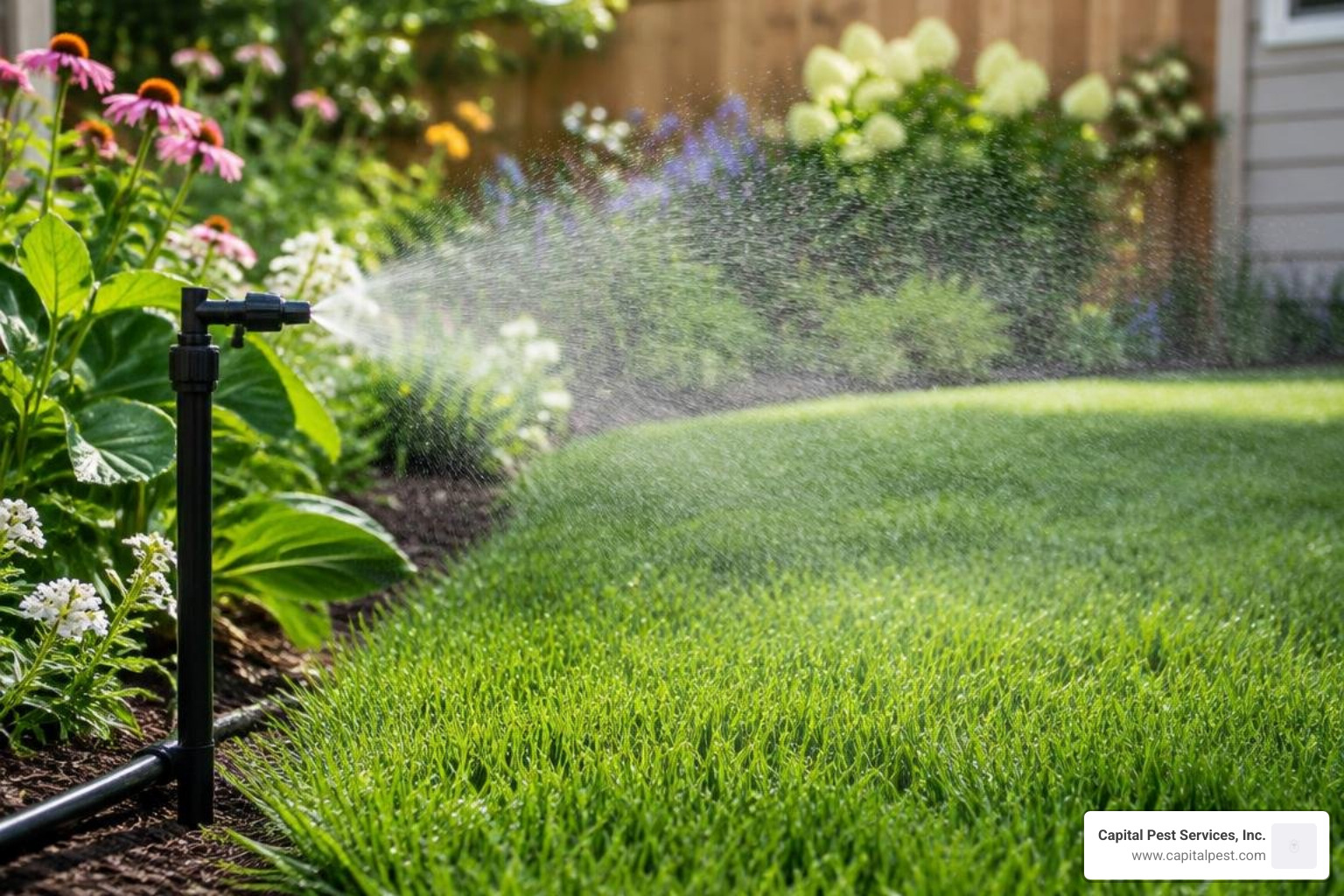
- Targeted Foliage Misting: Specialized backpack misters apply ultra-fine droplets to the undersides of leaves, dense shrubbery, and low tree branches where adult mosquitoes and ticks rest during the heat of the day.
- Granular Soil Applications: Granules are applied to wide perimeter zones (often extending 10 to 15 feet out into the turf) or directly to active ant mounds. Once activated by moisture, granular treatments eliminate subterranean nests without lingering airborne drift.
- Crack-and-Crevice Injections: Targeted dusts and microencapsulated products are applied into expansion joints, brick weep holes, and underneath siding edges to reach pests sheltering deep within structural gaps.
- Standing Water Larvicides (BTI): For natural water features, drainage basins, and ditch lines that cannot be drained, biological larvicides prevent mosquito larvae from developing into biting adults.
Finding the Best Bug Spraying Near Me: Local Exterminator vs. National Franchise
When searching online for reliable pest management, you will inevitably compare large national franchises against locally owned and operated companies. While national call centers often rely on rigid, one-size-fits-all packages, local specialists understand the unique soil types, humidity trends, and seasonal insect swarms specific to towns like Apex, Holly Springs, and Fuquay-Varina.
| Feature / Consideration | Locally Owned Exterminator | National Franchise Chain |
|---|---|---|
| Local Climate Expertise | High: Deep knowledge of regional soils, moisture patterns, and insect cycles | Moderate: Uses standardized national protocols |
| Response Time | Fast: Route technicians live and work within local communities | Variable: Often coordinated via distant dispatch centers |
| Industry Accreditations | Often holds top certifications like QualityPro (met by only ~3% of companies) | Varies widely by specific franchise location |
| Customized Treatment Plans | Tailored to your specific yard topology, shade levels, and drainage | Pre-packaged corporate service bundles |
| Direct Communication | Direct line to local dispatchers, managers, and service owners | Multi-tiered automated phone queues |
What to Look for in Accreditations, Guarantees, and Customer Reviews
When selecting a contractor to apply treatments around your home, verify their credentials and customer track record:
- State Licensing and Insurance: Make certain the business holds an active structural pest control license and carries comprehensive liability insurance.
- QualityPro Accreditation: Considered the standard in pest control, QualityPro designation is achieved by fewer than 3% of pest management businesses nationwide, confirming stringent employee background checks, safety protocols, and operational standards.
- Real Re-Treatment Guarantees: A reputable provider should stand behind their work with a clear satisfaction policy (such as a 14-day re-treatment window) if targeted pests return between scheduled maintenance visits.
- Verified Community Reviews: Look at feedback on trusted review platforms to see how consistently technicians arrive on schedule and whether they treat customer properties with respect.
Eco-Friendly and Pet-Safe Spraying Solutions
Modern outdoor pest management prioritizes environmental safety alongside insect control. Leading exterminators use botanical formulations derived from essential oils (like rosemary, peppermint, and cedarwood) or EPA-registered synthetic pyrethroids designed to bond tightly with organic material once dry.
- Pollinator Protection: Responsible technicians inspect flowering plants, vegetable gardens, and blooming ornamentals to avoid spraying active blooms where honeybees and butterflies forage.
- Fast Drying Periods: Liquid barrier sprays typically dry within 30 minutes under sunny conditions, after which children and pets can safely return to the yard.
- Pet-Safe Practices: Granular and targeted bait formulations are deposited directly into deep soil cracks, specialized bait stations, or under dense mulch beds where dogs and cats cannot access them.
Pricing, Treatment Frequency, and DIY vs. Professional Care
Pest control pricing depends on your property size, the severity of insect activity, and the required treatment cadence. Let’s look at average pricing and treatment expectations so you can plan your home maintenance budget accurately.
Average Costs for Yard Treatments
Across the industry, the average cost for a professional pest control visit sits at approximately $175, with typical residential single-treatment costs ranging from $100 to $500 depending on the property’s square footage and specific target pests.
Specialized structural treatments, such as comprehensive termite eradication, represent a separate service category, typically ranging from $230 to $2,500 or more based on colony footprint and repair requirements. For homeowners looking to protect their structural foundation, our termite control services and preventative termite protection plans provide defense against subterranean damage. New construction projects can also benefit from our termite pre-treatment services to stop infestations before they start.
To keep ongoing maintenance straightforward, we provide transparent, tiered pest control plans designed to handle seasonal pests with scheduled visits:
- Silver Plan: Features a multi-step perimeter treatment designed to eliminate common household crawling pests around exterior entries, foundation footings, and crawlspace vents.
- Gold Plan: Expands your perimeter defense to include broader turf protection, exterior spider de-webbing, wasp nest removal under eaves, and scheduled seasonal inspections.
- Platinum Plan: Our top-tier package combining complete home perimeter defense with specialized exterior mosquito reduction and preventative monitoring.
To explore the details of pricing variables, check out our resource on how much pest control usually costs for residential properties.
What to Expect During a Professional Service Visit
A professional pest control appointment should be structured, clean, and transparent from start to finish:
- Initial Property Inspection: The technician completes a 360-degree walk-around of your home in Knightdale, Wendell, or Youngsville, noting standing water reservoirs, overhanging tree limbs, damaged vent screens, and unsealed siding gaps.
- Customized Application: Based on findings, the specialist applies exterior barrier sprays around foundation walls, treats turf nesting sites with granular bait, sweeps spider webs from eaves, and mist-targets mosquito resting zones.
- Comprehensive Service Summary: Before leaving, the technician provides a written or digital report detailing products used, target zones treated, and custom recommendations (such as moving firewood piles or repairing a dripping hose bib) to improve long-term results.
Treatment Schedules: Monthly vs. Quarterly Yard Applications
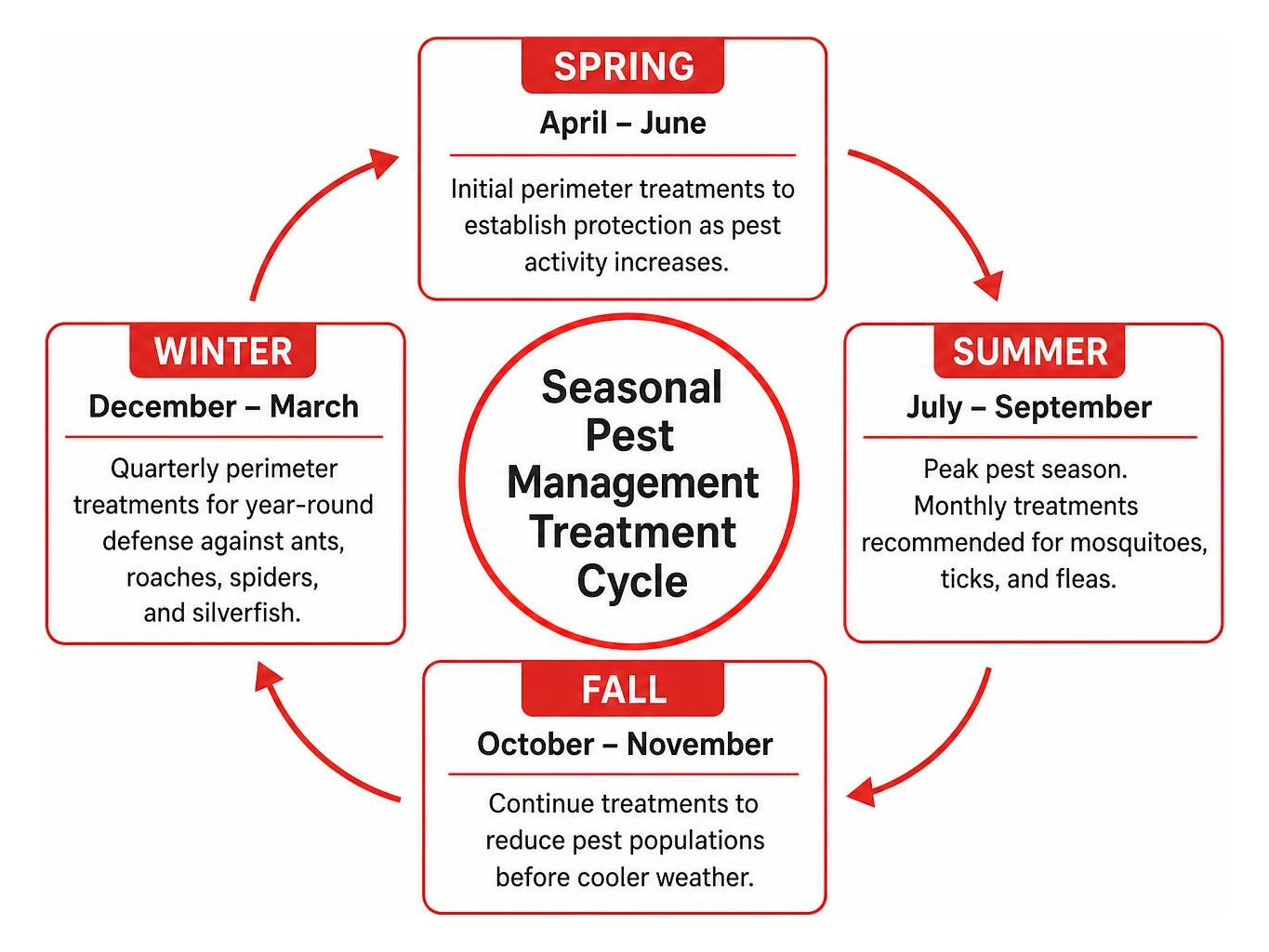
How often should your lawn receive professional treatment? The ideal frequency depends on your local pest pressure and seasonal climate shifts:
- Monthly Treatments (April – October): Recommended for high-intensity mosquito, tick, and flea management during hot North Carolina summers. Because outdoor residual sprays degrade under intense sunlight and heavy rain, monthly misting cycles keep mosquito populations down.
- Quarterly Treatments (Year-Round): Ideal for general perimeter defense against ants, roaches, spiders, and silverfish. A quarterly exterior barrier reapplies protective materials just as previous applications naturally weather away.
- Bimonthly Programs: A balanced option for homes with moderate wooded borders in towns like Pittsboro, Sanford, or Rolesville, offering enhanced warm-weather defense without full monthly visits.
Frequently Asked Questions About Lawn Pest Extermination
Can I handle lawn pest control myself or should I hire a professional?
While DIY retail sprays and bug bombs might kill a few visible pests on contact, they rarely reach the core nesting colony hidden beneath concrete slabs or deep within root systems. Furthermore, improper pesticide application risks over-concentrating chemicals, contaminating local water runoff, or repelling pests into inaccessible wall voids.
Hiring licensed professionals ensures correct pest identification, access to commercial-grade formulations that withstand regional weather, and comprehensive coverage that addresses both interior perimeter defense and commercial pest control or residential pest control requirements. If you encounter severe interior infestations involving stubborn pests like German cockroaches or rodents, targeted cockroach control and professional rodent control are far safer and more reliable than consumer traps.
How long after a yard spray is it safe for kids and pets to go outside?
For standard liquid barrier and foliage applications, pets and family members should stay off treated surfaces until the product has completely dried—typically 30 minutes on a warm, clear day. Once dry, modern EPA-registered products bond tightly to plant foliage and soil surfaces, minimizing transfer risks. Technicians will always advise you on specific drying requirements before concluding a service visit.
What should be included in a free pest control inspection?
A thorough, no-obligation inspection should always cover:
- Visual examination of foundation walls, crawlspaces, and basement entries for pest intrusion pathways.
- Identification of exterior moisture sources, such as leaking spigots, downspouts emptying near the foundation, and blocked gutters.
- Detection of insect breeding sites, including mulch beds, woodpiles, and overgrown brush.
- A written evaluation and clear, itemized quote detailing recommended treatment options without high-pressure sales tactics.
Conclusion
Protecting your outdoor living areas requires more than a quick store-bought spray. By partnering with a local, experienced exterminator who understands North Carolina’s climate and pest species, you can enjoy a safe, comfortable yard all season long.
At Capital Pest Services, Inc., we take pride in delivering trusted, eco-friendly pest control and seasonal mosquito control tailored to homes throughout Raleigh, Durham, Chapel Hill, Wake Forest, Apex, and the surrounding Triangle communities. Ready to reclaim your lawn? Contact Capital Pest Services, Inc. today to schedule your comprehensive yard evaluation!
Capital Pest is proud to be a family-owned and operated pest control company serving Raleigh, NC and its surrounding area (Chapel Hill, Wake Forest, Clayton, Pinehurst, Pittsboro, Fuquay-Varina, etc). Contact us for our pest control services today!