Evict the Bugs: Best Pest Control for Homes Ranked and Reviewed
The Best Pest Control for Homes Starts With the Pest
The best pest control for homes is a layered plan: identify the pest, seal its entry points, remove food and moisture, then use a targeted bait or trap if needed. A spray can help with some pests, but it will not fix a gap that lets mice in or moisture that attracts termites. For signs of termites, widespread activity, or pests that keep coming back, get a professional inspection.
In the Raleigh-Durham Triangle, the right choice also depends on the season and where pests are entering your home. This guide ranks common options by what they do well, where they fall short, and when to call for help.
I’m Mitch Taylor, president of Capital Pest Services, Inc., and I’ve spent more than 17 years helping Triangle homeowners find the best pest control for homes through inspection, prevention, and targeted treatment.
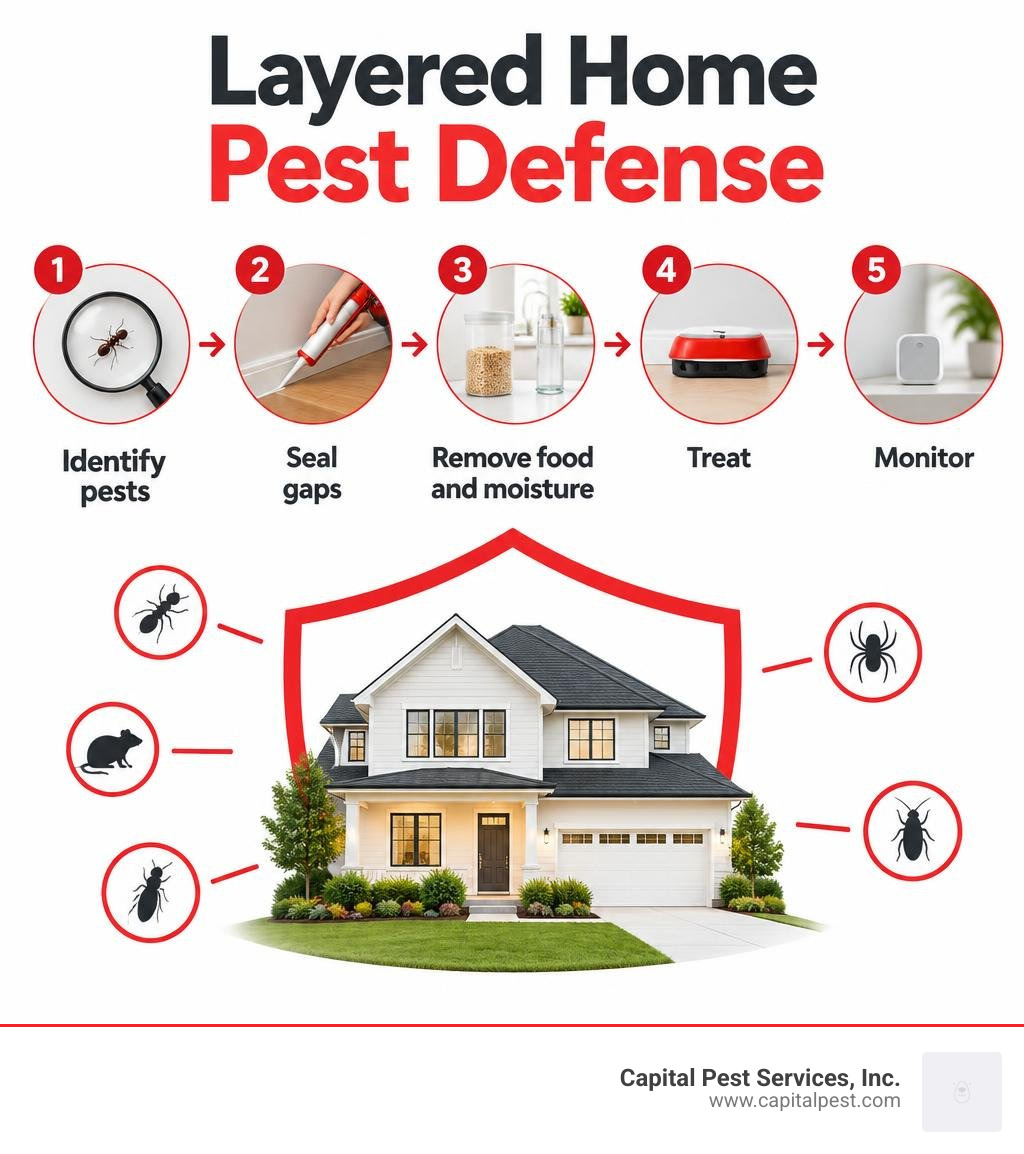
Common Household Pests and Early Warning Signs
Finding an unwanted critter in your living room is never pleasant. Identifying the exact pest quickly is essential because treating an ant trail requires a completely different approach than handling wood-destroying insects or invading rodents.
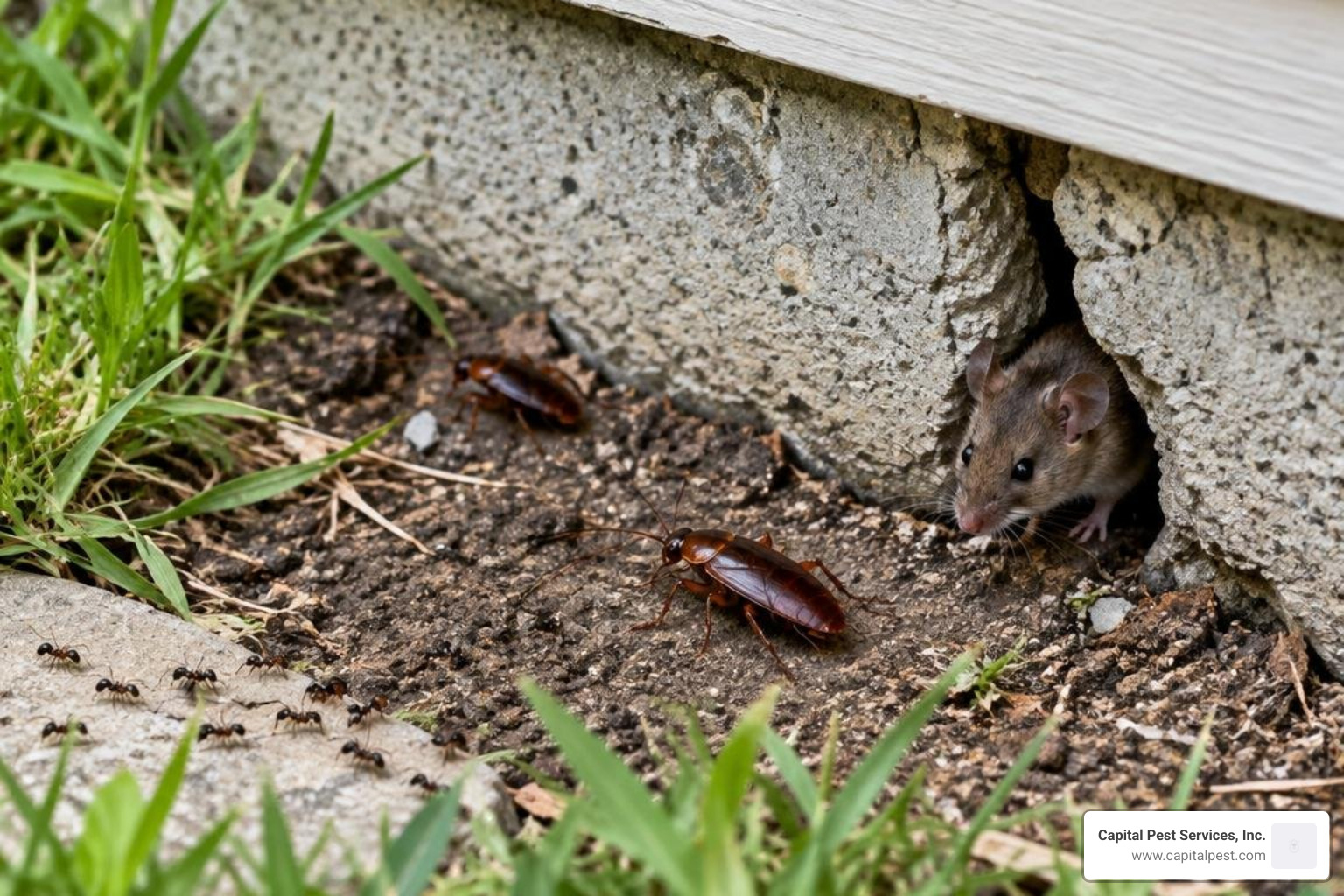
German Cockroaches
German cockroaches are small, light brown insects with two dark parallel stripes behind their heads. Unlike larger outdoor roaches that wander inside accidentally, German roaches thrive indoors, multiplying rapidly near warm, humid areas like dishwashers, refrigerators, and kitchen sinks. If you spot tiny black pepper-like droppings or egg cases (oothecae) in cabinet corners, learn how to eliminate cockroach infestation in 5 easy steps before the population surges out of control.
Subterranean Termites
Subterranean termites cause an estimated $5 billion in property damage across the United States every single year. These silent destroyers feed on cellulose within structural framing. Warning signs include:
- Pencil-sized mud tubes running up foundation walls, crawlspaces, or support piers.
- Discarded wings piled on window sills or near exterior doors after spring swarms.
- Hollow-sounding baseboards or drywall with bubbling, maze-like patterns beneath the paint.
To protect your home’s structural integrity, consult our comprehensive termite control complete guide 2026 for detailed prevention and treatment insights.
Mice and Rats
Around 21 million U.S. homes deal with rodent infiltration every winter as outdoor temperatures drop. Mice can squeeze through openings as small as a dime, while rats need only a nickel-sized gap. Early warning indicators include dark, spindle-shaped droppings along baseboards, shredded insulation or paper nests, grease marks along walls, and scratching noises in attics or crawlspaces at night. Implementing smart homeowner strategies for fast and reliable mouse removal stops rodents before they chew through electrical wiring or contaminate food stores.
Carpenter Ants and Nuisance Ants
While nuisance ants forage for kitchen grease and sugars, carpenter ants excavate smooth tunnels inside damp structural timber to establish satellite nests. Unlike termites, carpenter ants do not eat the wood; they push out coarse sawdust (known as frass) near baseboards, windowsills, or deck attachments.
The Best Pest Control for Homes: Treatment Types Compared
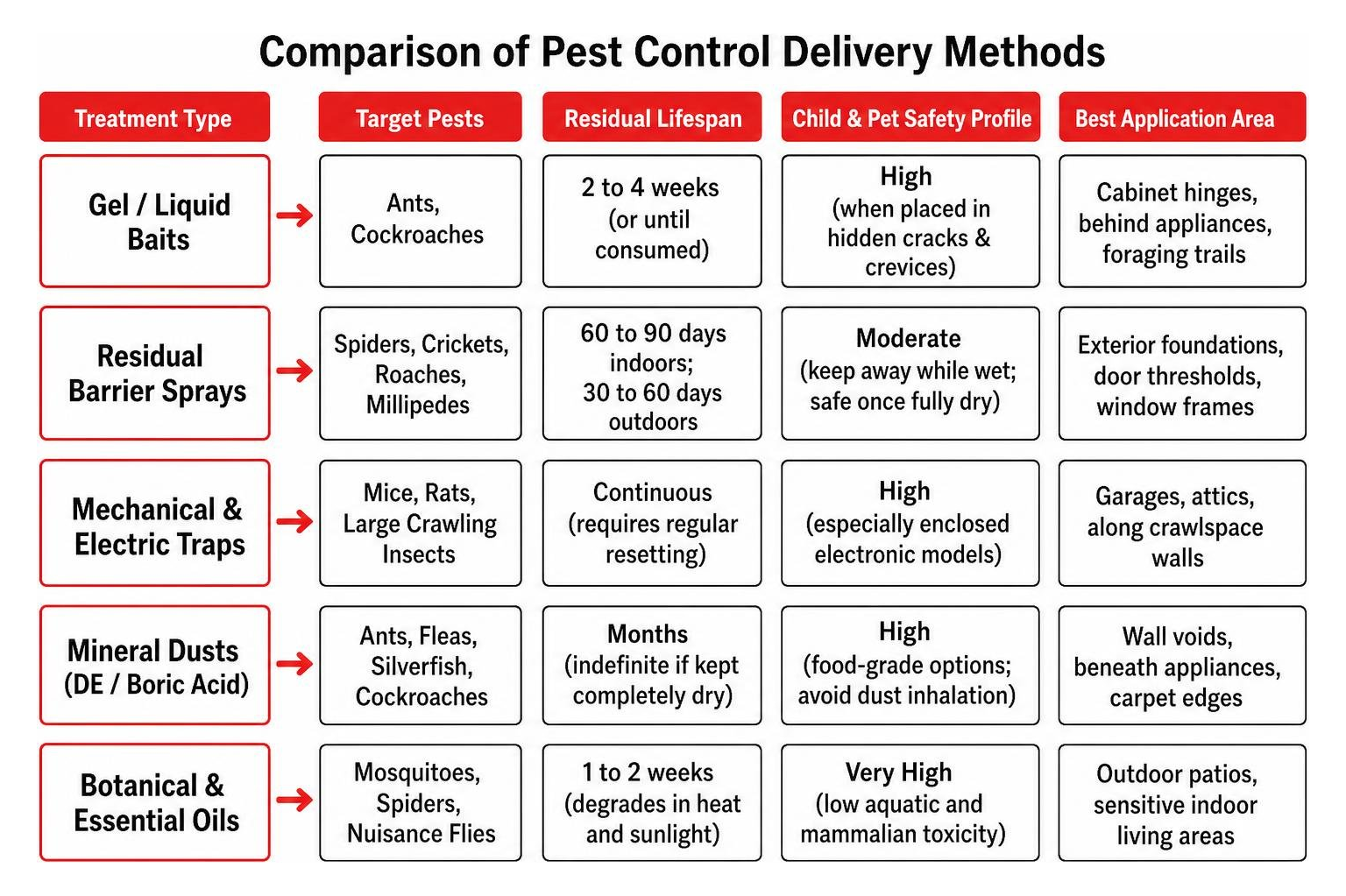
No single treatment cures every pest problem. Modern pest management relies on selecting the right tool—chemical barriers, physical exclusion, mechanical traps, or natural mineral dusts—based on the specific biology and nesting habits of the pest.
| Treatment Type | Target Pests | Residual Lifespan | Child & Pet Safety Profile | Best Application Area |
|---|---|---|---|---|
| Gel / Liquid Baits | Ants, Cockroaches | 2 to 4 weeks (or until consumed) | High (when placed in hidden cracks & crevices) | Cabinet hinges, behind appliances, foraging trails |
| Residual Barrier Sprays | Spiders, Crickets, Roaches, Millipedes | 60 to 90 days indoors; 30 to 60 days outdoors | Moderate (keep away while wet; safe once fully dry) | Exterior foundations, door thresholds, window frames |
| Mechanical & Electric Traps | Mice, Rats, Large Crawling Insects | Continuous (requires regular resetting) | High (especially enclosed electronic models) | Garages, attics, along crawlspace walls |
| Mineral Dusts (DE / Boric Acid) | Ants, Fleas, Silverfish, Cockroaches | Months (indefinite if kept completely dry) | High (food-grade options; avoid dust inhalation) | Wall voids, beneath appliances, carpet edges |
| Botanical & Essential Oils | Mosquitoes, Spiders, Nuisance Flies | 1 to 2 weeks (degrades in heat and sunlight) | Very High (low aquatic and mammalian toxicity) | Outdoor patios, sensitive indoor living areas |
Best Pest Control for Homes: Baits, Sprays, Traps, and Repellers
Understanding how different delivery mechanisms function allows you to choose products that solve problems at their source rather than just eliminating a few foraging bugs.
Liquid and Gel Baits
Baits are the gold standard for social and nesting insects like ants and cockroaches. Instead of killing on contact, gel baits contain slow-acting active ingredients mixed with attractive food attractants. Foraging worker pests consume the bait, carry it back to hidden nests, and share it with nymphs, larvae, and queens through grooming and feeding. Reviewing top rated pest control solutions to clear out cockroaches for good helps ensure you select products that eliminate whole colonies rather than scattering them into adjacent rooms.
Microencapsulated Residual Sprays
Residual perimeter sprays create an invisible barrier along baseboards, entry thresholds, and foundation perimeters. High-performing modern formulas utilize microencapsulated synthetic pyrethroids (such as bifenthrin, deltamethrin, or gamma-cyhalothrin). The active chemical is suspended in microscopic capsules that adhere to an insect’s legs and outer cuticle as it crosses the treated zone, slowly releasing the active agent over several weeks.
Mechanical Snap Traps vs. Electronic Traps
For rodent control, mechanical snap traps and enclosed electronic kill chambers remain vastly superior to rodenticides inside living spaces. Placing poisoned bait indoors often causes rodents to die inside inaccessible wall voids, leading to severe odor issues and fly infestations. Electronic traps deliver a high-voltage shock that dispatches mice instantly and humanely, offering easy cleanup without direct contact.
Ultrasonic Pest Repellers: An Honest Look
Ultrasonic devices emit high-frequency sound waves intended to irritate and repel pests. While laboratory trials show mild temporary disorientation in rodents, peer-reviewed field tests and independent consumer studies reveal that pests quickly adapt to continuous frequencies. Ultrasonic devices cannot penetrate solid furniture or drywall and should never be relied upon as a primary defense for active infestations.
Evidence-Based Natural and Eco-Friendly Treatments
For homeowners seeking reduced-risk approaches around children, pets, or sensitive gardens, several evidence-based natural solutions provide excellent results when applied correctly according to research on Natural Pest Control: What Actually Works (Evidence-Based).
Diatomaceous Earth (DE)
Diatomaceous earth is composed of pulverized, fossilized microscopic algae (diatoms). To insects, these microscopic particles act like razor-sharp shards that scratch and absorb the protective waxy outer coating of their exoskeletons, causing them to dehydrate and die within a few days.
- Application Tip: Always use food-grade DE (never pool-grade, which contains crystalline silica) and apply it in a barely visible, paper-thin dusting. Pests will simply walk around thick piles of white powder.
Boric Acid and Borates
Derived from naturally occurring boron minerals, boric acid functions as both an abrasive dust and a potent stomach poison when ingested during insect grooming. Applied inside dry wall cavities and hollow appliance voids, it provides long-lasting control against roaches and silverfish without off-gassing synthetic vapors.
Beneficial Nematodes and Biological Controls
For yard protection, microscopic beneficial nematodes (such as Steinernema carpocapsae) can be watered into lawn soil to target and consume beetle grubs, fleas, and lawn pests naturally. For mosquito control in birdbaths or rain barrels, Bacillus thuringiensis israelensis (Bti) dunks release natural bacterial proteins that destroy mosquito larvae without harming birds, fish, or pets.
DIY vs. Professional Exterminators: Cost and Efficacy
Many homeowners wonder whether a store-bought setup or an ongoing subscription service can replace a licensed exterminator.
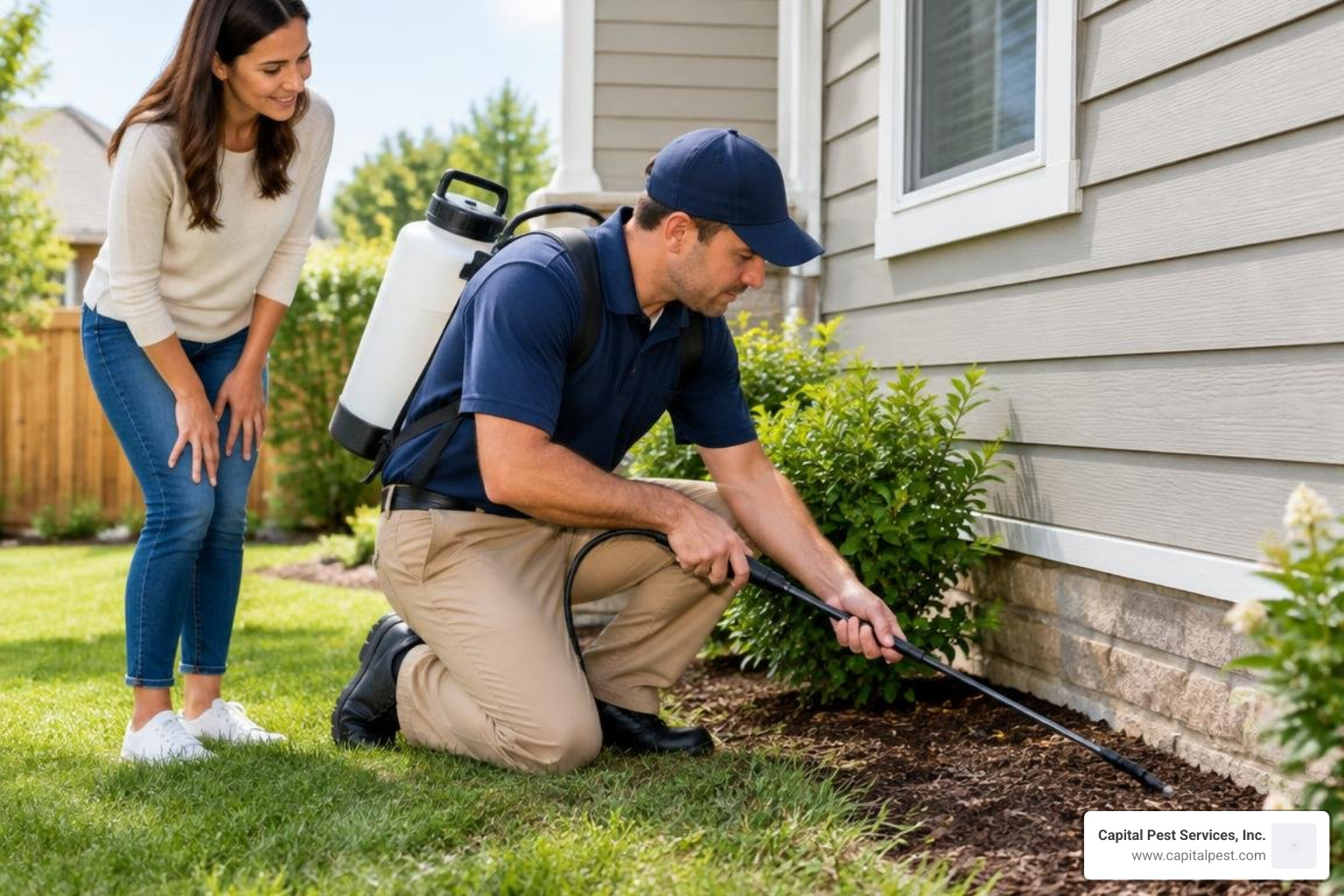
A comprehensive DIY startup kit—including a pump sprayer, professional-grade residual concentrate, ant bait stations, and heavy-duty rodent traps—typically costs $150 to $250 upfront. Ready-to-use DIY subscription boxes generally range from $80 to $350 per year.
By contrast, professional quarterly pest maintenance typically averages $50 to $70 per month (totaling $240 to $840 per year), with initial or one-time visits ranging from $110 to $260. Specialized single treatments for specific pests, such as seasonal mosquito misting ($250 per visit) or wildlife removal ($400), reflect the specialized equipment, licensed materials, and physical labor required.
| Pest Scenario | DIY Strategy | Professional Service | Recommended Approach |
|---|---|---|---|
| Occasional Nuisance Ants | Liquid bait stations + exterior foundation caulk | Targeted perimeter barrier + colony tracking | DIY First (Escalate if trailing continues > 14 days) |
| Outdoor Yard Mosquitoes | Source reduction + Bti dunks + plant sprays | Foliage misting + resting zone barrier treatments | Hybrid (DIY standing water management + Pro misting) |
| Mice in the Garage/Pantry | Snap traps + copper mesh entry sealing | Comprehensive structural exclusion + exterior baiting | DIY First (Call Pro for attic/crawlspace activity) |
| German Cockroaches | Gel baits + insect growth regulators (IGRs) | Multi-stage cleanout + crack-and-crevice treatments | Professional Recommended |
| Subterranean Termites | Ineffective (surface sprays miss underground colonies) | Liquid termiticide trenching or monitored bait stations | Professional Required |
For complex local pest pressures in Wake, Durham, and surrounding counties, working with experienced professionals ensures your home is protected using targeted, calibrated applications. Homeowners seeking vetted local guidance can streamline their search by finding a reliable licensed exterminator in Raleigh without the hassle.
When to Transition from DIY to Professional Treatment
DIY measures work well for isolated, seasonal nuisances, but certain pest threats carry significant financial and health risks if mishandled:
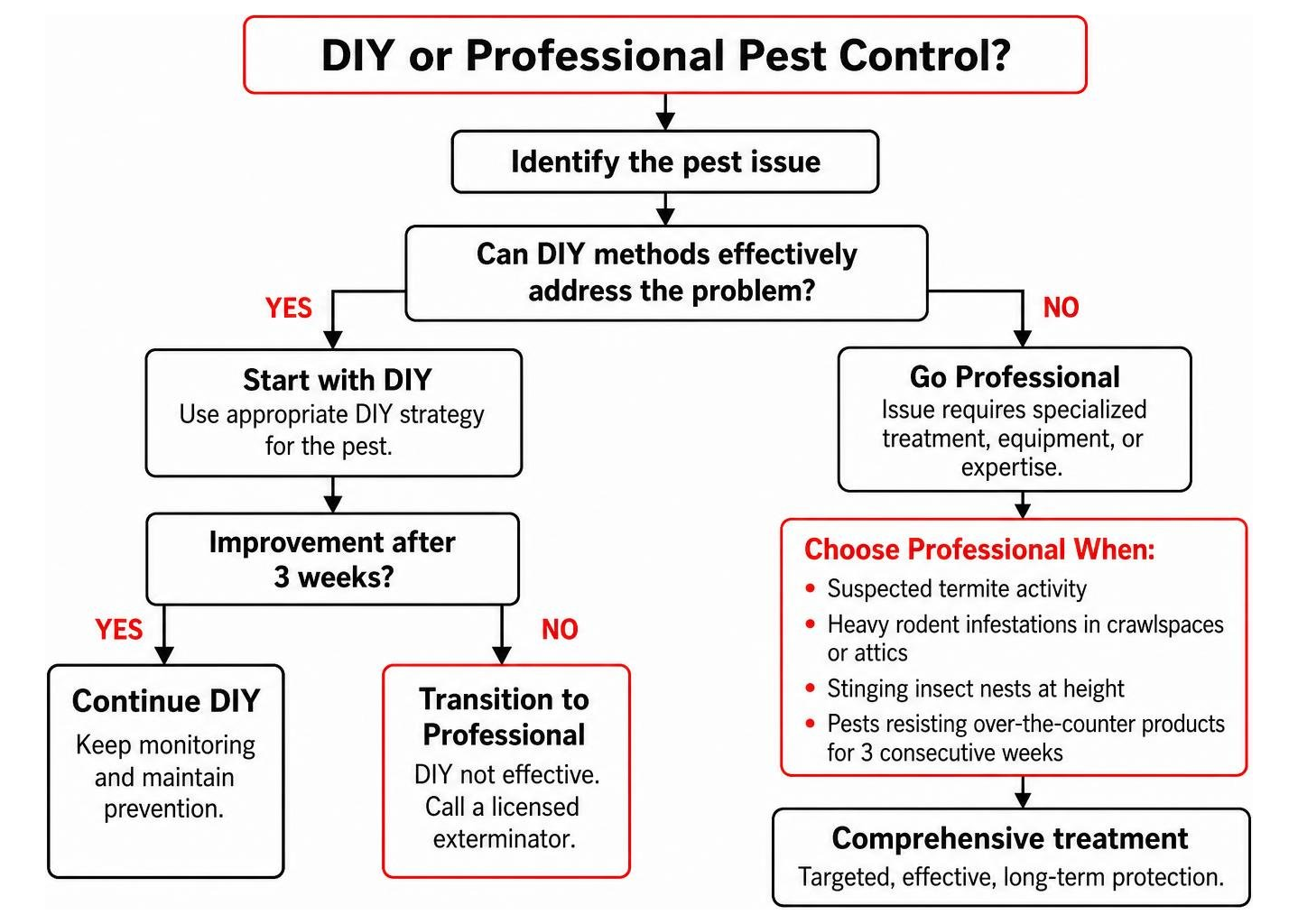
- Suspected Termite Activity: Termites cause catastrophic structural framing failure. Over-the-counter surface sprays merely kill visible foraging workers, leaving millions of reproductive insects feeding beneath your floorboards. If you suspect activity, reviewing what you should expect to pay for professional termite treatment helps you budget for long-term structural defense.
- Heavy Rodent Infestations: When mice or rats establish breeding nests inside crawlspaces or attic insulation, surface traps are no longer enough. Learning how to eliminate rodent infestation on a budget through whole-structure exclusion seals structural gaps permanently.
- Stinging Insect Nests at Height: Hornets, yellow jackets, and wasps nesting high in roof eaves or inside wall soffits present dangerous sting risks and should be removed with specialized pole-injection gear.
- Pests Resisting Over-the-Counter Products: If you have applied store-bought sprays or baits for three consecutive weeks without a noticeable reduction in activity, the pest population has likely established satellite nests behind drywall.
Safe Application and Long-Term Prevention Strategies
Safety must always come first when applying pest control products. Understanding pesticide labels, active ingredient toxicity, and physical prevention techniques keeps your living environment safe.
Understanding Toxicity and Safety Protocols
- Check the Signal Word: Every registered pesticide features a signal word indicating acute toxicity. “Caution” denotes the lowest hazard category, “Warning” indicates moderate hazard, and “Danger” indicates high toxicity.
- Keep Pets and Kids Away During Treatment: Always keep pets, toys, and children out of the treatment zone while liquid products are being applied. Once the product dries completely (usually 1 to 2 hours), the active ingredients bond tightly to treated surfaces, minimizing transfer risks.
- Protect Aquatic Life and Pollinators: Synthetic pyrethroids and concentrated yard sprays are toxic to fish and beneficial pollinators. Never spray flowering plants visited by bees, and avoid applying outdoor barrier treatments immediately before heavy rain to prevent chemical runoff into municipal storm drains. Discover smart ways to control backyard pests and enjoy your summer while protecting beneficial backyard ecology.
- Review Independent Safety Guidelines: For comprehensive safety and step-by-step prevention tips, consult practical resources on How to Get Rid of Any Pest in Your Home or Yard—for Good.
Implementing the Best Pest Control for Homes Through Integrated Pest Management
The most effective, long-lasting pest control relies on Integrated Pest Management (IPM)—a system that combines physical exclusion, good sanitation, and targeted treatments.
- Physical Exclusion (Pest-Proofing):
- Install tight-fitting, 1/4-inch door sweeps along all exterior entrances and garage doors.
- Seal plumbing pipe penetrations under sinks and behind toilets using silicone caulk or stainless steel copper mesh.
- Cover crawlspace vents, soffit openings, and attic louvers with 1/8-inch galvanized hardware cloth.
- Moisture Reduction:
- Repair leaking pipe joints and ensure air conditioner condensate lines drain away from the foundation. If you notice crawling pests congregating around sinks and showers, discover why ants love your bathroom and simple tricks to make them leave.
- Clean out roof gutters regularly so rainwater discharges at least five feet from your foundation walls.
- Landscape Management:
- Trim shrubbery, tree branches, and decorative groundcover at least 18 inches away from exterior siding to eliminate natural pest bridges.
- Maintain a dry, clear gravel or mulch-free boundary directly along your home’s perimeter footing, and wipe out outdoor pests using these top rated yard sprays during peak breeding seasons.
Frequently Asked Questions About Home Pest Control
How often should preventative pest control treatments be applied?
For continuous protection, exterior barrier treatments are typically applied on a quarterly schedule (every 90 days). Modern, low-toxicity pest control products naturally break down after 60 to 90 days when exposed to sunlight, rainfall, and temperature shifts. A quarterly schedule refreshes this protective barrier just as seasonal pest behaviors change—targeting spring ant swarms, summer mosquitoes and roaches, fall rodent migrations, and overwintering indoor shelter-seekers.
Are natural pest control methods strong enough to stop heavy infestations?
Natural methods like diatomaceous earth, botanical oils, and exclusion are fantastic for mild pest activity, preventative maintenance, and sensitive indoor rooms. However, natural products break down quickly and lack the residual strength needed to stop severe, entrenched infestations such as subterranean termite colonies, heavy bed bug infestations, or rapidly multiplying German cockroach populations. In these high-risk scenarios, combining physical exclusion with targeted, professional-grade treatments is necessary to prevent widespread property damage.
How long must pets and children stay away from treated areas?
As a standard safety rule, family members and pets should remain out of treated rooms or yards until liquid sprays have dried completely, which usually takes between one and two hours. Once dry, modern residual products bind securely to treated surfaces (such as baseboards, foundations, and soil), significantly reducing the risk of accidental chemical transfer. Always check specific product label guidelines or ask your technician for exact re-entry timeframes.
Evict Pests with Capital Pest Services
Keeping your home comfortable and pest-free requires consistent prevention, careful property maintenance, and targeted treatments when infestations arise. While simple DIY steps can solve isolated nuisance issues, structural threats like termites, carpenter ants, and established rodent nests require professional expertise.
At Capital Pest Services, Inc., our NPA-accredited team delivers customized, eco-conscious pest management across the Triangle area—including Raleigh, Durham, Chapel Hill, Cary, Wake Forest, Apex, Holly Springs, and surrounding communities. Whether you need a preventative exterior barrier or an in-depth structural inspection, explore our comprehensive residential pest control services to find the ideal protection plan for your home.
Capital Pest is proud to be a family-owned and operated pest control company serving Raleigh, NC and its surrounding area (Chapel Hill, Wake Forest, Clayton, Pinehurst, Pittsboro, Fuquay-Varina, etc). Contact us for our pest control services today!