Everything You Need to Know About Professional Ant Removal in Cary
How to Get Rid of Ants in Your Cary Home
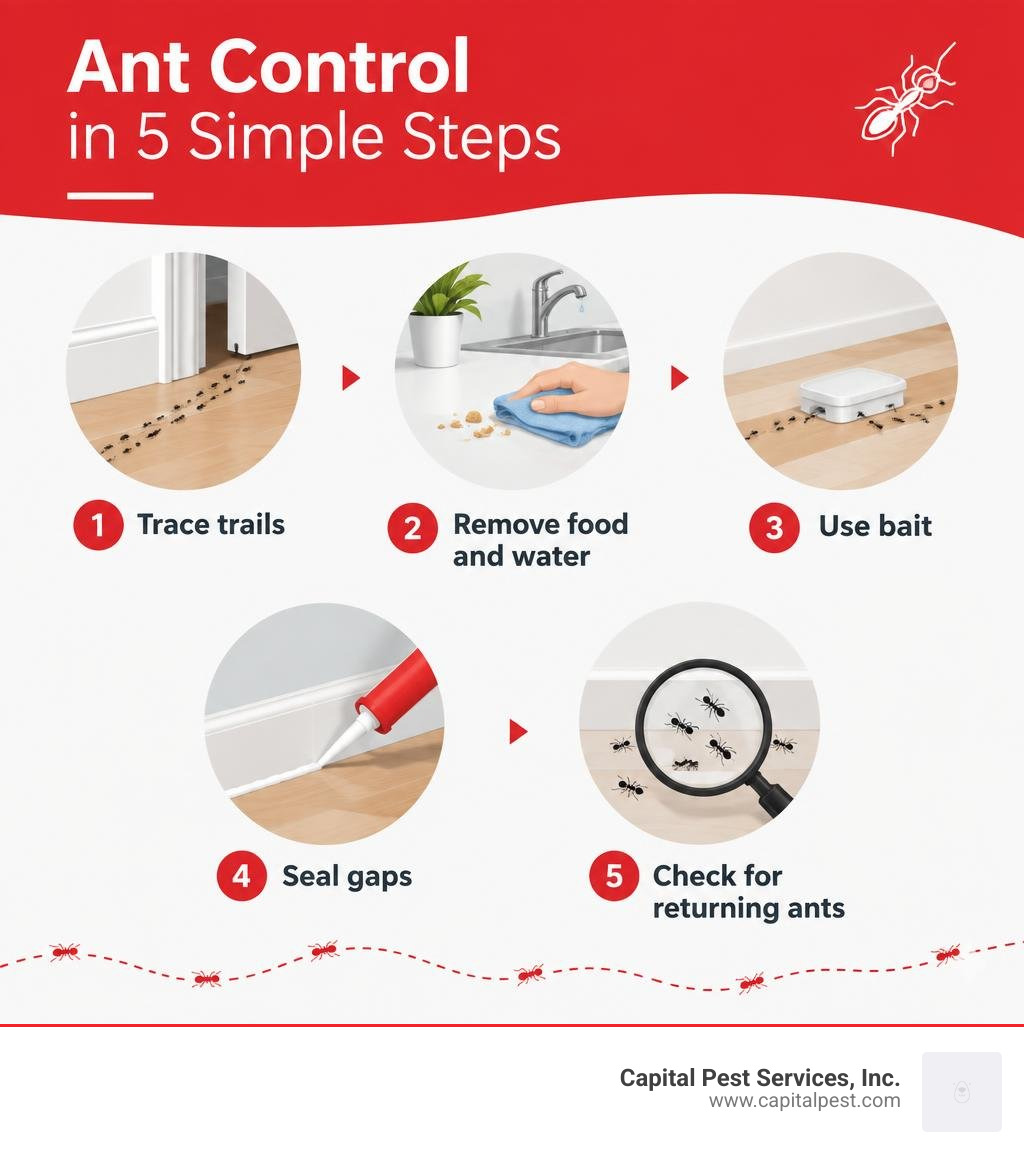
Start by following the ant trail. Find where ants enter, wipe up crumbs and spills, and fix nearby leaks. Place ant bait near active trails where children and pets cannot reach it. Once activity slows, seal entry gaps. If ants keep returning, or you find wood shavings near walls or baseboards, have a professional check for hidden nests.
In Cary, ants may move indoors to find food, water, or shelter. Spraying the ants you see may stop a trail for a while, but it often leaves the colony untouched. A lasting approach targets the nest and removes what draws ants inside.
I’m Mitch Taylor, president of Capital Pest Services, Inc., with more than 17 years of pest control experience in the Triangle. When you need dependable ant control in Cary, NC, I’ll help you sort out what you can do yourself and when professional treatment makes sense.
Living in Wake County means enjoying warm summers, beautiful green spaces, and mild shoulder seasons. Unfortunately, our humid subtropical climate is also paradise for nuisance pests. Ants are among the most persistent invaders North Carolina homeowners face. While seeing a handful of scouts along your kitchen counter might feel like a minor annoyance, ant colonies operate as complex superorganisms. If left unchecked, they can compromise food safety, damage structural framing, and establish massive networks behind your walls.
At Capital Pest Services, Inc., we rely on Integrated Pest Management (IPM) to address ant issues at their source. Instead of simply coating baseboards with harsh chemicals, we focus on identifying the specific species, tracking foraging trails back to satellite and parent nests, and deploying eco-friendly solutions that eliminate the entire colony while protecting your household. For a broader look at how ants behave and why they invade, the ant entry from Wikipedia provides useful background on colony structure and foraging habits.
Identifying Local Ant Species and Early Infestation Signs
To solve an ant problem permanently, you have to know what you are dealing with. Different species prefer different food sources, construct nests in unique environments, and respond differently to pest treatments. Using the wrong bait or spray can actually cause some species to split into multiple colonies—a defensive reaction known as “budding.”
| Ant Species | Typical Nesting Locations | Preferred Diet | Structural Risk Level | Primary Risk & Behavior |
|---|---|---|---|---|
| Odorous House Ant | Wall voids, beneath mulch, under stones, near hot water pipes | Sweets, honeydew, meats, grease | Low (Nuisance) | Emits a rotten coconut odor when crushed; contaminates food pantries. |
| Carpenter Ant | Water-damaged wood, wall framing, tree stumps, roof eaves | Proteins, living/dead insects, sweet juices | High (Structural) | Excavates galleries inside structural lumber; leaves sawdust-like frass piles. |
| Argentine Ant | Damp soil, mulch beds, crawl spaces, beneath slabs | Sugars, syrups, honeydew, fats | Low to Moderate | Forms vast multi-queen supercolonies; frequently invades in massive numbers after rain. |
| Pavement Ant | Beneath driveway slabs, foundation cracks, brick pavers | Greasy foods, dead insects, pet kibble, sugars | Low (Nuisance) | Pushes small piles of dirt and sand through masonry cracks and subflooring. |
| Red Imported Fire Ant | Open sunny lawns, landscape beds, electrical casings | Seeds, oily proteins, dead animals | Moderate (Health Hazard) | Aggressive; delivers painful, venomous stings that cause sterile pustules or allergic reactions. |
Common Species Requiring Ant Control in Cary, NC
Understanding the foraging behaviors of local species helps determine the right tactical approach for eradication:
- Odorous House Ants: Often referred to casually as “sugar ants,” these small, dark brown-to-black ants are notorious for marching in single-file lines across kitchen counters. When crushed, they emit a distinct odor reminiscent of rotten coconuts. They frequently establish interior satellite nests during rainy Cary springs.
- Carpenter Ants: As the largest common household ants in North Carolina, these black or reddish-black insects don’t eat wood—they chew through it to create smooth nesting galleries. They often target areas near plumbing leaks, damp crawl spaces, or poorly sealed roof valleys.
- Argentine Ants: These persistent invaders form multi-queen colonies that can span multiple yards. Because they cooperate across colonies rather than fight, their numbers can surge dramatically during the hot summer months.
- Pavement Ants: Small, slow-moving, and light brown to black, pavement ants build colonies under masonry. You will often see their telltale sand craters along sidewalks, patios, and garage expansion joints.
- Fire Ants: Common throughout Wake County lawns, fire ants build dome-shaped mounds in open turf. When disturbed, hundreds of worker ants rush out to defend the nest, delivering painful stings.
Subtle Indicators of Structural and Kitchen Infestations
Early detection saves both money and stress. Here is what to look out for around your home:
- Piles of Frass: Carpenter ants maintain clean nesting galleries. They push out discarded wood shavings, insect fragments, and debris through tiny “kick-out” holes, leaving small piles that look like pencil shavings or fine sawdust near baseboards and window sills.
- Moisture Stains and Soft Wood: Because carpenter ants prefer moist or decaying wood, soft window frames, spongy subflooring, or peeling paint near plumbing lines often signal both a moisture problem and a nesting site.
- Active Pheromone Trails: Scout ants leave behind an invisible chemical trail that guides hundreds of foraging workers directly to food. If you notice steady lines of ants moving along baseboards, behind kitchen appliances, or up foundation edges, a colony is actively feeding on your property.
- Hollow Sounds in Structural Lumber: Tapping on wall framing or door headers with the handle of a screwdriver can help detect carpenter ant damage. A hollow, papery sound indicates internal excavation.
- Rustling Sounds in Wall Voids: Large carpenter ant nests inside walls can produce a faint, dry rustling sound—similar to crinkling cellophane—especially at night when workers are most active.
Research from the NC State Extension underlines that successful ant management relies entirely on understanding species-specific biology. Treating a structural carpenter ant problem requires a completely different approach than managing an invasive Argentine ant supercolony.
Proven Methods for Ant Control Cary NC Residents Can Rely On
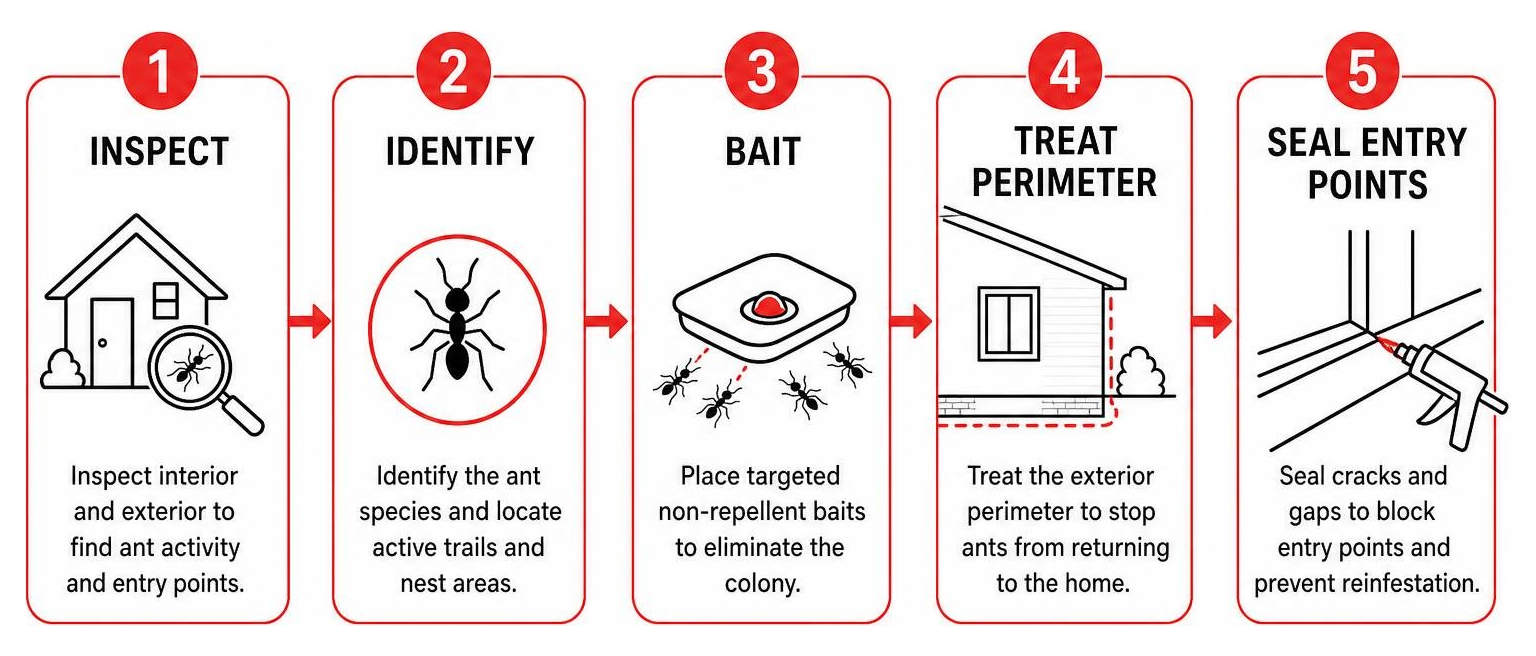
Getting rid of ants requires more than quick surface sprays. A sustainable IPM strategy combines thorough property inspections, non-repellent treatments, targeted baiting, and physical exclusion. For many Cary homeowners, professional ant control in Cary, NC is the most reliable way to break the cycle of recurring trails and hidden nests.
Comprehensive Property Inspection and Colony Tracking
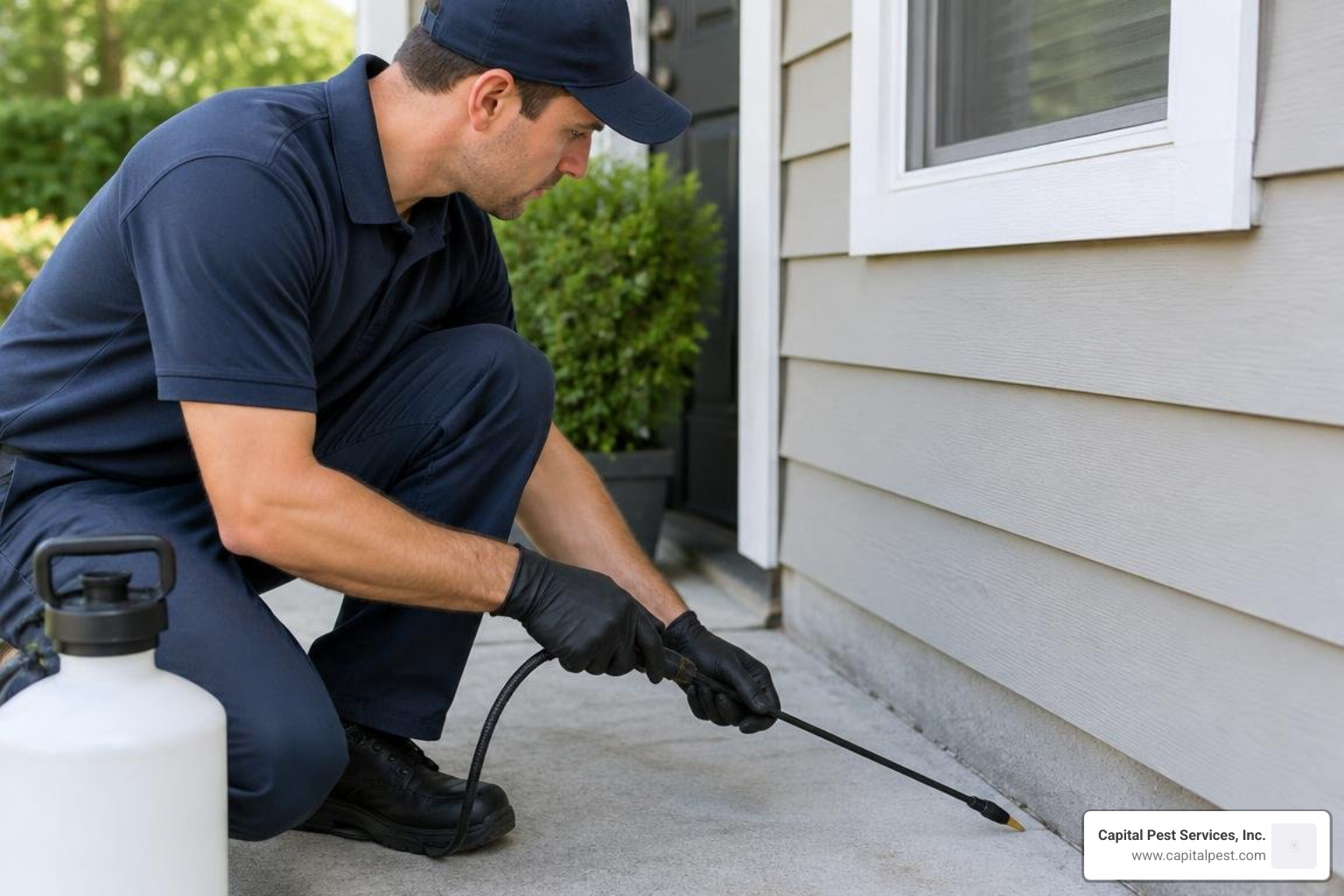
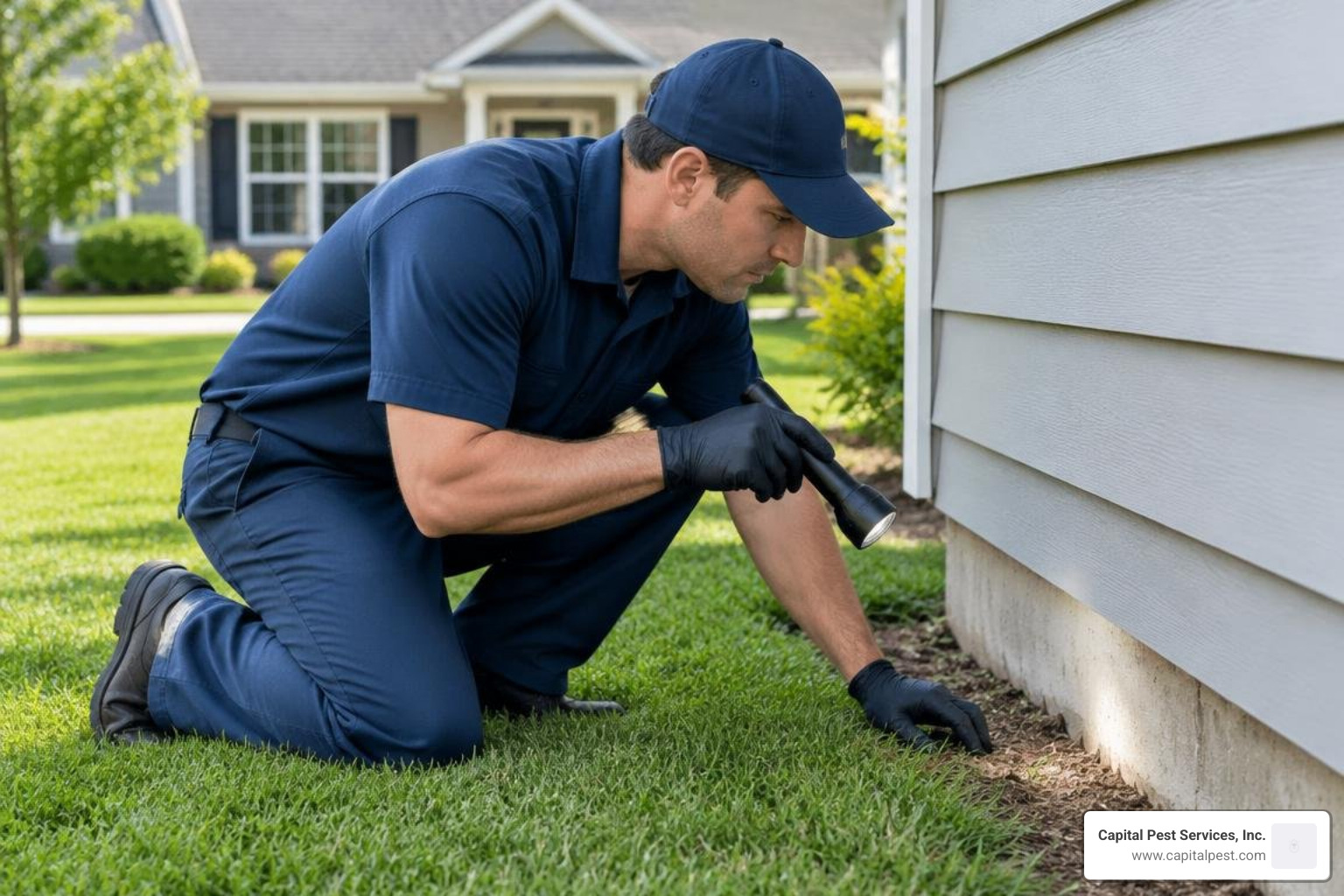
Effective treatment begins with locating the heart of the colony. During a professional inspection, technicians evaluate both interior living areas and exterior perimeter zones:
- Interior Hotspots: We inspect under sinks, behind dishwashers, along crawl space access hatches, around pantry shelving, and inside laundry rooms where moisture and food attract foragers.
- Exterior Perimeter: We examine foundation weep holes, expansion joints, window and door frames, utility penetrations, and landscape beds where mulch touches siding.
- Satellite vs. Parent Nests: Species like carpenter ants and odorous house ants frequently maintain outdoor “parent” nests in tree hollows, landscape ties, or mulch beds, while sending workers indoors to set up “satellite” nests. Eliminating the problem requires tracing trails back to both locations.
When you need specialized, long-term relief from stubborn infestations, scheduling expert ant control ensures that every nesting site on your property is properly identified and targeted.
Targeted Eco-Friendly Baiting and Exclusion Techniques
Modern pest management uses an ant’s natural foraging habits against the colony:
- Slow-Acting Non-Repellent Baits: Fast-acting sprays kill only the foraging worker ants, leaving the queen and larvae safe inside the nest. Professional-grade gel and granular baits use slow-acting active ingredients. Worker ants consume the bait, carry it back into the nest, and share it with the queen and brood through trophallaxis (food sharing), collapsing the colony from within.
- Perimeter Exclusion and Barrier Defense: Sealing physical entry points stops future scouts from getting inside. Applying long-lasting, EPA-approved non-repellent materials around foundation walls, crawl space vents, and door thresholds creates a barrier that ants cannot detect. They walk across it, pick up the treatment, and spread it back to the nest.
Pairing targeted treatments with ongoing residential pest control keeps your home protected against seasonal pest pressures throughout the year.
How to Prevent Recurring Infestations in North Carolina Homes
Once an active colony has been eliminated, routine preventative maintenance keeps ants from returning to your living spaces.
Managing Moisture, Food Sources, and Entry Points
Ants need food, water, and shelter. Removing these attractants makes your property far less inviting:
- Control Moisture: Repair leaking hose bibbs, sink traps, and appliance supply lines promptly. Keep gutters clear so rainwater flows away from your foundation, and make sure crawl spaces have functional vapor barriers and proper ventilation.
- Store Food Securely: Keep cereals, baking ingredients, sugars, and snacks in airtight glass or heavy plastic containers. Avoid leaving pet food bowls out overnight, and clean food prep areas daily.
- Landscape Maintenance: Maintain a 12-to-18-inch clearance between foundation walls and landscape mulch, groundcovers, or shrubs. Trim tree branches and vines away from your roofline and siding, as these serve as natural bridges into your attic.
- Seal Open Gaps: Use silicone-acrylic caulk to seal gaps around window frames, exterior door trim, plumbing penetrations, and siding joints. Install durable weatherstripping along exterior doors.
Enrolling in comprehensive preventative pest control plans provides scheduled seasonal perimeter treatments that keep insects outside before they ever find a way indoors.
Handling Persistent Colonies and Species Budding
One of the most frustrating aspects of DIY ant removal is “budding.” When species like Argentine ants or pharaoh ants sense certain store-bought repellent sprays, the colony perceives an existential threat. In response, worker ants take batches of larvae and multiple queens, scatter in different directions, and establish several new colonies throughout your home.

Overcoming persistent or budding infestations requires:
- Stopping the use of over-the-counter contact sprays that trigger colony stress.
- Switching to non-repellent liquid treatments and targeted baits.
- Applying deep soil treatments to reach subterranean nests and outdoor mounds.
- Ensuring the reproductive queens are eliminated rather than just foraging workers.
Frequently Asked Questions About Cary Pest Management
Why do ants keep returning after over-the-counter spray treatments?
Most grocery store bug sprays contain synthetic pyrethroids, which are repellent contact killers. While they kill the visible ants on your counter, they act as an alarm bell for the rest of the nest. The colony quickly avoids the sprayed surface, relocates deeper into walls, or splits into multiple colonies through budding. Additionally, these sprays do not wash away the invisible pheromone trails left behind, allowing new workers to pick up the trail once the chemical breaks down.
How quickly can professionals achieve complete ant control in Cary, NC?
Most minor ant issues show dramatic reduction within 48 to 72 hours of treatment. However, because professional baits are intentionally slow-acting to ensure they reach the queen and larvae, complete colony collapse typically takes between 7 and 14 days. For large carpenter ant infestations or expansive Argentine ant supercolonies, a follow-up visit may be required to confirm the entire population has been eradicated.
Are modern professional ant treatments safe for pets and children?
Yes. Modern Integrated Pest Management focuses on precision application rather than broad chemical spraying. Baits are applied inside secure, tamper-resistant stations or placed deep within inaccessible wall voids, crevices, and crawl spaces. The EPA-approved perimeter products we use bind tightly to surfaces once dry, presenting minimal risk to family members and pets when applied according to label directions.
Conclusion
Dealing with ants in your Cary home doesn’t have to be an endless cycle of grocery-store sprays, sticky counters, and frustration. By identifying the specific species, removing moisture and food attractants, and using non-repellent baits that eliminate the colony at its source, you can keep your home ant-free year-round.
As a locally owned and NPA-accredited provider, Capital Pest Services, Inc. has spent decades helping Triangle homeowners protect their properties. Whether you are dealing with carpenter ants in your trim, sugar ants in your pantry, or fire ants across your lawn, our team delivers customized, eco-friendly treatments tailored to Wake County homes. For reliable, long-term protection, contact the team for professional pest control in Cary NC from Capital Pest Services, Inc. and reclaim your living space today.
Capital Pest is proud to be a family-owned and operated pest control company serving Raleigh, NC and its surrounding area (Chapel Hill, Wake Forest, Clayton, Pinehurst, Pittsboro, Fuquay-Varina, etc). Contact us for our pest control services today!