

A Homeowner’s Guide to Vetting Local Mosquito Yard Treatments
Find the Best Mosquito Control Near Me for Your Yard
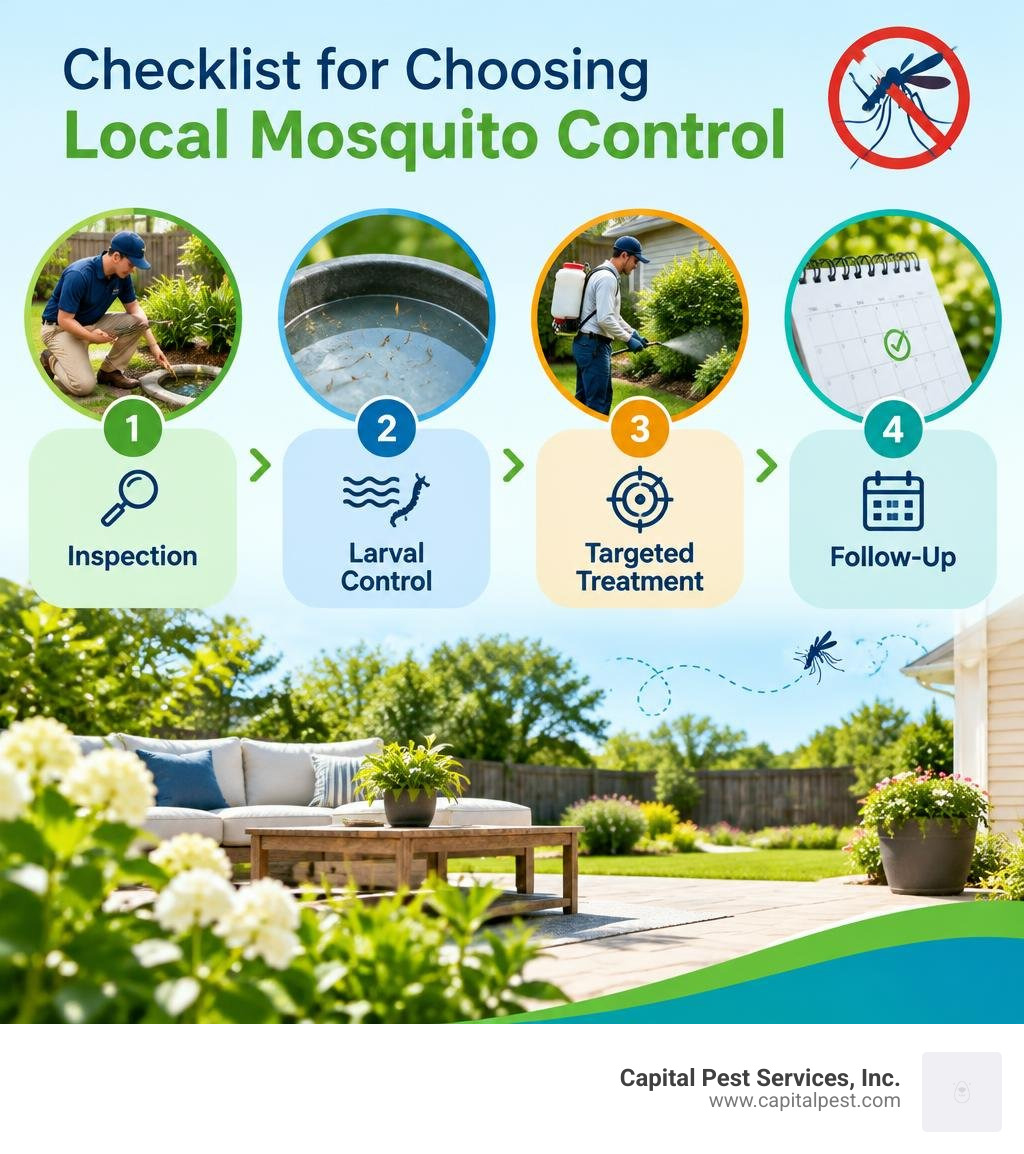
The best mosquito control near me is usually a licensed local provider that starts with a yard inspection, removes or treats breeding water, and targets the shaded plants and damp areas where adult mosquitoes rest. Before you hire, ask each company:
- Do you inspect for standing water and breeding sites, not just spray?
- What products do you use, and how do you protect kids, pets, ponds, and pollinators?
- How often will you return during mosquito season, and what happens after rain?
- Do you offer clear service details, local references, and a satisfaction policy?
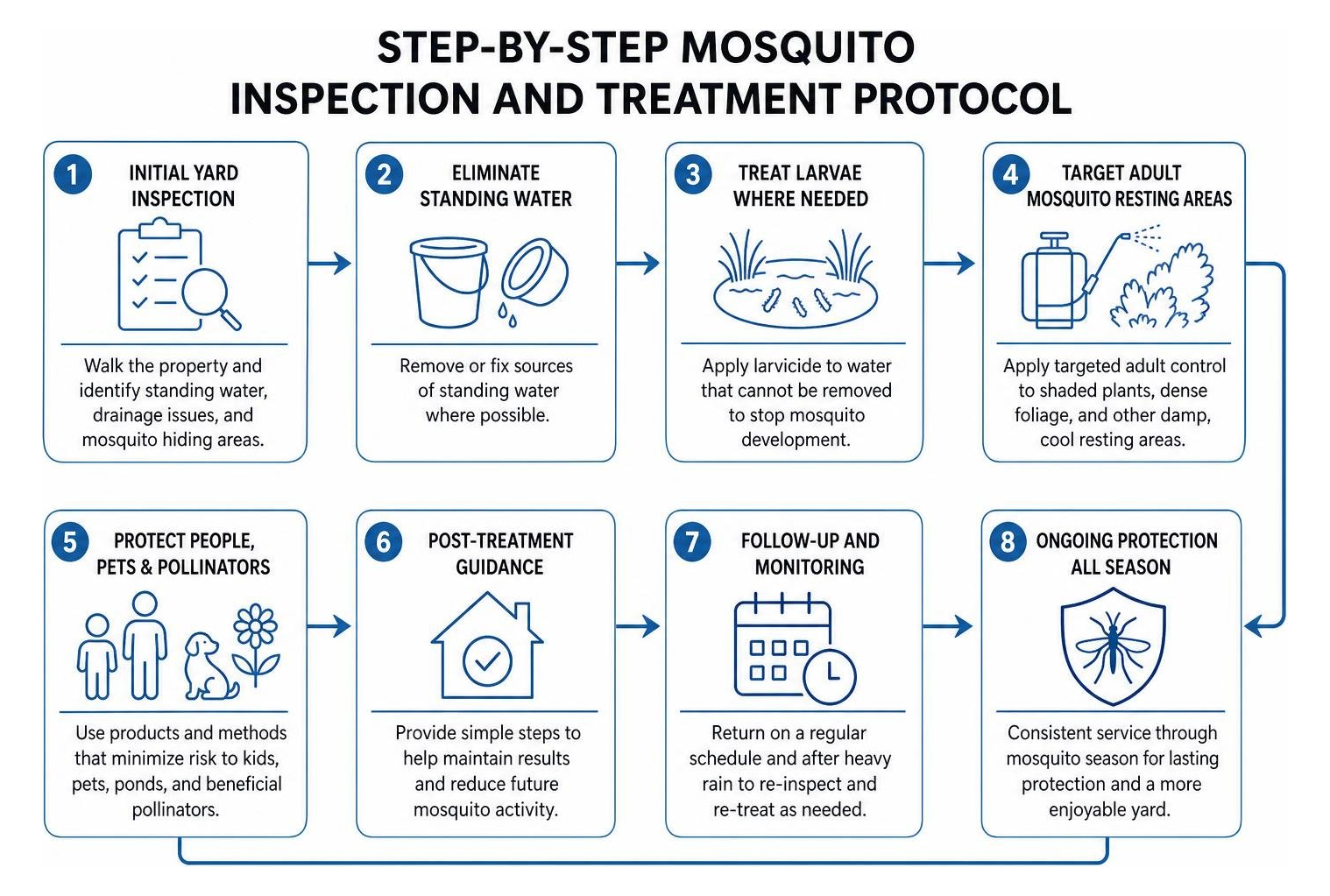
Mosquitoes are more than an outdoor annoyance. They can spread illnesses such as West Nile virus and Zika, while even a small mosquito population can make patios, play areas, and cookouts hard to enjoy. The strongest yard programs use integrated pest management: reduce water sources, treat larvae where water cannot be removed, and apply targeted adult control only where mosquitoes hide. For more on how professionals approach this, see the integrated pest management framework.
I am Mitch Taylor, President of Capital Pest Services, Inc., and I have more than 17 years of pest-management experience serving Raleigh-Durham Triangle homes and businesses. In the next sections, I will show you how to compare the best mosquito control near me options with an eye toward local knowledge, practical safety, and lasting results.
How to Find the Best Mosquito Control Near Me
When searching for reliable mosquito relief, looking beyond marketing buzzwords is critical. Quality mosquito management requires a scientific approach known as Integrated Pest Management (IPM). Rather than just coating a property in chemicals, a true IPM approach integrates habitat reduction, biological targeting of larvae, and judicious barrier applications.
As you evaluate providers for overall pest control, examine several core vetting criteria:
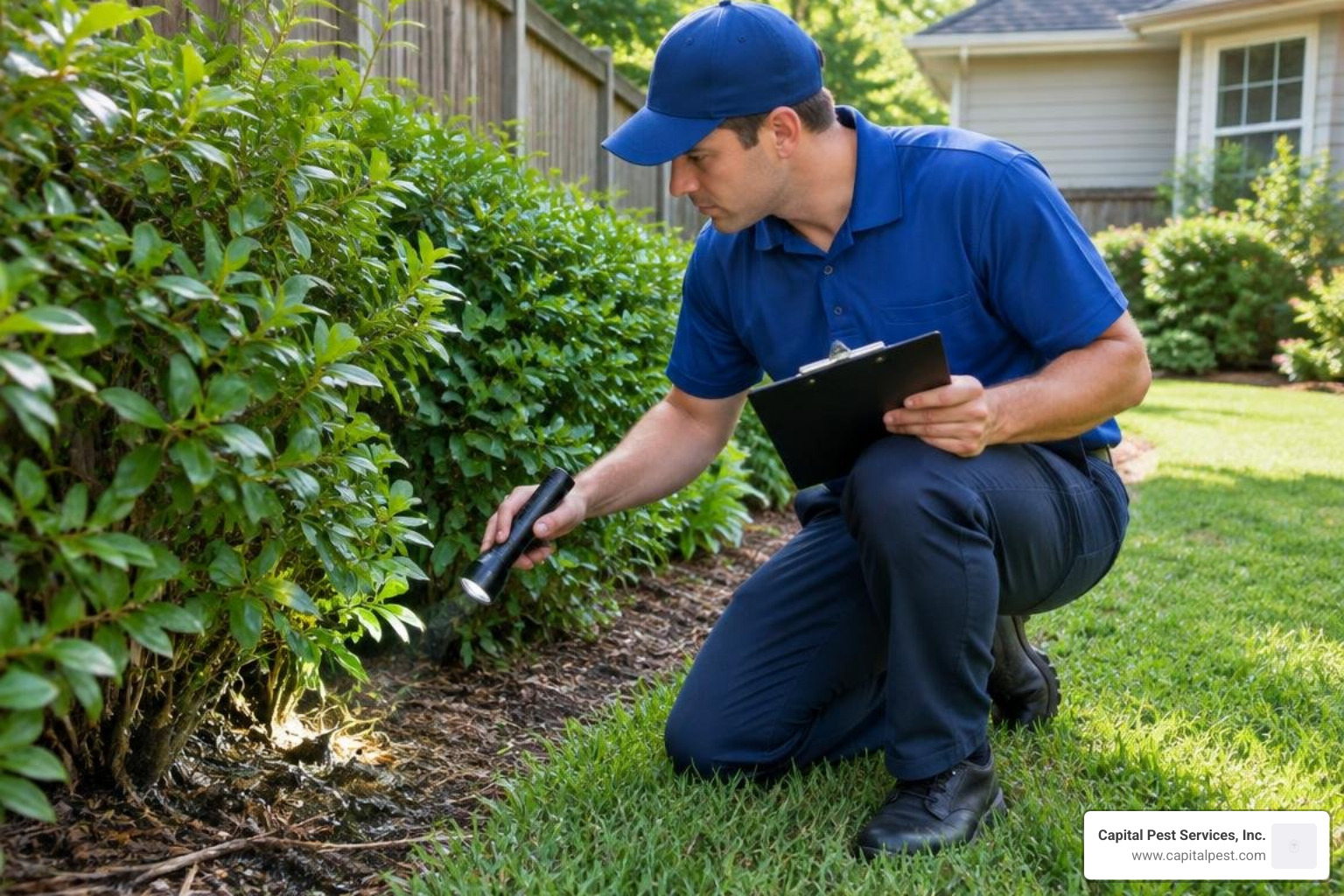
- Thorough Yard Inspections: A technician should walk the perimeter, check low-lying drainage zones, and inspect gutters or dense ornamental plantings before selecting a treatment method.
- Accreditation and Licensing: Ensure the team holds valid state pesticide applicator licenses and industry credentials, such as National Pest Management Association (NPMA) accreditation.
- Service Guarantees: Look for companies offering clear satisfaction policies. If mosquito pressure rebounds significantly between scheduled visits due to severe weather, the provider should re-treat the area promptly.
- Customer Reputation: Check real local reviews across communities like Raleigh, Cary, and Wake Forest to confirm reliability, punctuality, and responsiveness.
Local Exterminators vs National Franchises for Best Mosquito Control Near Me
Deciding between a regional, locally owned exterminator and a large national franchise often comes down to service adaptability. National chains frequently operate on rigid, standardized formulas developed for broad regions. While their branding is familiar, their technicians may lack deep familiarity with hyper-local conditions.
In contrast, an established local provider understands the specific microclimates across our Piedmont communities—from the clay-heavy soils of Durham and Chapel Hill that trap surface runoff, to the wooded lots common in Apex, Holly Springs, and Youngsville. Locally owned teams offer:
- Direct Communication: A dedicated, single-call point of contact rather than an out-of-state call center.
- Flexible Scheduling: Faster turnaround times for service touch-ups or weather-related reschedules.
- Tailored Formulations: Yard plans customized around specific landscape designs, water features, and neighborhood pest pressure.
Evaluating Chemical vs Natural Mosquito Spray Programs
Modern mosquito treatments generally fall into two categories: synthetic formulations and botanical, all-natural alternatives. Both options play valid roles depending on your property layout, family preferences, and environmental priorities.
- Synthetic Residual Barriers: These treatments utilize synthetic pyrethroids (derived from compounds naturally found in chrysanthemum flowers) combined with polymer carriers. They bond to the undersides of leaves and dense shrubs, creating a barrier that eliminates resting mosquitoes on contact for 21 to 30 days.
- All-Natural Botanical Sprays: Often utilizing EPA 25(b) exempt active ingredients such as cedarwood, peppermint, rosemary, or garlic oils, botanical sprays act primarily as repellents while delivering contact knockdown. Because essential oils break down more quickly in sunlight and rain, natural programs typically require a tighter 14- to 21-day service cadence.
Regardless of the formulation selected, professional applicators must practice pollinator stewardship. This means strictly avoiding flowering plants, blooming vegetable gardens, and active beehives to keep beneficial insects completely safe.
Key Factors That Determine Mosquito Control Pricing
Mosquito treatment costs reflect several property-specific variables. Understanding how much pest control usually costs helps you evaluate quotes fairly across different service scopes.
Key pricing factors include:
- Acreage and Landscape Density: A quarter-acre suburban lawn with open turf requires far less product and labor than a heavily wooded one-acre lot with dense understory ivy in Clayton or Pittsboro.
- Service Frequency: Recurring seasonal programs (spanning early spring through autumn) provide the lowest cost per visit compared to one-time event sprays.
- Treatment Method: Standard backpack barrier misting carries lower overhead than custom automated misting systems, which require upfront hardware installation, plumbing maintenance, and winterization.
- Add-On Solutions: Integrating specialized biological traps or extended larval treatments into drainage easements can adjust monthly rates slightly.
Professional Treatments vs DIY Pest Control Solutions
Many homeowners wonder whether retail foggers, garden-hose attachments, or hardware store granules can replace professional yard care. While DIY products offer short-term suppression, they rarely provide sustainable relief across an entire season.
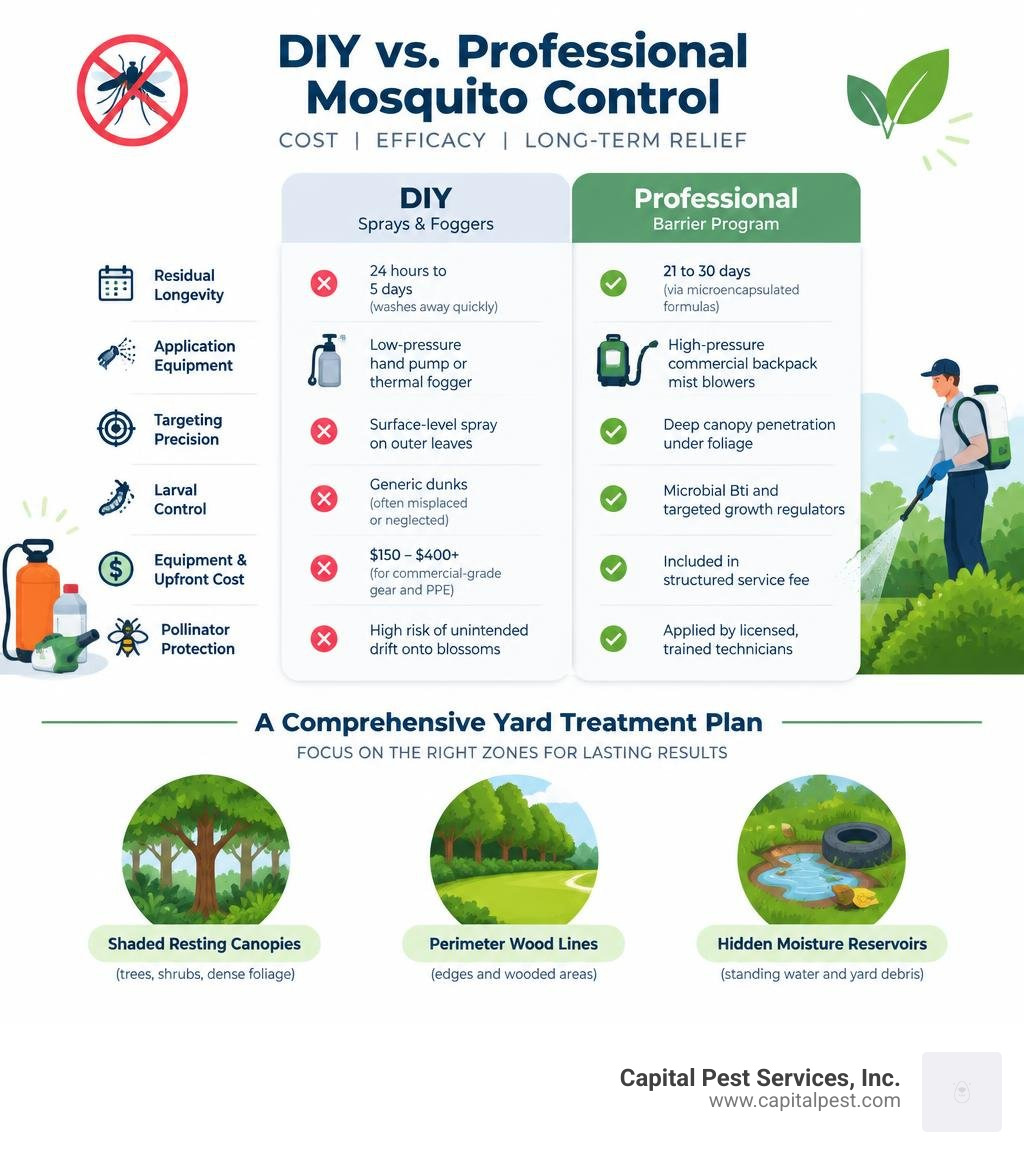
| Feature / Metric | Professional Barrier Program | DIY Sprays & Foggers |
|---|---|---|
| Residual Longevity | 21 to 30 days via microencapsulated formulas | 24 hours to 5 days (washes away quickly) |
| Application Equipment | High-pressure commercial backpack mist blowers | Low-pressure hand pump or thermal fogger |
| Targeting Precision | Deep canopy penetration under foliage | Surface-level spray on outer leaves |
| Larval Control | Microbial Bti and targeted growth regulators | Generic dunks (often misplaced or neglected) |
| Equipment & Upfront Cost | Included in structured service fee | $150–$400+ for commercial-grade gear and PPE |
| Pollinator Protection | Applied by licensed, trained technicians | High risk of unintended drift onto blossoms |
What to Look for in a Comprehensive Yard Treatment Plan
A truly comprehensive yard plan treats your property as an ecosystem. Simply fogging the grass achieves very little because mosquitoes do not typically rest on open turf exposed to direct sunlight. Instead, effective residential pest control plans focus on three core zones: shaded resting canopies, perimeter wood lines, and hidden moisture reservoirs.

Breeding Sites and Larval Control Strategies
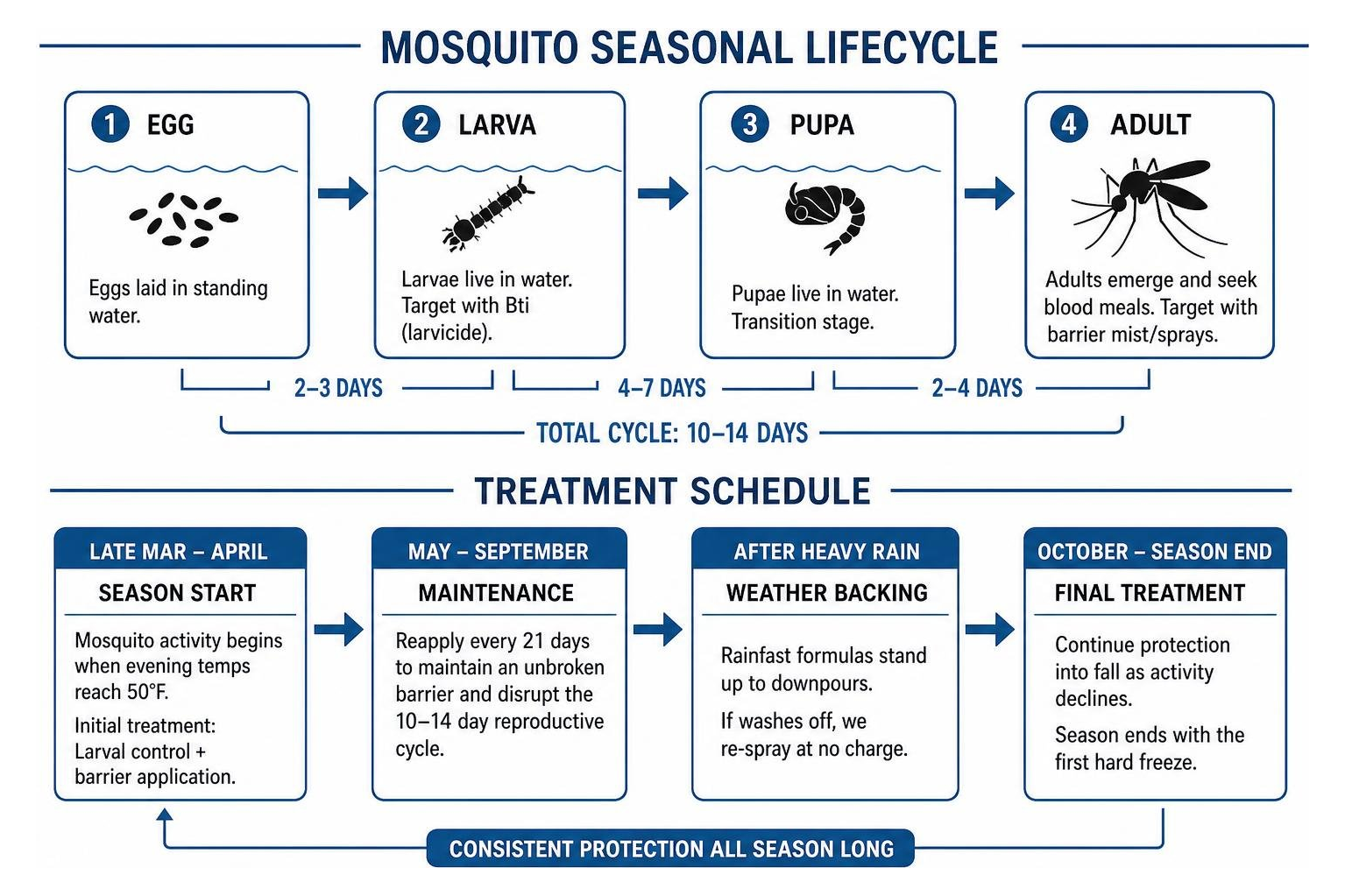
Adult mosquitoes represent only about 15% of a total population; the remaining 85% exist as eggs, larvae, and pupae in aquatic habitats. Stopping mosquitoes before they grow wings is the most efficient vector control method available.
Professional programs implement targeted larviciding using Bacillus thuringiensis israelensis (Bti)—a naturally occurring soil bacterium that specifically targets mosquito and blackfly larvae without harming fish, pets, waterfowl, or beneficial aquatic life. Technicians treat un-drainable collection points such as:
- Low-lying corrugated downspout extensions
- French drains, catch basins, and stormwater retention edges
- Permanent garden ponds, birdbaths, and neglected water features
- Tarps, boat covers, and saucer plates beneath outdoor planters
Adult Mosquito Misting and Barrier Sprays
To neutralize adult mosquitoes migrating from surrounding properties, technicians apply fine-droplet barrier mists to cool, shaded resting sites. Focus areas include:
- Undersides of broadleaf shrubs, ornamental bushes, and ivy patches
- Shaded alcoves beneath decks, porches, and roof eaves
- Dense fencelines, tree lines, and tall ground covers
Once applied, standard barrier sprays bond to vegetation and dry within 30 minutes. After this brief drying window, the yard is completely safe for children, dogs, and family activities.
Maximizing Results: Choosing the Best Mosquito Control Near Me
To keep your yard bite-free throughout the warm season, timing and consistency are crucial. In the Piedmont region—including communities such as Garner, Morrisville, Fuquay-Varina, and Zebulon—mosquito activity initiates when sustained evening temperatures hit 50°F. This transition typically occurs in late March or early April.
When selecting your provider, ensure your service includes:
- Consistent Treatment Cycles: Reapplication every 21 days maintains an unbroken chemical or botanical barrier that disrupts the 10-to-14-day mosquito reproductive cycle.
- Weather Backing: Formulations should feature rainfast polymer bonding agents, paired with a company guarantee to re-spray free of charge if torrential downpours compromise results.
- Integrated Yard Protection: Mosquito control works best alongside full-spectrum yard management. Combining your mosquito defense with specialized mosquito control services that also target ticks, fleas, and perimeter invaders ensures your outdoor living spaces remain thoroughly protected.
Frequently Asked Questions About Local Mosquito Control
How often should my yard be treated for mosquitoes?
For continuous protection throughout the warm season, properties should be treated every 21 days. Professional-grade residual barrier treatments break down gradually due to UV light and natural microbial action over three to four weeks. Re-treating on a three-week schedule ensures that incoming adult mosquitoes are neutralized before they can establish new breeding cycles on your property.
Are professional mosquito treatments safe for children, pets, and pollinators?
Yes, when applied by licensed technicians adhering strictly to EPA regulations and product labels. Barrier sprays are directed specifically at non-flowering foliage and resting zones where mosquitoes congregate. Technicians deliberately avoid blossoms, vegetable gardens, and active beehives to safeguard pollinators. Once the fine mist has completely dried—which takes approximately 30 minutes under normal humidity—the yard is completely accessible for children and pets.
Can mosquito control services eliminate other yard pests like ticks and fleas?
Yes. The residual barrier treatments and botanical applications applied to shaded perimeters, ground covers, and dense wood lines are equally effective against ticks and fleas. By targeting the cool, humid transitional zones where these pests hide, a standard barrier spray dramatically reduces tick activity along fence lines and lawn borders.
Conclusion
A backyard should be a sanctuary for relaxing, grilling, and playing with family—not a breeding ground for biting insects. Achieving lasting relief requires an integrated strategy that pairs habitat source reduction with targeted, eco-conscious barrier protection applied by local specialists who know our regional climate inside and out.
Capital Pest Services, Inc. provides comprehensive pest protection across Raleigh, Durham, Cary, Chapel Hill, Wake Forest, Apex, and surrounding communities. From customized larval suppression to reliable barrier mists, our NPMA-accredited team delivers dependable results backed by clear communication and personal service. To restore comfort to your lawn this season, explore our dedicated professional mosquito control services and secure your yard today.
Capital Pest is proud to be a family-owned and operated pest control company serving Raleigh, NC and its surrounding area (Chapel Hill, Wake Forest, Clayton, Pinehurst, Pittsboro, Fuquay-Varina, etc). Contact us for our pest control services today!